Exercise During Pregnancy by Trimester
The Constant Changes and Challenges of Pregnancy
Dear expectant mother, exercising during pregnancy is safe and warmly recommended.
It is helpful to remain physically active throughout pregnancy through regular, mindful movement. Naturally, you will adapt exercises to needs and abilities that change from week to week and month to month. More than ever, it is important to move slowly and consciously. This literally means feeling your body in motion, respecting its constant changes, and honestly recognizing what feels good, what feels uncomfortable, and what you do not have the strength for at a particular moment.
This article is intended to help you recognize the language of your body through the changes of pregnancy and respond to challenges that may arise during its three magical trimesters.
First, each of us knows her own starting point and predispositions, so answer these questions:
– What was your fitness level when you became pregnant, and how often did you exercise?
– What are your eating habits? Do you eat regularly, chew thoroughly, and eat in peace? How much protein do you consume compared with carbohydrates, how often do you eat highly processed food, and how much sugar do you consume?
– How well do you balance stress, and how much free time do you have?
– What are your relationships with the people close to you like, and how much support do you have for taking time for yourself?
All these factors influence your ability to organize yourself and exercise successfully during pregnancy. Your approach may be very different depending on whether you exercised regularly before pregnancy or had no such routine. If stretching and strength movements are familiar to you, you will modify them slightly. If you are starting from the beginning, do only what feels clear and safe. You are the person who knows best what you can and cannot do because, as I keep emphasizing, it is essential to be completely honest about what you feel and how much strength you have.
Try to create the best possible conditions so that your exercise time is effective.

Second, many combinations of pregnancy-related symptoms can appear during every month.
Women in the same group may experience very different things while doing the same exercises. Depending on the challenges present for you, the exercises should be adapted so that pregnancy discomfort does not get in the way and you receive the support and relief you need. Small groups and an individual approach are recommended. You should be able to speak with the instructor so she knows you and can adapt each exercise to your previous experience and current needs. This is the approach I offer in my online prenatal yoga program.
. Let us begin with the most common challenges of the three trimesters and suggestions for helping yourself and choosing an exercise to try. Good luck, dear mothers!
First Trimester
1. Nausea
Nausea can range from mild discomfort and loss of appetite to severe cramping and vomiting that requires intravenous fluids. It may remain constant for several days, or one difficult day may be followed by an easier one. Follow common sense and exercise when the nausea is not too strong.
Gentle movement and calm, deeper breathing can ease nausea. If discomfort increases, however, it is not the right time to exercise. Another useful rule is to keep moving while focusing on the body’s periphery, for example the arms, shoulders, and legs, while breathing a little more deeply and calmly.
SUGGESTION – Sit on the edge of a chair and move the spine slowly in waves through flexion and extension. Raise your arms with the inhalation and lower them with the exhalation several times. Circle the shoulders and neck, then breathe deeply into the abdomen.
NOTE – Avoid compressing the abdomen, activating the abdominal muscles, or rotating around the waist.
If movement intensifies nausea, become still and try simply breathing deeply.
2. Emotional Instability
Sudden hormonal changes can produce anxious feelings ranging from mild lack of interest to very uncomfortable, stressful thoughts and fears. Unfortunately, this is a natural chemical process taking place in a pregnant body. Do not become frightened by these thoughts and feelings. Remember that pregnancy is a different state, and these experiences are part of why it is described that way.
Most importantly, do not fight these feelings or believe that you should not feel this way. As long as you hold that belief, you cannot open to healing. When you notice constant mood changes, you can gently conclude: “This is not who I am, and I can find some humor in it.”
REMEMBER – You do not need to believe these thoughts. View them a little more abstractly and less personally.
– Try to see the wider picture and understand that this is one aspect of pregnancy.
– This state will pass as the body’s hormones return to balance.
– Remember that you are a cheerful person who currently feels uninterested, and that this is all right.
– Ask yourself: am I reacting unnecessarily, and can I become more receptive?
SUGGESTION – Practice patience and patient endurance, the ability to move courageously through a difficult period.
– Try to find something that brings joy and can move your attention from your inner state toward the world outside.
– Talk with the people close to you and explain how you feel. Allow your feelings, and be honest and gentle with yourself.
Be gentle with yourself and bring patience and compassion to your state. Practice these virtues; you will need them when the baby arrives.
This ten-minute video contains gentle exercises for spinal mobility that help your back move more freely and comfortably. We pay attention to how the spine moves deeply while the rest of the body follows. VIDEO
Second Trimester
1. Hunger and Healthy Eating
An increased sense of hunger is normal during pregnancy because the baby needs “building material” for development. You may develop an aversion to certain foods or, conversely, increased hunger and cravings. The need for simple carbohydrates and quick sources of energy can also grow, but this is where you need to choose carefully what you eat and how you combine it. It is understandable to be attracted to primary flavors such as bread and cheese; simply choose good-quality cheese and nourishing bread, and try to add some vegetables to the meal. Increase your protein intake. This will help you remain full longer and reduce cravings for foods that rapidly raise blood sugar and then cause it to fall just as quickly.
SUGGESTION – Choose “healthy sugars,” the sweetness naturally present in foods such as dried fruit, fresh fruit, and honey.
– Choose whole foods in forms that are as close to their natural state as possible.
– Today you can find many savory snacks with a good amount of protein, for example products made from chickpeas or lentils. Choose something like this rather than biscuits or ordinary potato chips made almost entirely from carbohydrates.
IDEA – Keep a planned snack in your pocket. It is better than buying something from a bakery every time you become hungry simply because it is easy and convenient.
2. Constipation and Changes in Digestion
When constipation occurs, walking, regular exercise, and foods rich in soluble fiber can all be helpful. Digestion changes during pregnancy; the digestive organs literally begin working differently. Constipation is a common side effect that can be partially eased through a suitable diet, regular movement, and sufficient fluids. Avoid eating large quantities of bread, pasta, and other starchy foods in a single meal. Add vegetables in different forms and preparations whenever you can, because fiber supports regular digestion. These changes may accompany you throughout pregnancy, so use the suggestions that suit you.
SUGGESTION – Soak prunes and/or dried figs overnight and eat them first thing in the morning on an empty stomach.
– Eat an apple or pear every day.
– Chew food slowly. Thoroughly chewed food is easier to digest.
– Sip lukewarm, unsweetened fluids throughout the day, such as fennel tea or water with a few drops of lemon.
– Drink a little magnesium-rich mineral water each day.
IN PRACTICE – Walk uphill and use stairs, hike, or walk an extra stop. These activities stimulate the bowels. Practice modified prenatal sun salutations, which include all the elements needed to encourage movement and healthy digestion.
Prenatal sun salutations are adapted for you and contain everything needed for effective movement. The motions are simple, and no previous knowledge is required.
In this five-minute video, I guide you through five prenatal sun salutations. You can learn them with me and then continue practicing every day. VIDEO
Third Trimester
1. Water Retention and Swollen Joints
Water retention during the final weeks of pregnancy is very common. It usually cannot be prevented, but you can help the body awaken circulation and encourage flow. Regular movement naturally keeps everything circulating, so it is helpful to take frequent short walks, do a few squats, mobilize the spine, and deepen the breath. You can also eat more diuretic foods, reduce salt, and increase fluid intake. Teas that may help with fluid retention include chamomile, cranberry, nettle, chicory, asparagus, and fennel, as well as cabbage juice. Helpful foods include cucumber; celery root and stalk; parsley root, with the leaves in small quantities; watermelon; and apple. Include these foods when available.
Warm water with a few drops of lemon is a remedy for almost everything and can be sipped whenever needed.
SUGGESTION – Lie on a bed or yoga mat, raise your legs, and circle the ankles about twenty times in one direction and twenty in the other. You can also flex and point the feet, feeling the calves stretch.
– Raise the pelvis on a cushion and rest the legs against a wall. Elevating the legs can help reduce swelling, even if only a little.
– Pedal your legs in the air as though riding a bicycle. This mobilizes the lower back and encourages fluids in the legs to circulate. If you cannot lie on your back for long, place a large cushion beneath the head and chest.
IDEA – Grate celery root and season it with a few drops of oil for a light salad with a diuretic effect.
– Cut an apple into thin slices and sprinkle with cinnamon for a fragrant dessert that encourages digestion.
– A salad of grated cucumber and Greek yogurt can refresh both the palate and digestion.
2. Tiring Easily and Sleeping Poorly
As your body gains volume and weight, it becomes more difficult to find a comfortable position for rest and sleep. Lying on your back is not recommended, lying on the stomach is no longer possible, and the side becomes the only option. A pillow between the legs and another beneath the head naturally help, but every turn and adjustment can still be uncomfortable. For better sleep, move a little before bed, breathe more deeply, and stretch thoroughly. I understand that you are tired, tire easily, and do not feel like doing it, but it will help, so begin gently.
EXERCISES – Make a small supported bridge. Place a cushion on a yoga block, or use one firm cushion beneath the pelvis, and relax in the position.
– Move in a standing position: circle the arms a few times, do a few squats, and rise onto the toes several times.
SUGGESTION – Because you tire more easily and have less strength, try making “wide movements,” such as windmill circles with the arms, lateral stretches, or simply raising and lowering the arms with the breath.
Whenever things feel difficult, remember that your baby, your little miracle, is coming. Surrender and trust nature to care for you.

3. Lower-Back Pain
The spine is now carrying considerable weight and receives almost no help from the abdominal muscles. It can feel as though a large water balloon is pulling the spine forward into lordosis. The muscles along the back are tired and can easily become tight and cramped. Fortunately, regular movement and mobility exercises can help greatly. Because the abdominal muscles should no longer be activated directly, you can choose exercises that engage the entire front of the body, such as all-fours exercises, or gentler movements for the side abdominal muscles.
REMEMBER – Reduce stressful and negative information, choose your company carefully, and do things that bring you joy. You have every right to care for and indulge yourself.
– Stress is both a mental and physical burden and may be carried through the back. Read my suggestions for a vital pregnancy and take care not to expose yourself to unnecessary stress.
SUGGESTION – Spinal waves, often called cat-cow, are an excellent and simple way to mobilize the back. You can also perform them standing whenever you need them.
Begin gently and remember: every breath of mindful movement is medicine for a tired body. Your body needs support because it is creating an entirely new human being.
In this ten-minute video, I guide you through simple exercises that lengthen the muscle fibers of the lower back, relax them, and reduce tension. The movements are simple and require no previous knowledge. Begin and enjoy your body, breath, and baby. VIDEO
Exercise After Pregnancy: Postnatal
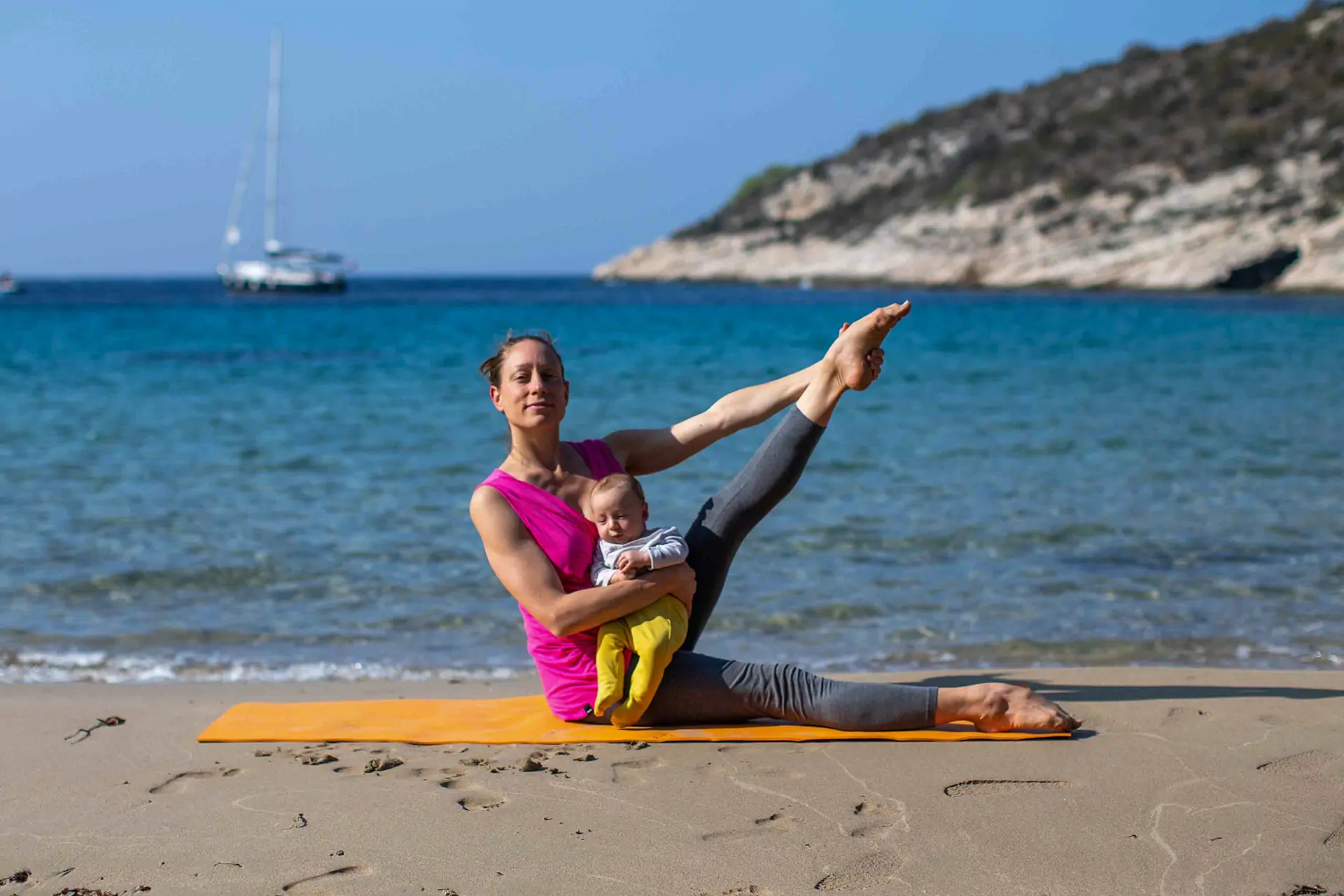
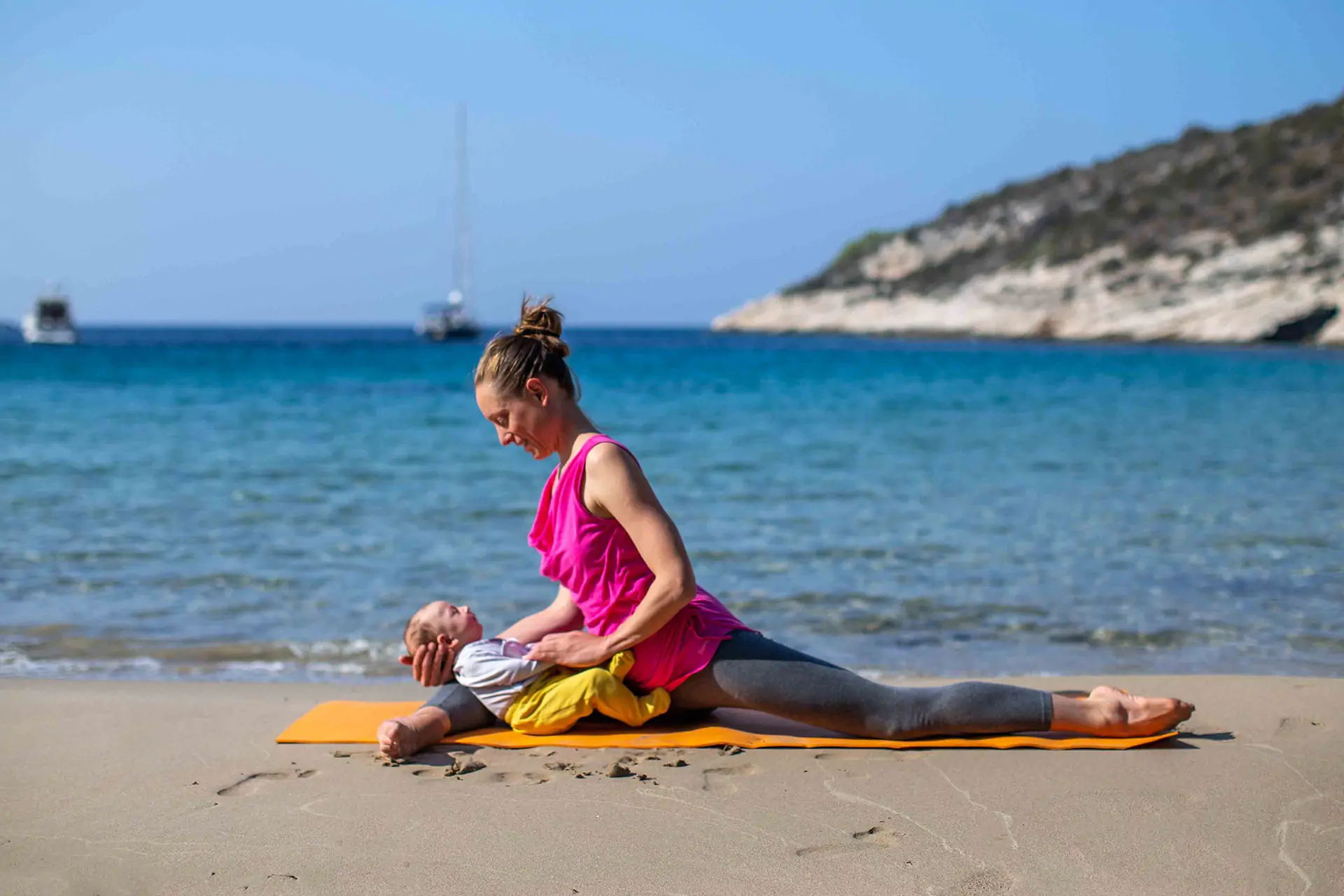
Once your little bundle of joy arrives, continue exercising and caring for your fitness because the baby regulates emotions through you. Babies experience themselves as one with their mother, so direct attention toward your own well-being. Learn to carry and release changes in body and mind with greater ease. Balance problems, try to calm yourself, and then slowly address what needs to be done.
Exercise and mindful movement will help because they make it easier to reset your state.
After giving birth, join my regular online yoga program where we practice complete yogic themes. With the recorded classes, you can practice whenever you wish. The first month is free for every pregnant woman who has attended my prenatal yoga for at least three months.
See you in yoga, Tena!