The Tena yoga method
The Tena Yoga Method is my approach to teaching dynamic and restorative yoga, which is based on therapeutic and mindful principles, and is practiced with joy.
The method is based on knowledge of meditation and yoga. It highlights principles that are worth implementing so that the practice is a meaningful path to health. The principles are simple and their application is a direct effort towards the greatest value we can have with yoga. The basis of the method is Somatic Yoga – connecting attention with bodily sensations, listening to body language and working with the mind and emotions through the body. The method works on awakening life energy (Prana) by respecting our body, exercising optimally and breathing deeply. It is not my invention but a summary of rich human knowledge that I convey in a simple way.
Read more about the knowledge and experiences that gave rise to the method on the page ABOUT ME.
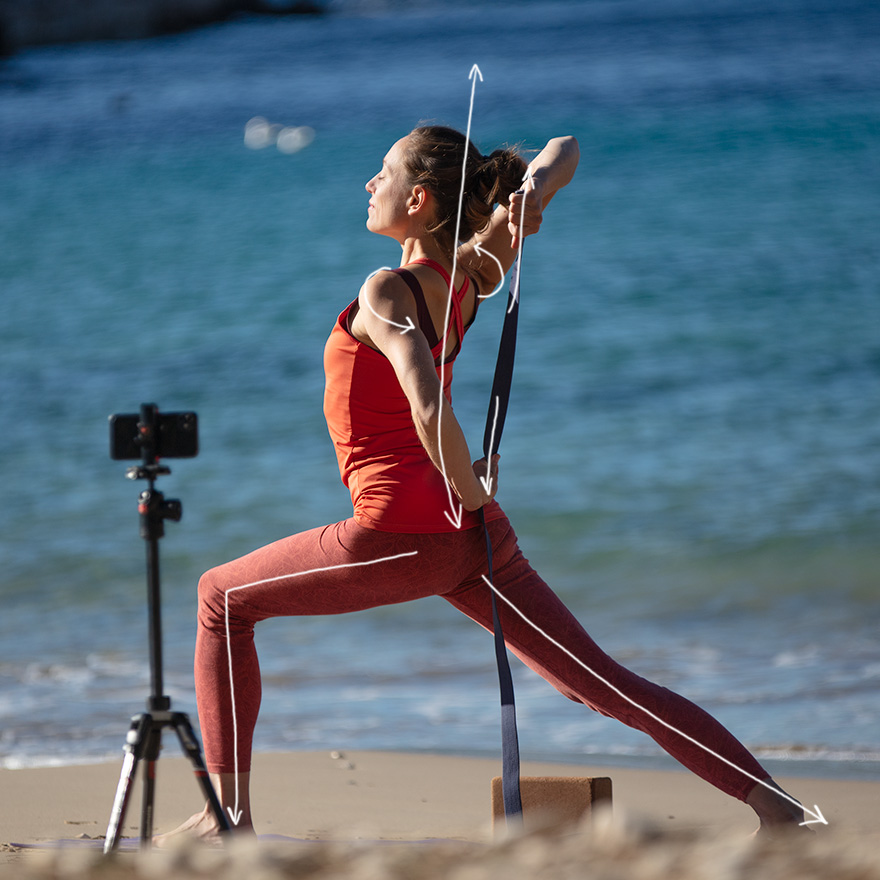
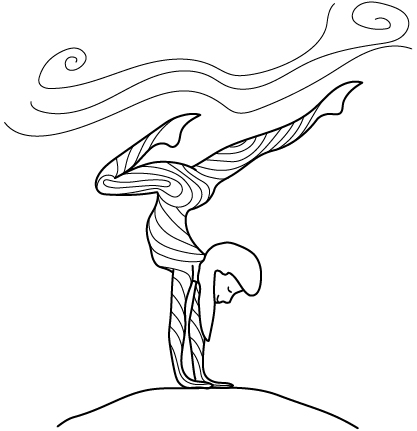
The body communicates with us in a range from tension to relaxation. Emotions also range from tightness to openness and we feel them in the body. By understanding this body language we can consciously balance ourselves. When we have a good balance of strength and relaxation we use our body in the best way and are most effective. The intention of this method is to provide the body with the conditions to easily balance itself.
The nature of our body strives for health, we can rely on that law.
Health is fluidity and ease of letting go, trust in transience.
My job is to guide you through simple and understandable yoga classes. I show and explain how to position yourself and where to place your attention in order to get the effect you want from the practice. The mindful principles we introduce during our sessions can easily be applied to the rest of your day in your everyday activities.
My intention is to motivate you to love movement, enjoy the awakening of your body and breath, and maintain your health with joy and ease.
What can you gain from regularly practicing yoga using this method?
- stay active and motivated
- gain strength and flexibility
- have a positive effect on health
- awaken all organs and systems
- enjoy your body
- understand your mind with love
- have the will, love and energy to perform daily tasks
- bring your Buddha nature into everyday actions
- find peace and home within yourself for all the waves of life.
PRINCIPLES of tena yoga method
1. PRINCIPLE – uprightness without effort
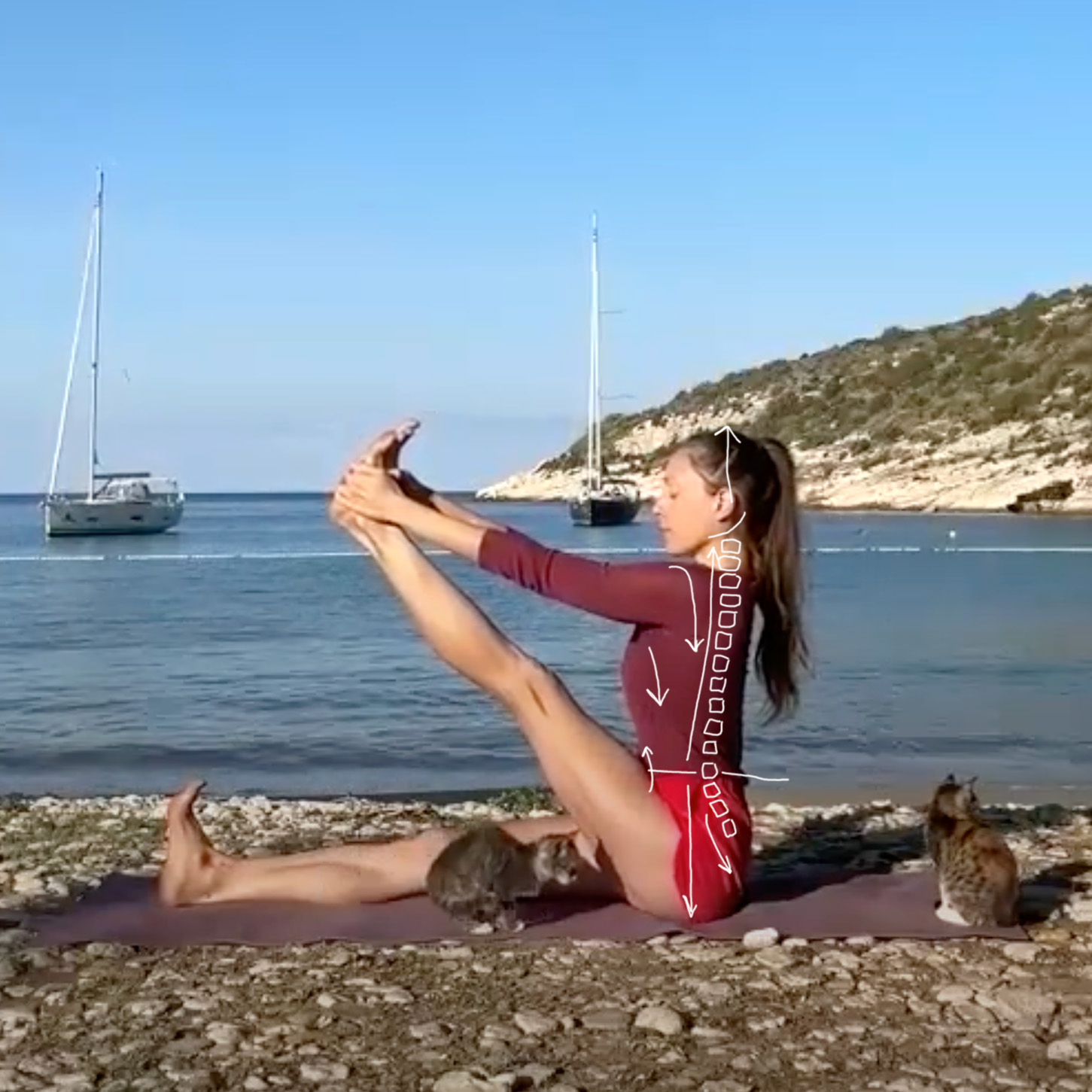
The spine is the axis of the body that holds us upright, and the periphery leans and relaxes on this central support. Yoga asanas are traditionally designed to adjust the tilt of the pelvis and spine in various positions so that we can sit easily, for a long time and calmly in meditation. This principle relies on the physiological division between phasic and tonic muscles because postural muscles (which primarily hold us upright) tend to be in spasm if we do not use them properly and if they are passive. This locks the body into a fetal position, shortens the front of the body and prevents upright posture. By working on lengthening the front, strengthening the back of the body and addressing phasic muscle groups, we stand upright without effort.
Also, when we lose the strength and integrity of the center of the body, the periphery begins to take over that function, which means that muscles that do not have long-lasting tissues are in constant tension and begin to create stress (for example, the trapezius).
When we strengthen our center, we easily carry ourselves upright and have an open stance.
2. PRINCIPLE – Mindful relationship
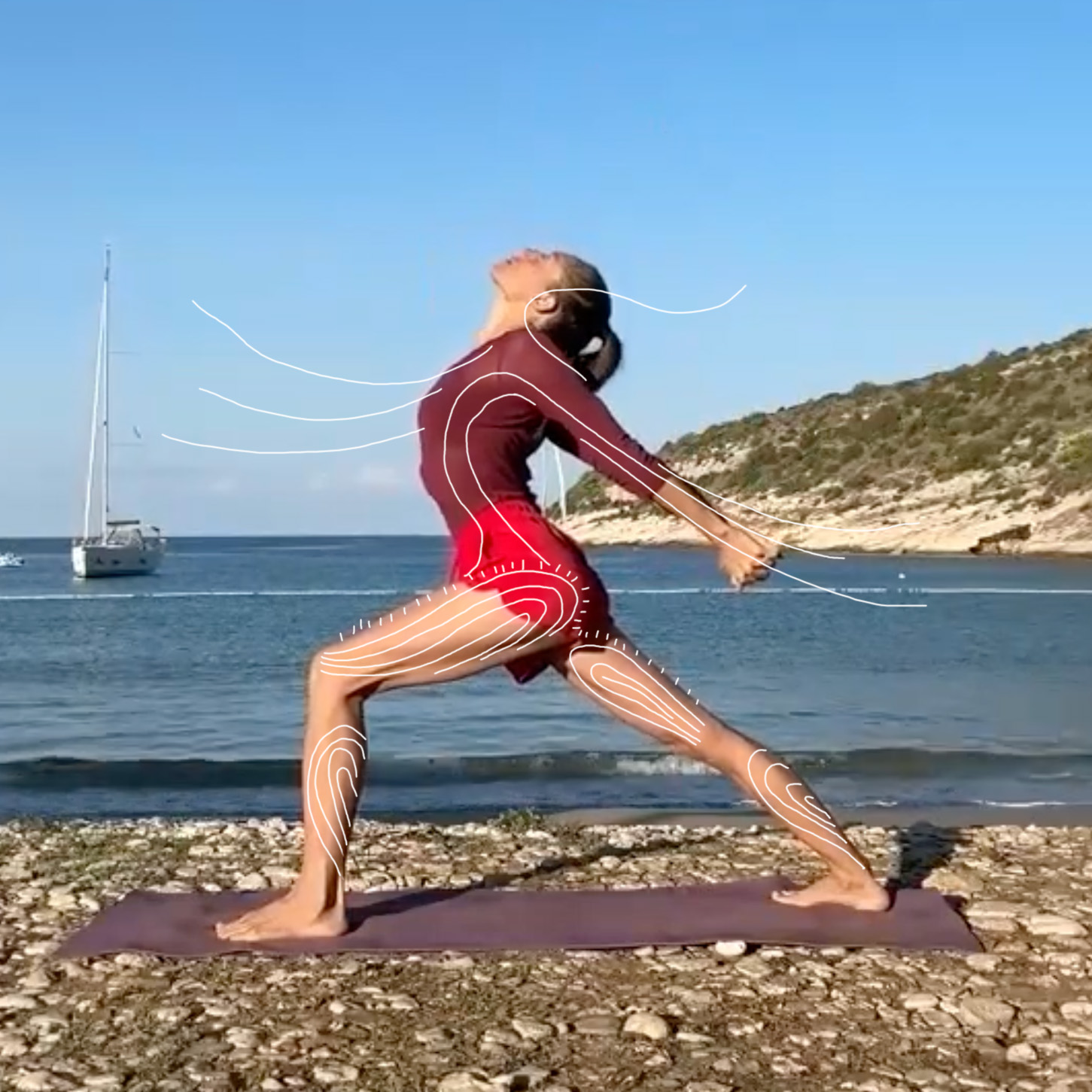
This principle is based on Mindfulness, which is to have a good balance of alertness and relaxation. Certain parts of the body in asana establish calm strength and stability, they are the base on which the rest of the body relaxes and expands, so that we can breathe with ease. In a mindful relationship, we become aware that we can have multiple experiences at one moment, for example the weight of strength and the lightness of openness. It is precisely by how we distribute strength and relaxation in the body that we establish a relationship of close sensations and have a true experience of asana. We strive to leave a broad but fully present attention with bodily sensations throughout all the changes during practice. If our attention narrows, we check what has distracted it and whether we can expand it again to experience the same from a wider space. Because we have consciously decided to stand in a certain position, we have the determination to hold it with joy, give our best and balance the relationship of strength, stretching and relaxation well. In the practice of this principle, we become aware of differences, for example, a calm stance of the legs, but ease of movement of the torso and arms, or a strong stomach but relaxed facial muscles.
Expanding the space around the experience and a good balance of strength and lightness provide us with the foundation for a mindful relationship to every state.
3. PRINCIPLE – Clear intention
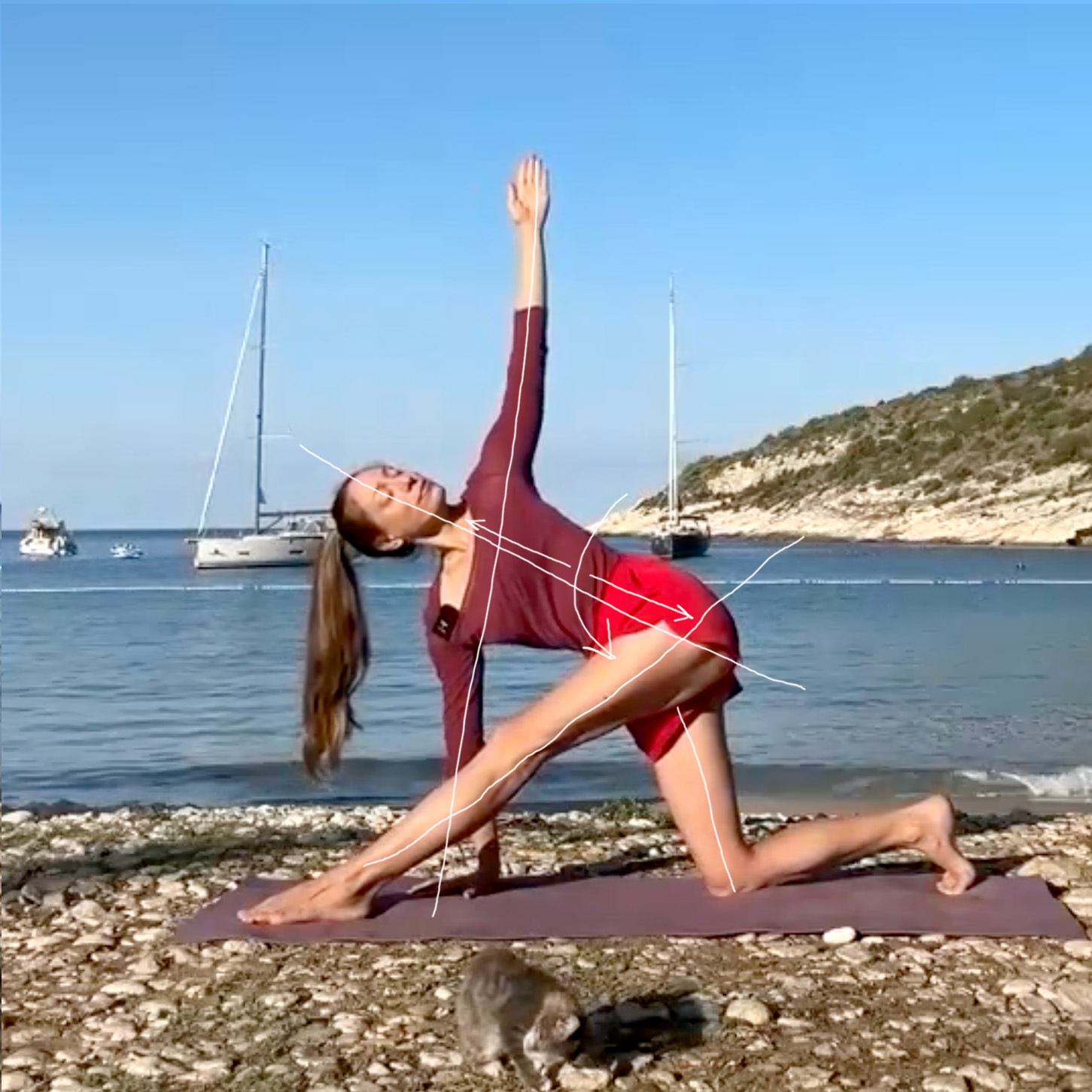
We know clearly what our intention is, why we are taking a certain position, we position ourselves precisely to target that specific area. For example, if we are standing in a rotation position and have pulled the pelvis, narrowed the lower abdominal space, we breathe deeply, squeezing the abdominal muscles – we are doing an exercise for activating the abdomen. If in the same position we have a pulled pelvis and a straight spine and we breathe “up and down” along it, we are doing an exercise for rotating the back muscles.
The key to the desired effect is in the intention behind our positioning and how we breathe in the position.
Clear intention also means becoming aware of the reason for which we are going deeper into a position, whether we are forcing ourselves because we think we need to achieve something or whether we are respecting body language and giving it the opportunity to open up and adjust itself. This is where our intentions differ between correct and incorrect ones. During practice, we can become aware of laziness, boredom, pain, emotional reactions, complexes and impressions in the body, but we try not to react to them. Correct intention is to practice non-harm, patience and compassion for what we feel while practicing, precisely in contact with unpleasant sensations.
We practice with clarity and determination so that we get the effect we want to achieve.
4. PRINCIPLE – Become aware, open, breathe
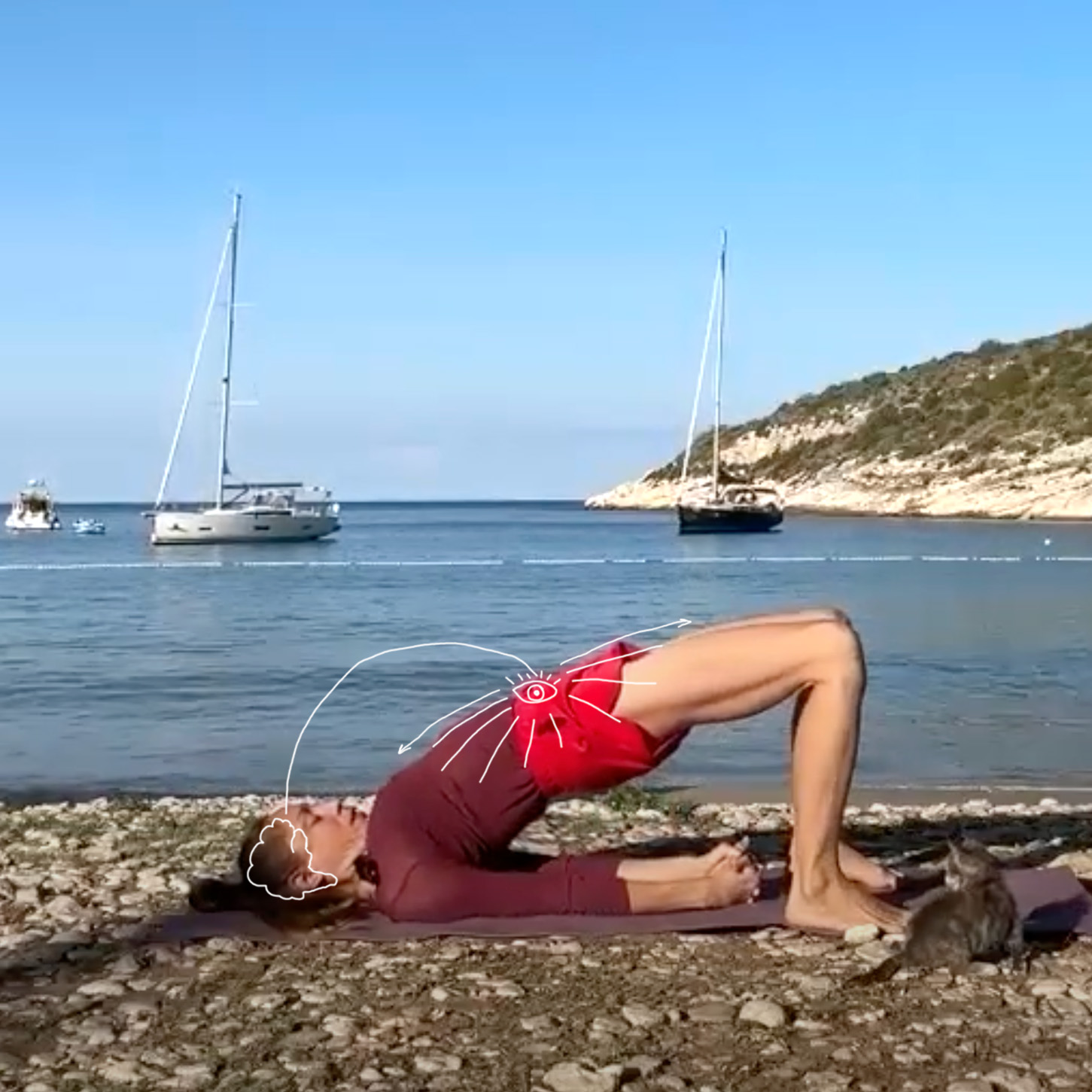
The principle is based on the basics of therapeutic yoga for releasing tension. We should first become aware of the painful and problematic (tense or too loose) part of the body and attach our attention to it. Then we should activate it, stretch it or strengthen it if necessary. And finally breathe “through it”. Let us be the breath that is directed to some part of the body, which is not just a metaphor but literally, because with every breath our body receives oxygen to all cells and we can truly “breathe into the hips”. We take a compassionate attitude towards the problem, we do not rush and do a practice in which we encourage the natural intelligence of the body to heal itself.
We patiently allow the body to settle into position and the breath to penetrate deeply.