Interview for the Da sam ja netko Portal
Interview by: Iva Matic
Dear Tena, how are you? What will your summer of 2023 look like? Do you have plans, or are you letting it unfold?
Hi, Iva. Summer somehow crept up on us. I kept saying, “Once it arrives,” and now here it is! It brought the whole package: heat, swimming, crowds, mosquitoes, and that slow summer mood. My partner and I joked that we hibernate in summer rather than winter. The heat makes us a little slower, but everything is moving along. We manage the house and garden, do our work, and spend time with our little one. This summer is special because we are celebrating our son Nikola’s first birthday. We will have a small gathering here on Bisevo for a few neighbors and family members.
Speaking of summer, which one would you say is among those you will remember forever? What was it like? Are you a summer person?
Speaking of summer, last summer was anything but summery and difficult to describe because we spent it in Zagreb waiting for me to give birth. Our little one was born on July 27. We stayed in Zagreb for another month and reached Vis only at the end of August.
I do not have a romantic story such as “becoming a mother changed me” or “it was the most beautiful experience of my life.”
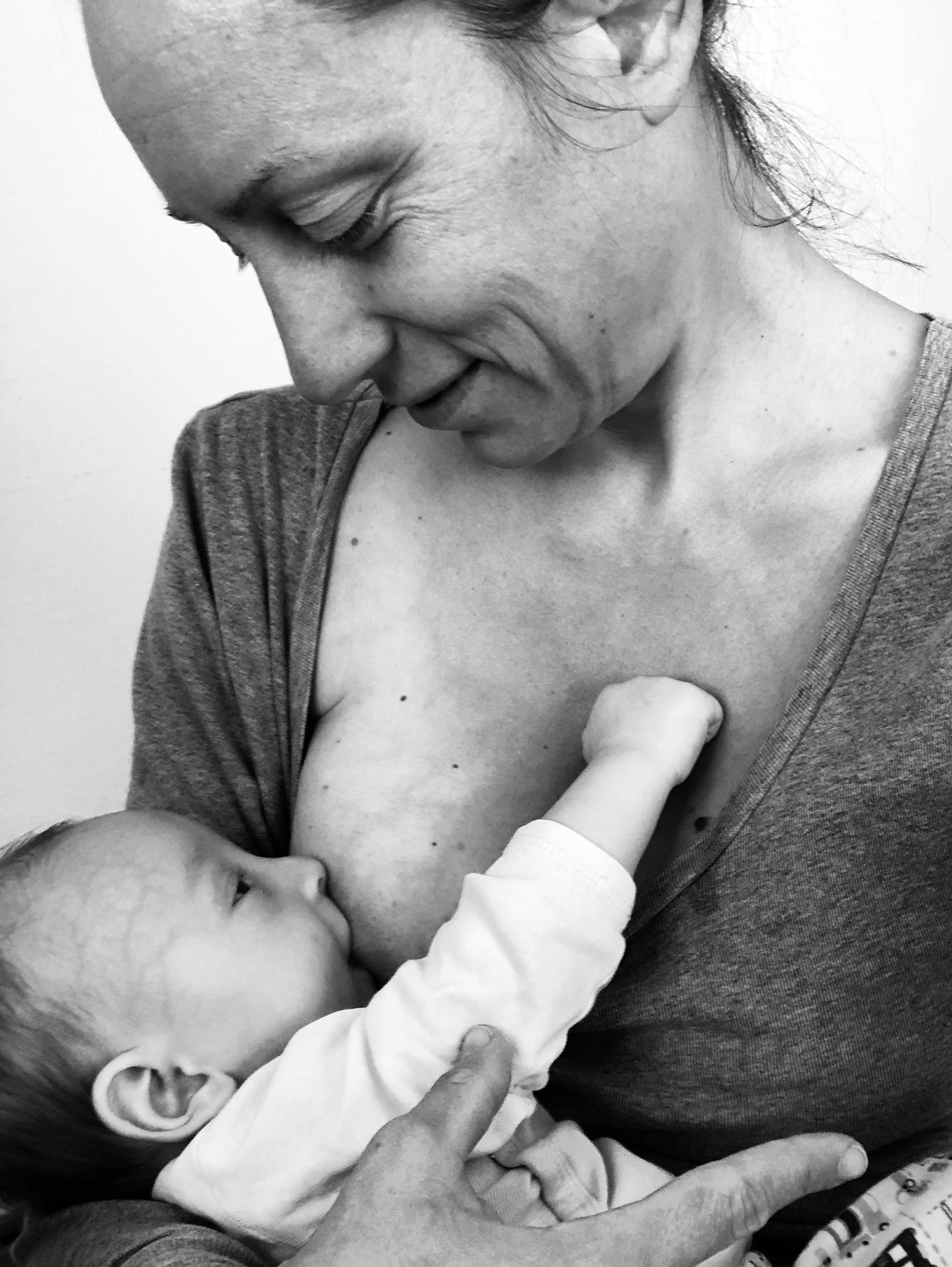
In reality, it was all very difficult: finding our way with a tiny baby, living in a body that hurt, and enduring summer heat and a sense of emptiness that created a peculiar atmosphere. I remember going out in the evening, when it became a little cooler, for a cold dark beer, mineral water for me, at Cinkus in Zagreb’s Upper Town. Our little worm was only a week or two old, and everyone spoke to us and admired him. Such an intense experience naturally remains in your memory, regardless of the season in which you become a parent. I generally function better at lower temperatures, but of course I surrender to every natural cycle.
You and your husband have built a life on Bisevo, the most remote inhabited island. What is island life like, and how did that decision come about? How many neighbors or fellow islanders do you have? Are you there all year?
There was no clear decision to live on a small island. In the context of everything happening at the time, it came naturally. During the pandemic, Stipe was here working around the house and building dry-stone walls for the terraces where we now plant olive trees. He began with a house inherited from his grandfather whose plumbing was essentially “pour water over yourself from a bucket.” He transformed that small house into a living space with the same standards as a home in the city. We now have a bathroom, running water, a washing machine, and even a dishwasher. The water comes from a rainwater cistern, so we use it carefully, and we have a septic tank instead of a sewer system. In other words, I came to live in a village on a beautiful island, in a fully functional house, not in the austere conditions that existed here 70 years ago. It was not difficult for me to come because my ideal had always been living in a smaller town and a house with a garden rather than an apartment in a city. I never would have guessed that place would be Bisevo , but life writes its own stories.
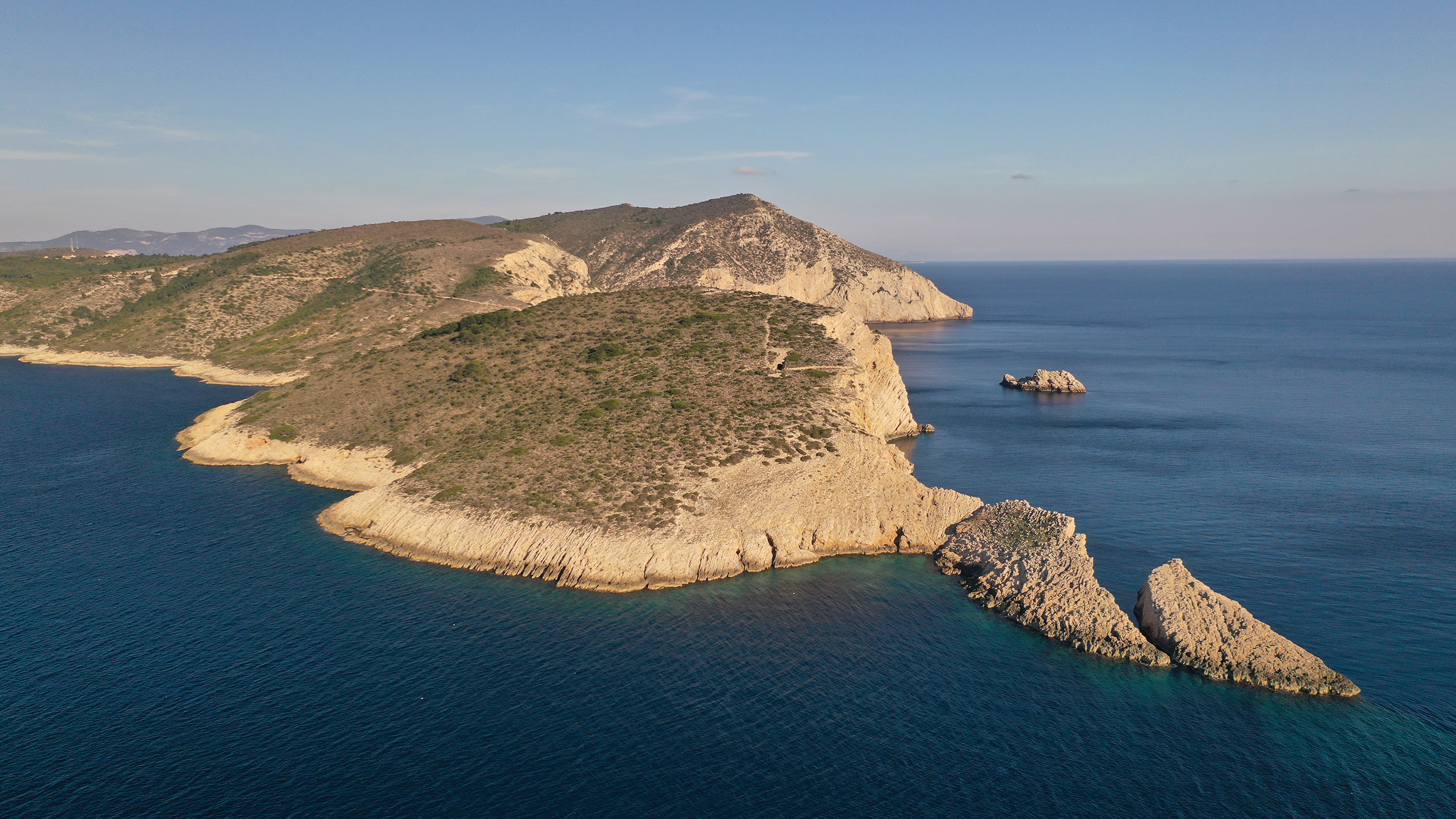
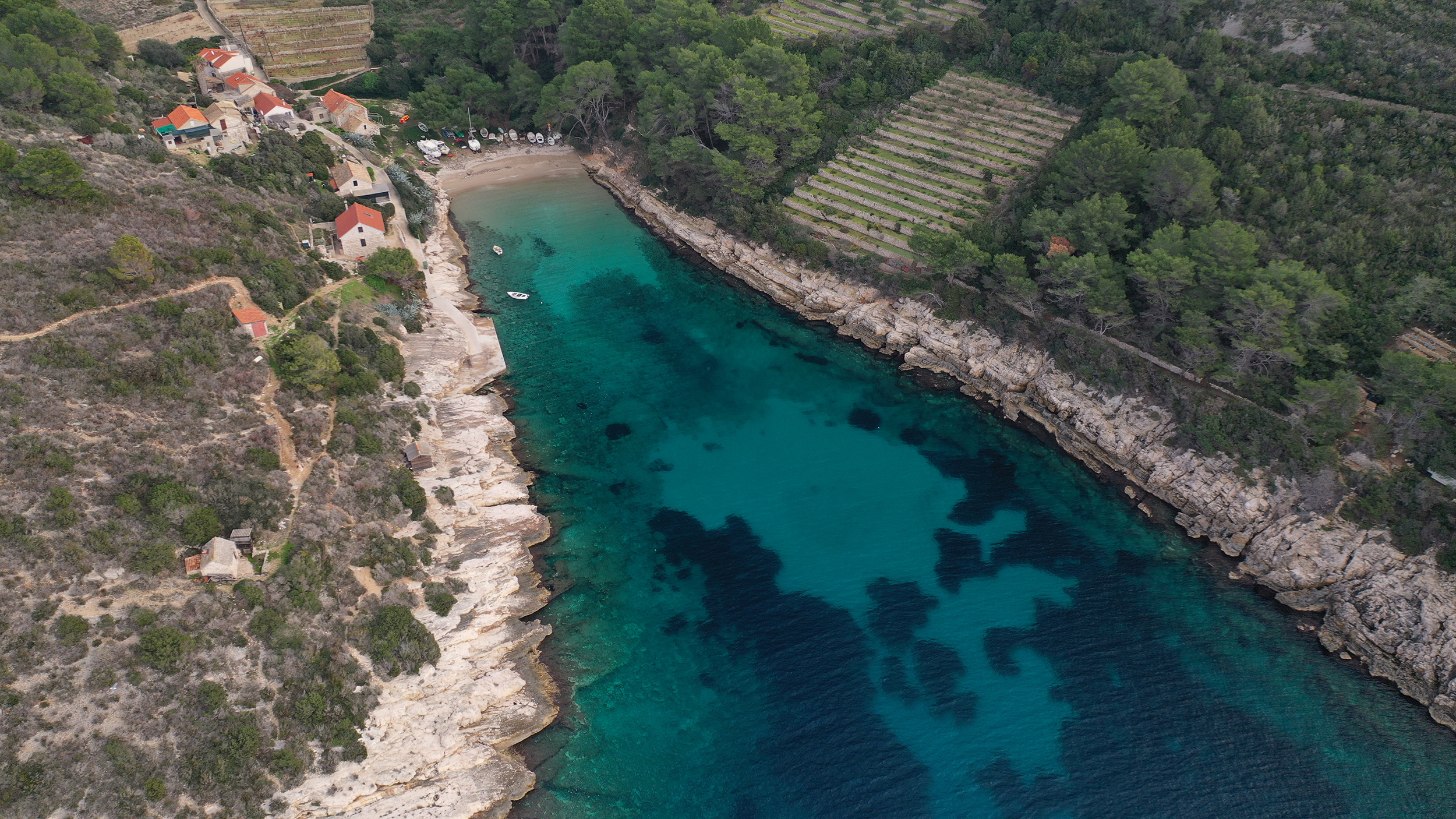
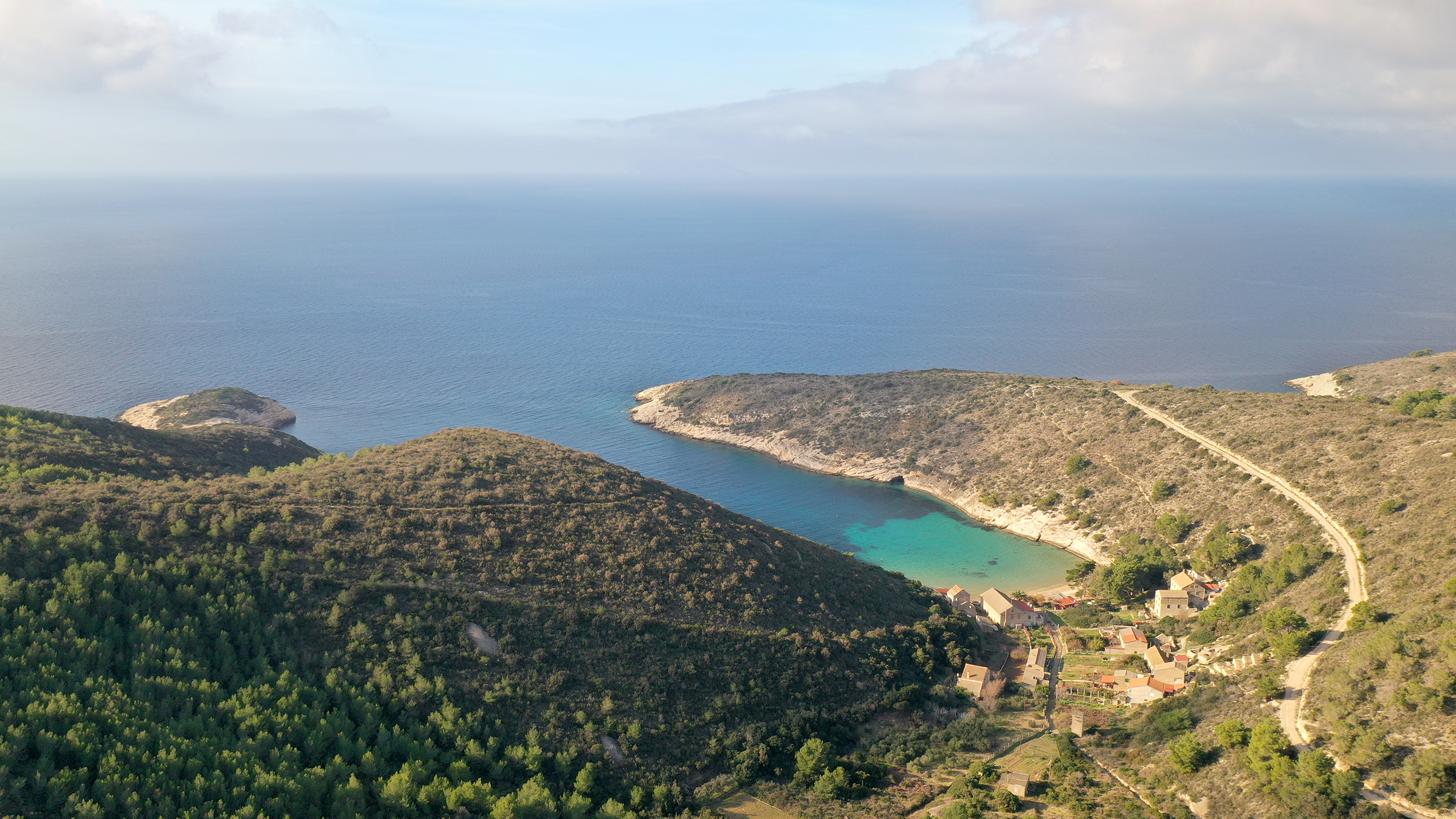
View of Cape Gatula
I find it interesting that while living in the city I thought of certain habits as “my bad habits,” but since moving here they have disappeared. These observations confirm for me the theory that our biology, psychology, and social environment all influence us equally: the biopsychosocial model. We all have bodily habits and a mind and emotions that shape us, but being part of a whole is equally important and affects us deeply. Zagreb is hurried and people are stressed. Wherever you go, cars race around you, everyone looks after themselves and rushes to solve a problem. This created an invisible layer of tension in me. I identified with it and believed that the restlessness was my own problem. Now I see that it is absent here. I want to encourage you not to identify with negative ideas about yourself. We cannot be cut out of our environment like a closed system untouched by outside forces.
Our surroundings and the people around us are reflected within us. Much of what we feel and think is connected to this social dimension that we create together.
Here, for example, I am becoming aware of other ways people relate socially that can be hurtful, arise from collective wounds, and lead to certain patterns of behavior. I can see them more easily and choose not to react because I am not immersed in that way of being. This is not personal either. These are inherited generational systems that can be released only when we become aware of them and replace them with better models.
We are fish in the sea, and only by looking from the outside can we see the sea and say: this is not me.
I will not ask what an ordinary day on Bisevo looks like, because I doubt any day is truly ordinary, but I would like to know about your daily rituals. What do you enjoy most about living on the island?
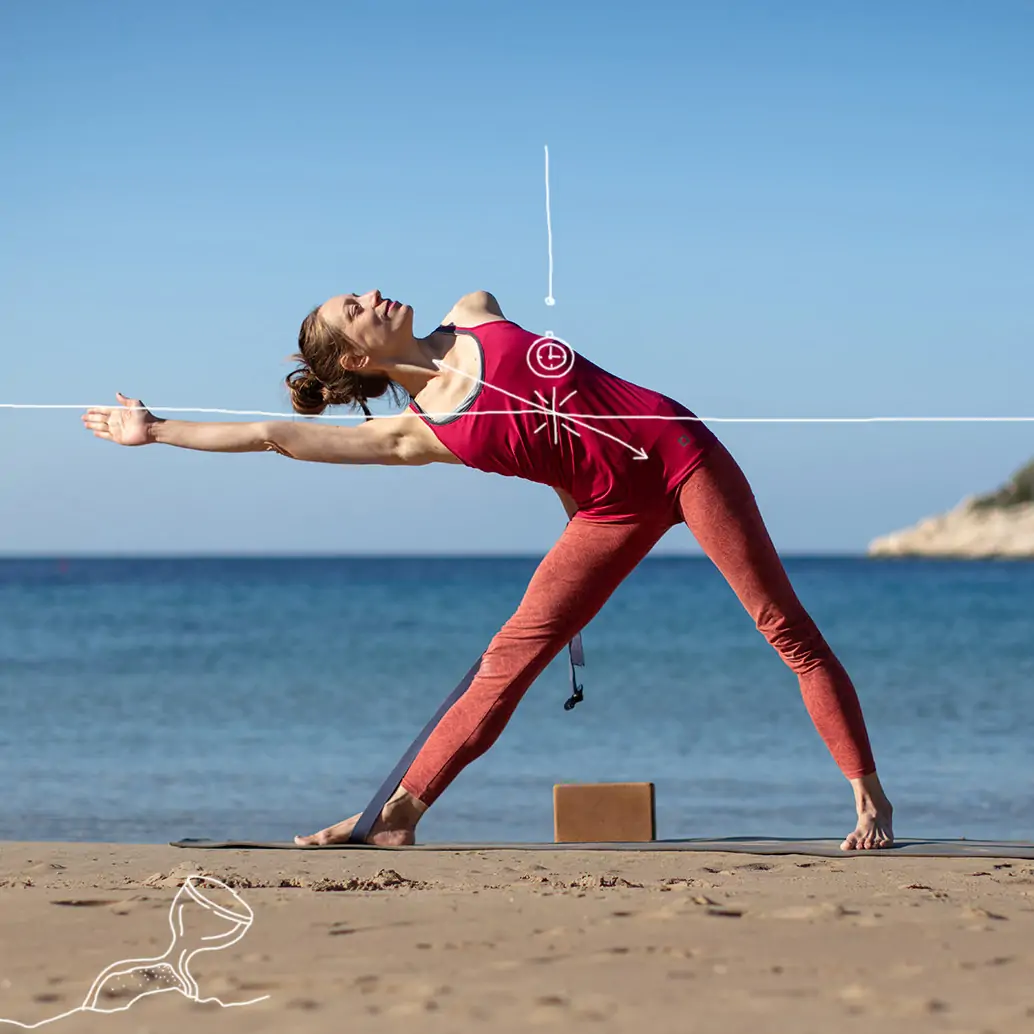
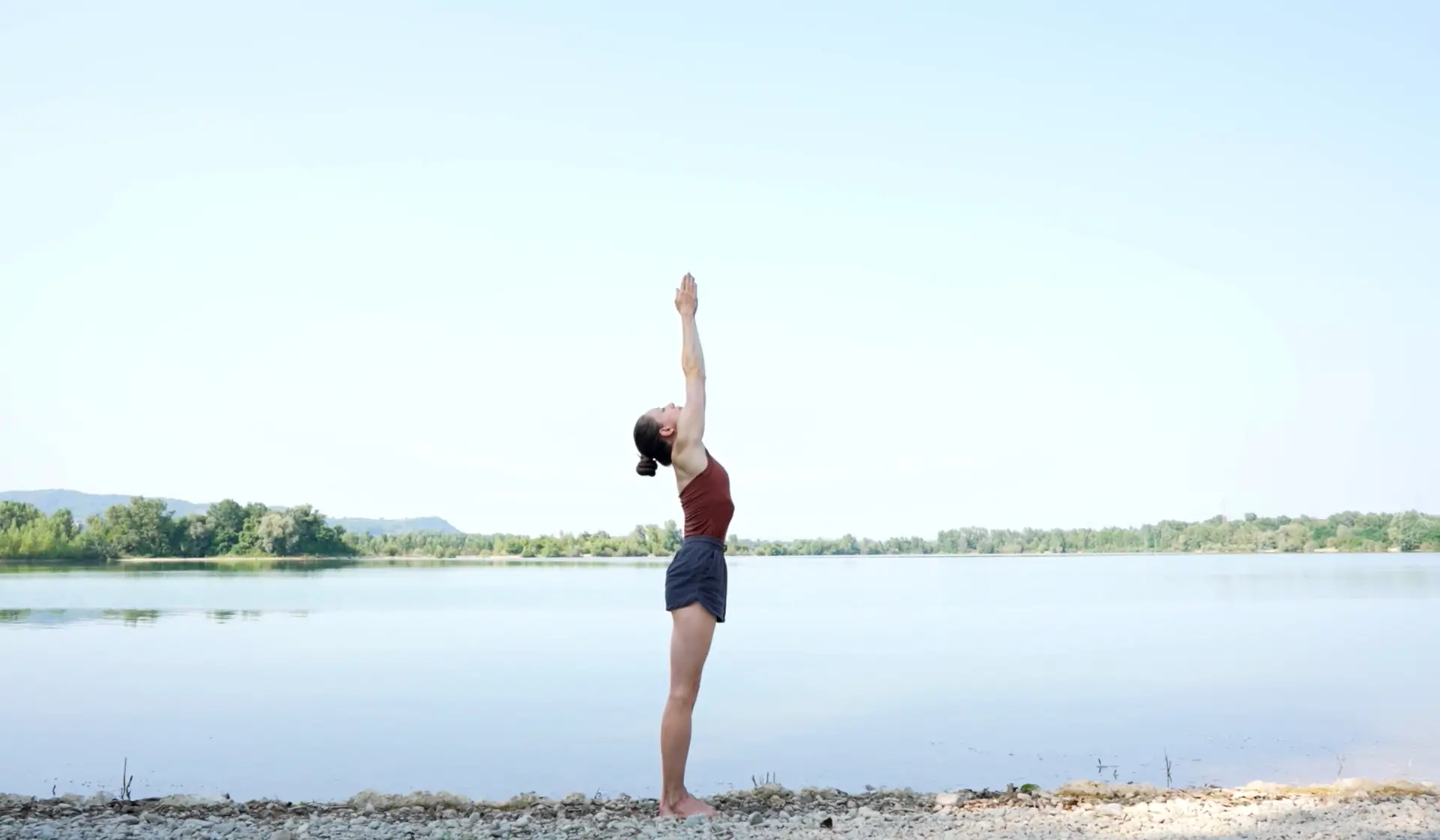
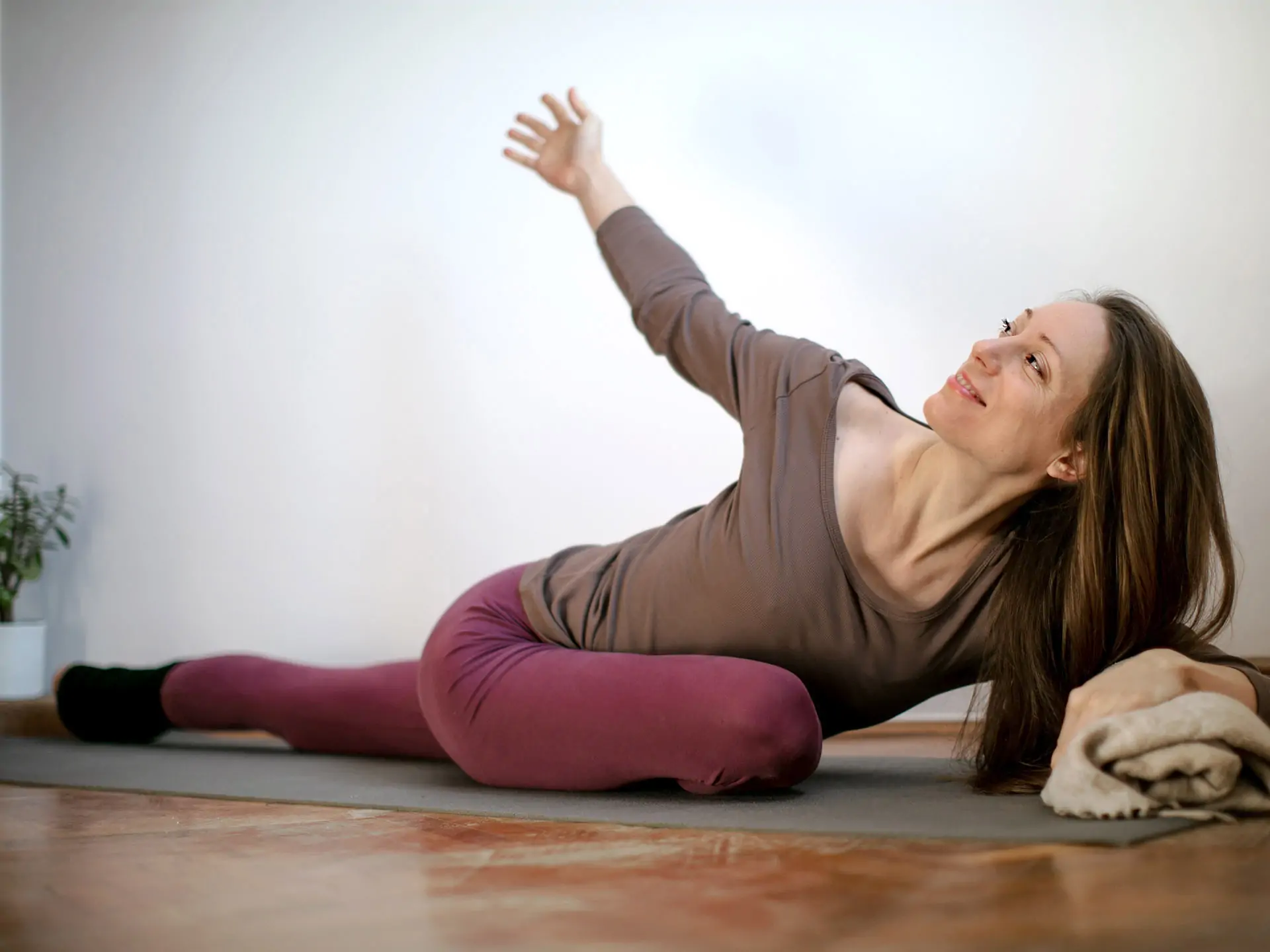
You are right, there is no “ordinary day,” mainly because of Nikola, who is different every day. It is incredible to watch him and marvel at a human being taking shape. I practice yoga, of course, lead online yoga and summer yoga classes on the beach, edit recordings, write, and follow a short online course. I cook, wash, tidy up, change nappies five times, and suddenly it is about 7 p.m. and time to “go to the beach.” The days pass quickly. During the other seasons we walk around the island more; now the sun is too strong.
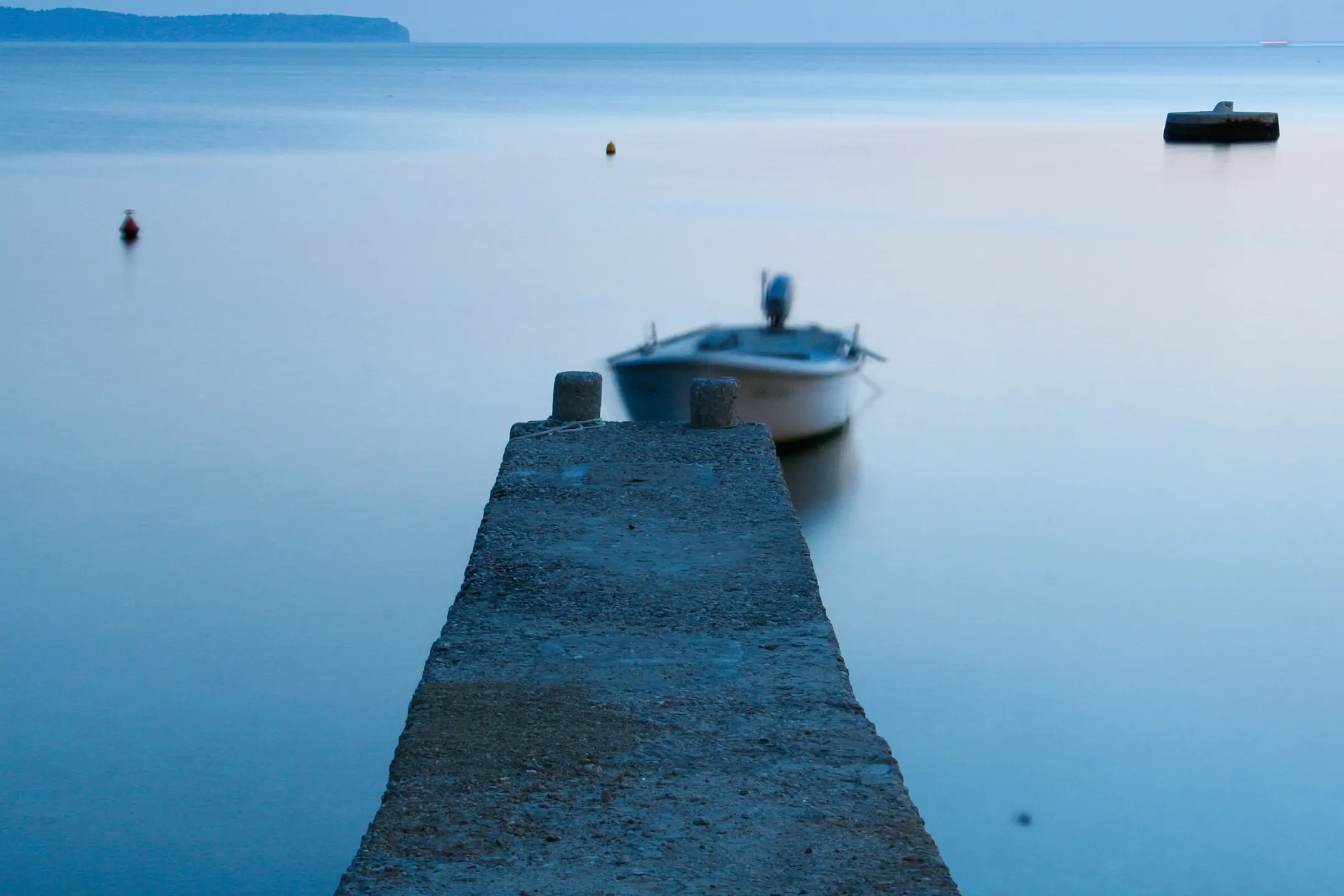
I adore these forests and vistas, the view of infinity and the sea horizon, the wind in the treetops, and the depth of silence that reigns when nature becomes still.
As a city girl, I cannot stop marveling at this nature and the uniqueness of every sunset, even though they are now almost part of everyday life. I am still grateful and do not take living here for granted. I want to open the door for others to come, too, which is why I organize yoga retreats and invite anyone who wants to practice yoga to come and drink in their own portion of deep peace.
What is it like raising a child there? Does little Nikola enjoy it? Do you ever miss city life?
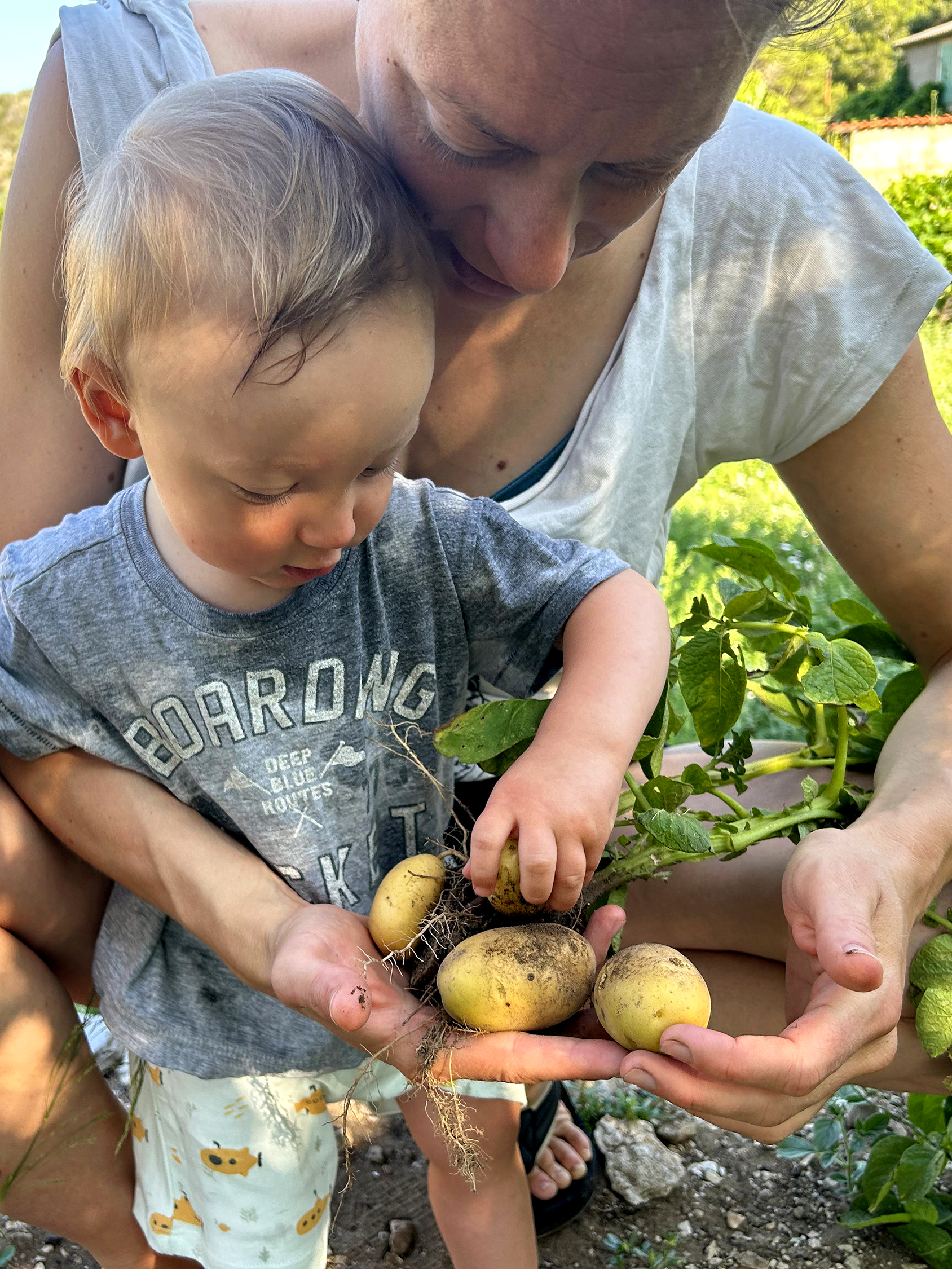
I was not afraid to come here with a small baby. From the beginning he has spent almost all his time outside. As soon as he could sit independently, he began playing in the garden, exploring, covering himself in mud, and putting snails in his mouth, which we stop him from doing. As Stipe says, “we follow him around and replant things” because he digs up everything. I think it is wonderful for him here, especially because Stipe and I are not stressed or rushing. We do not have to go anywhere or urgently do or buy anything. We are around the house and include Nikola in everything. When needed, we go to Komiza, Split, or Zagreb. That is also wonderful because he experiences other people, crowds, colors, and sounds that do not exist on the island. At the moment, I miss nothing about the big city. When we visit Zagreb, we spend time with friends, buy what we need, take a few walks, and return to nature. We probably would not socialize much more if we lived in the city because everyone has commitments and every arrangement takes time.
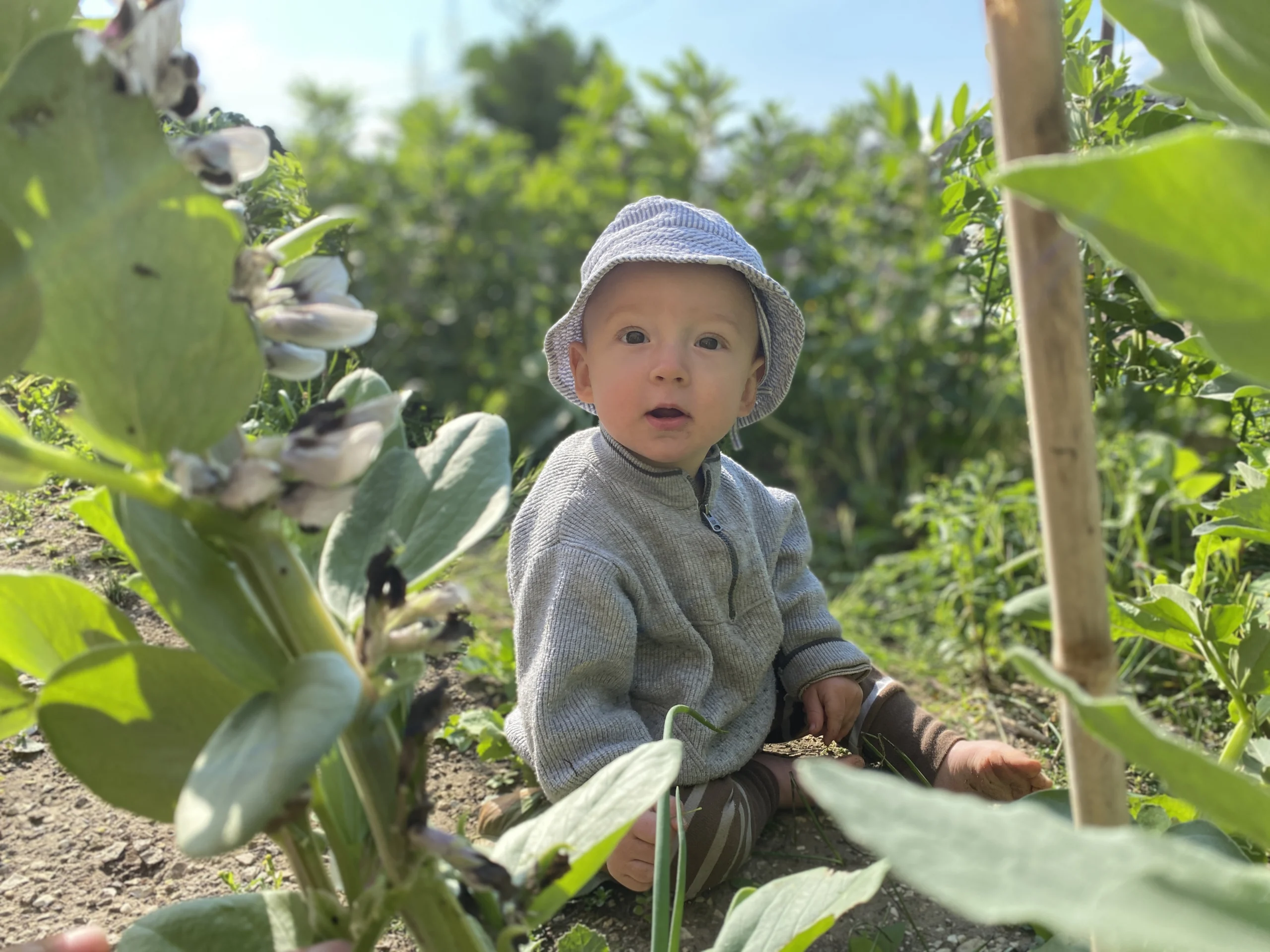
Nikola playing in the garden.
How did your path through life unfold, and what led you to teaching yoga?
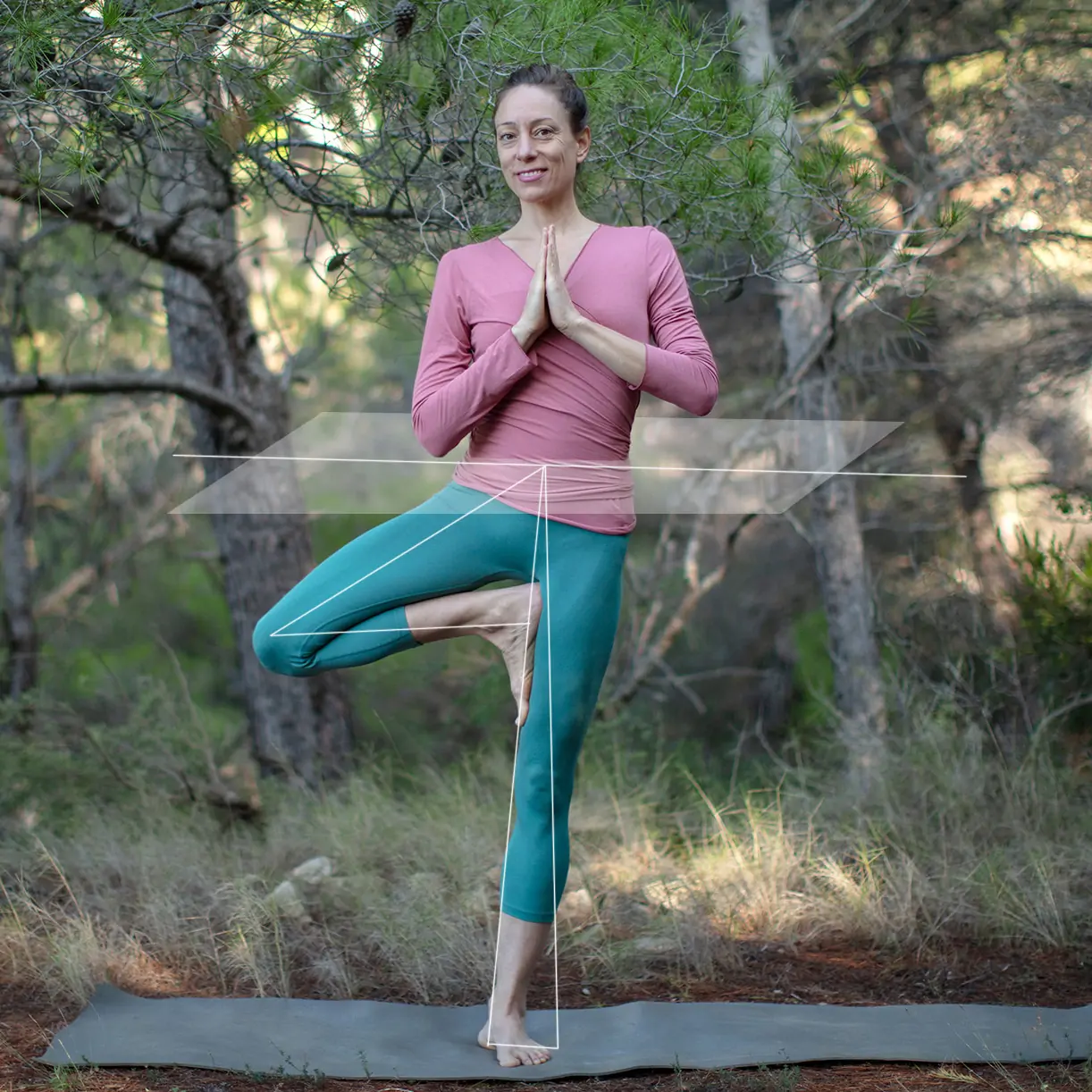
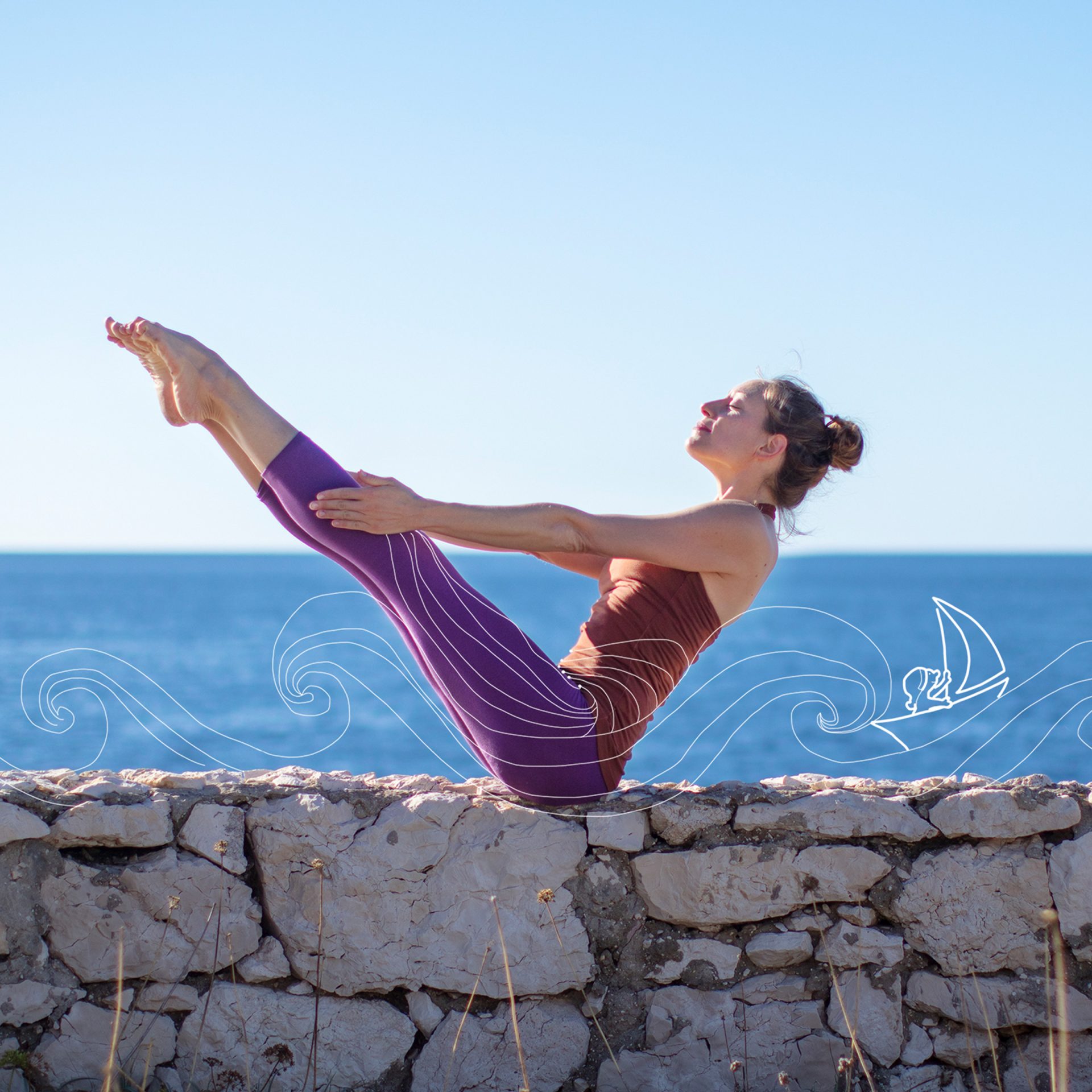
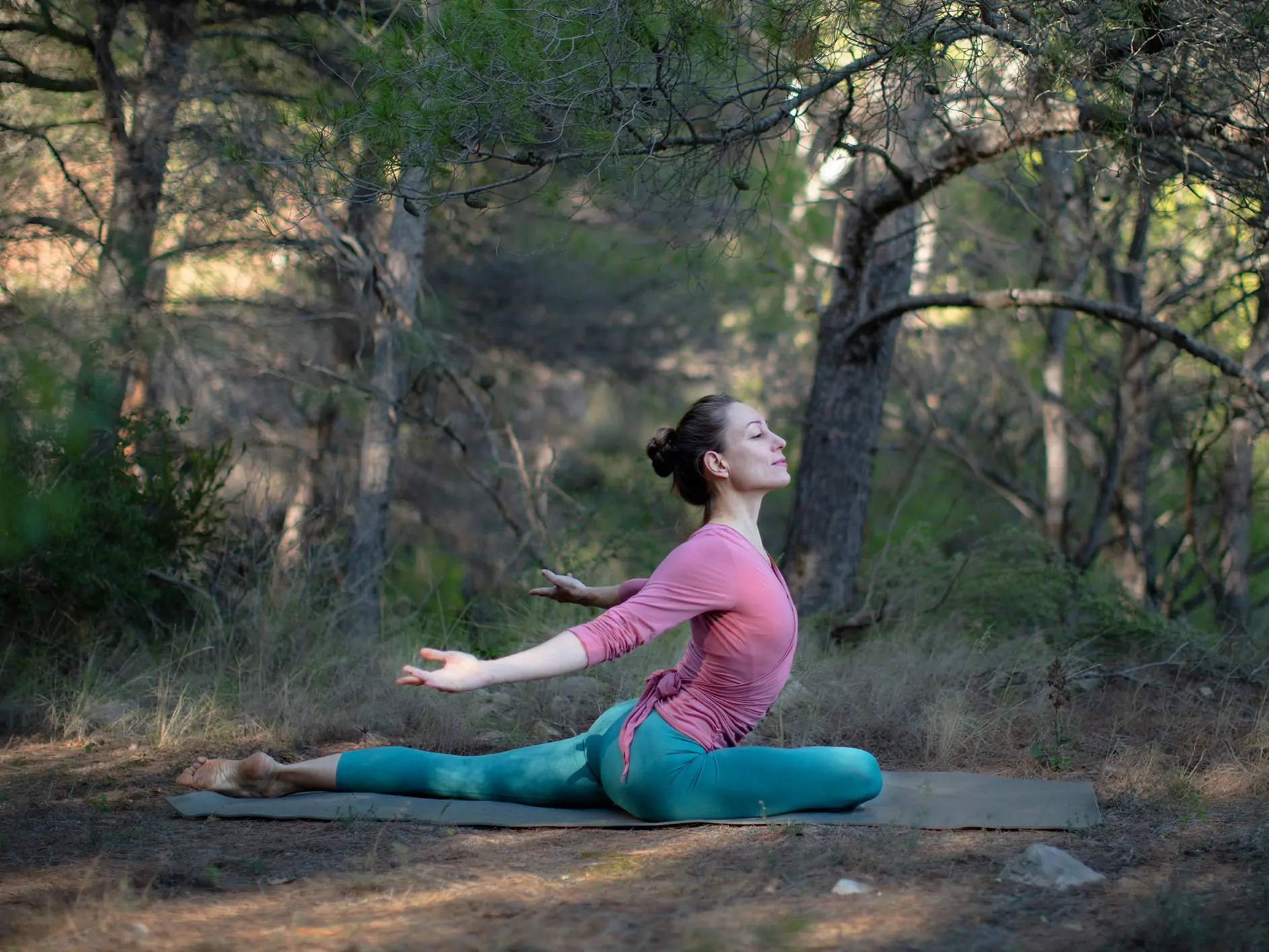
Yoga entered my life naturally and awakened my curiosity about the language of the body. Sensations, the body’s boundaries, energy, expression, and allowing emotions to move through the body opened an entire inner world through regular yoga practice. There was no choice for me. I continued studying and working more and more in yoga. I remain increasingly interested and fascinated by the body as a field of consciousness through which we live everything we know.
Through my own experience, I discovered and confirmed that thoughts and emotions are actually bodily sensations to which we react.
They arise in the body as energy* produced when the body responds to its environment according to what it has learned from previous experiences. This insight makes it clearer that what I feel is not “me.” It is the nature of the body itself. My personal specificity consists of my experiences, traumas, and beliefs. This is where change is possible: we can stop believing and reacting to what harms us and “allow it to pass through the body.” Change needs to be stimulated through the body; thinking about it is not enough. That is why we practice yoga. Breath and movement with full attention are the communication tools between thought, reason, and the body. After practice we feel good. The body has moved and stretched, released tension, found its breath, and stimulated circulation. When we feel good in the body, we are happy.
With time, it becomes easier to change our state because we know how to help ourselves, and everything we need is already here.
* Literally energy in the form of chemical and hormonal reactions, nerve impulses, and muscular energy, not in a mystical sense.
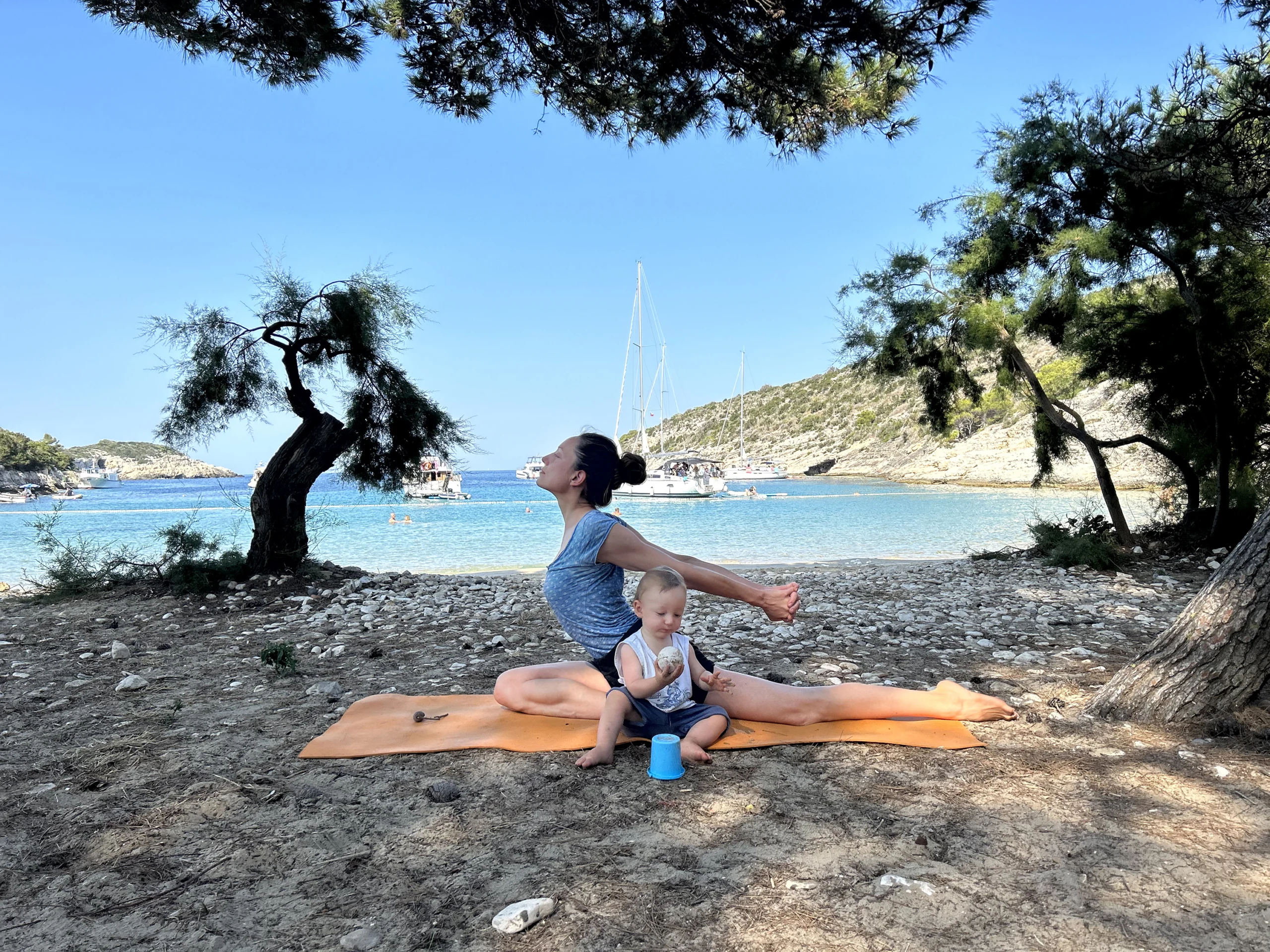
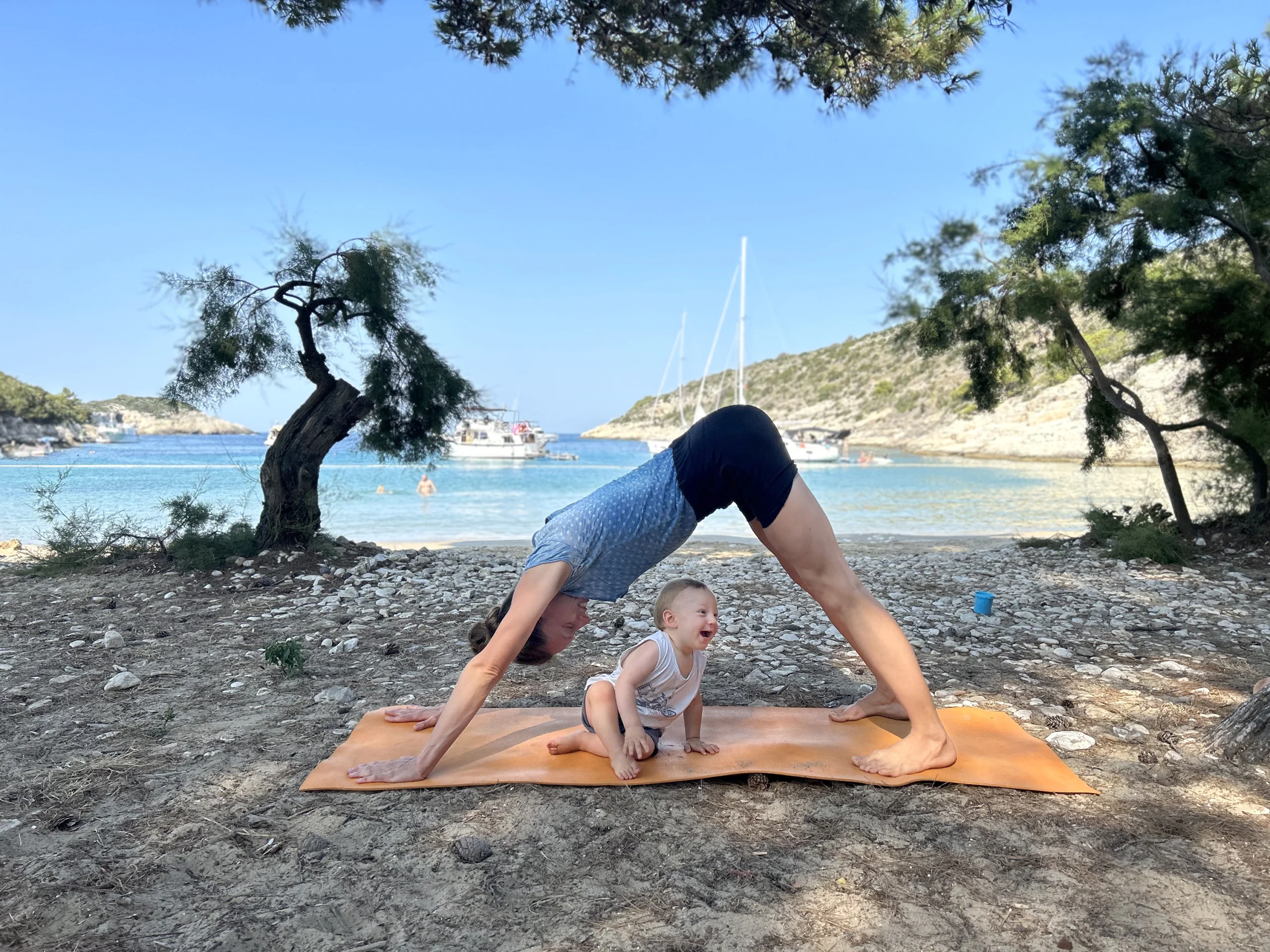
Mum practices yoga while Nikola does everything else.
If someone is interested, how can volunteers temporarily join your life on the island, and where do you need an extra pair of hands?
That is a good question. When a need arises, we look for someone specific. Most recently, we announced a call for a fanzine and searched for a person who would enjoy writing and working on a small Bisevo magazine. We would also like to create an illustrated guide to the island, for which we will need an illustrator, a designer, and a travel writer. We invited an architect friend to advise us about arranging part of the house. Of course, strong hands are always useful for carrying stones for dry-stone walls, moving barrels, or building.
The general rule is that everyone who comes should contribute in some way. We leave the volunteer program for the rest of the year because summer is too hot for concentration or physical work.
Art, yoga, environmental protection and conservation, cooking healthy, complete meals, organizing retreats… Tena, you are living my dream. Did you ever imagine such a life when you were, say, a teenager?
Thank you. You know, I did, but I did not yearn for it. I always knew that everyday life is the key and that perfection does not exist somewhere else, waiting for me once I finally solve this or that problem.
Only when we truly agree to be completely here, with 100 percent of our heart and love for what is present now, can we be happy. That is how I still try to live.
We do not need a deserted island and perfect conditions, a detox, yoga, or whatever else we imagine will “save” us. It is a decision: either I am here and I accept and love everything as it is, or I will never arrive in the here and now. There is a metaphor that prison is every place, emotional or physical, where we do not want to be. We create a prison for ourselves every time we refuse to be where we are. Let us begin by not believing thoughts that somewhere else is better and that we would finally be happy if only we were there. Instead, relax with what is here: these problems, these people, these feelings. Then we naturally do what we can to be socially active and take action, but from the position of having accepted the present situation rather than acting from aversion.
Could you share an idea for a summer breakfast, lunch, and dinner? What grows in your garden?
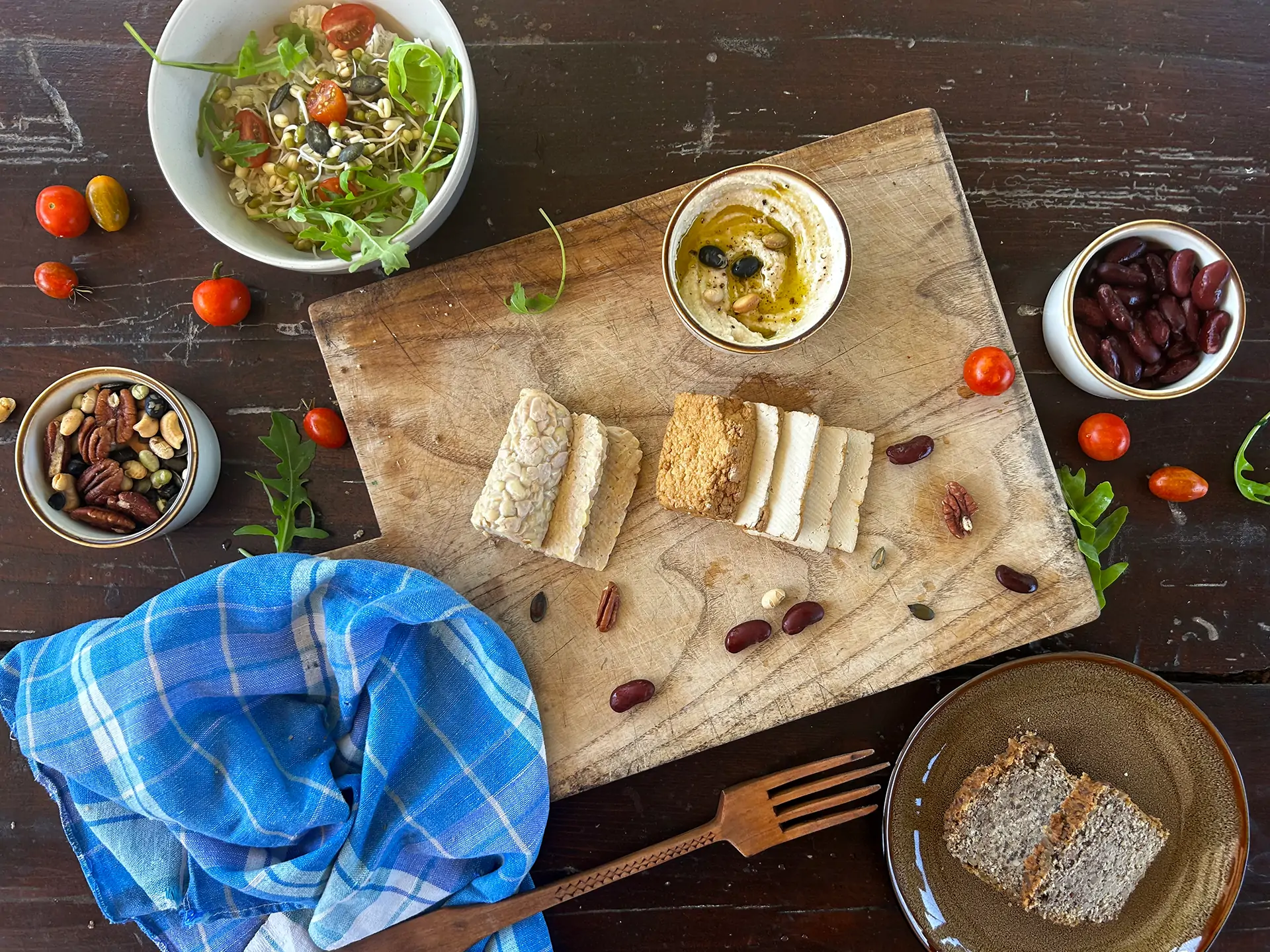
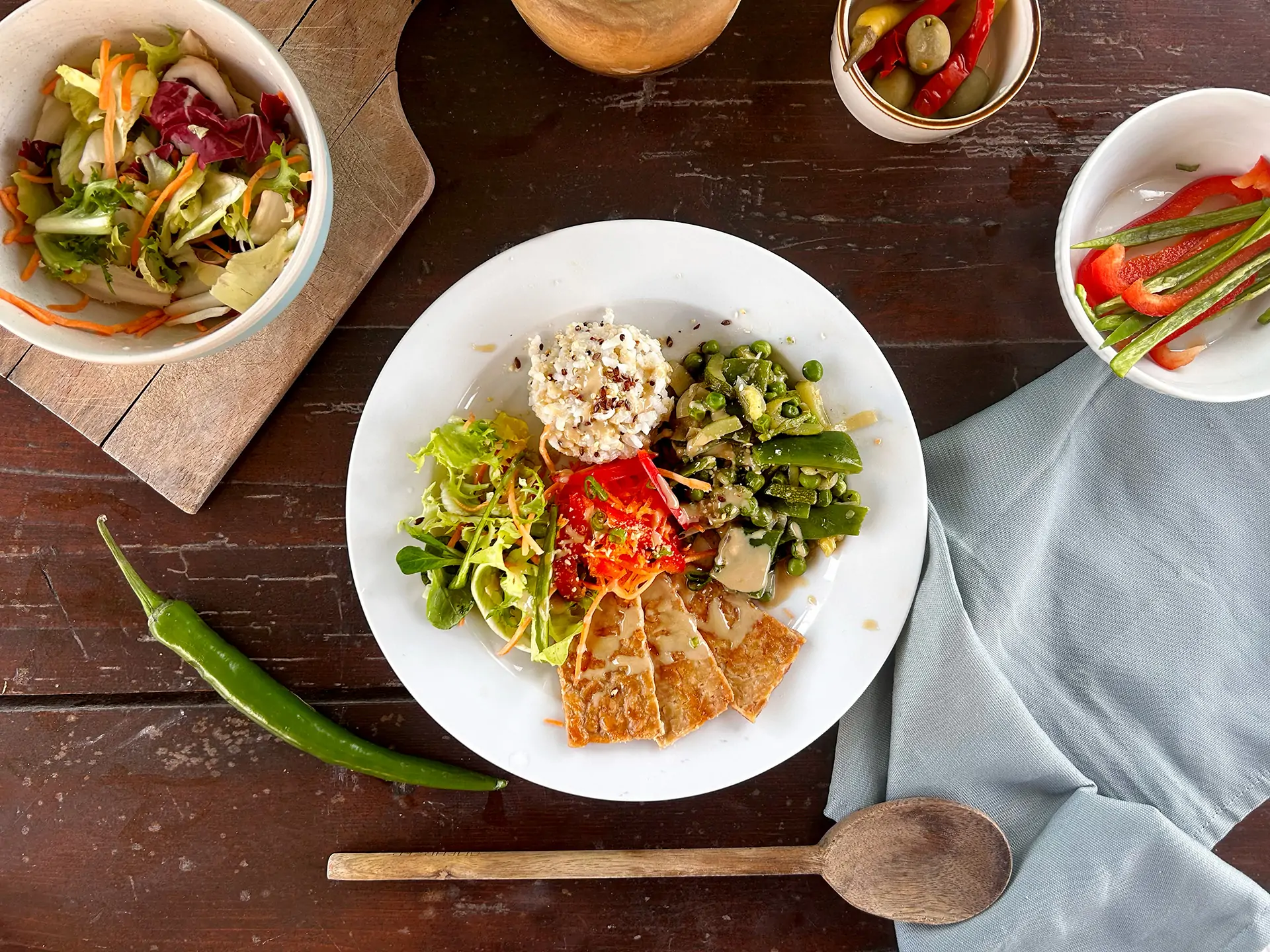
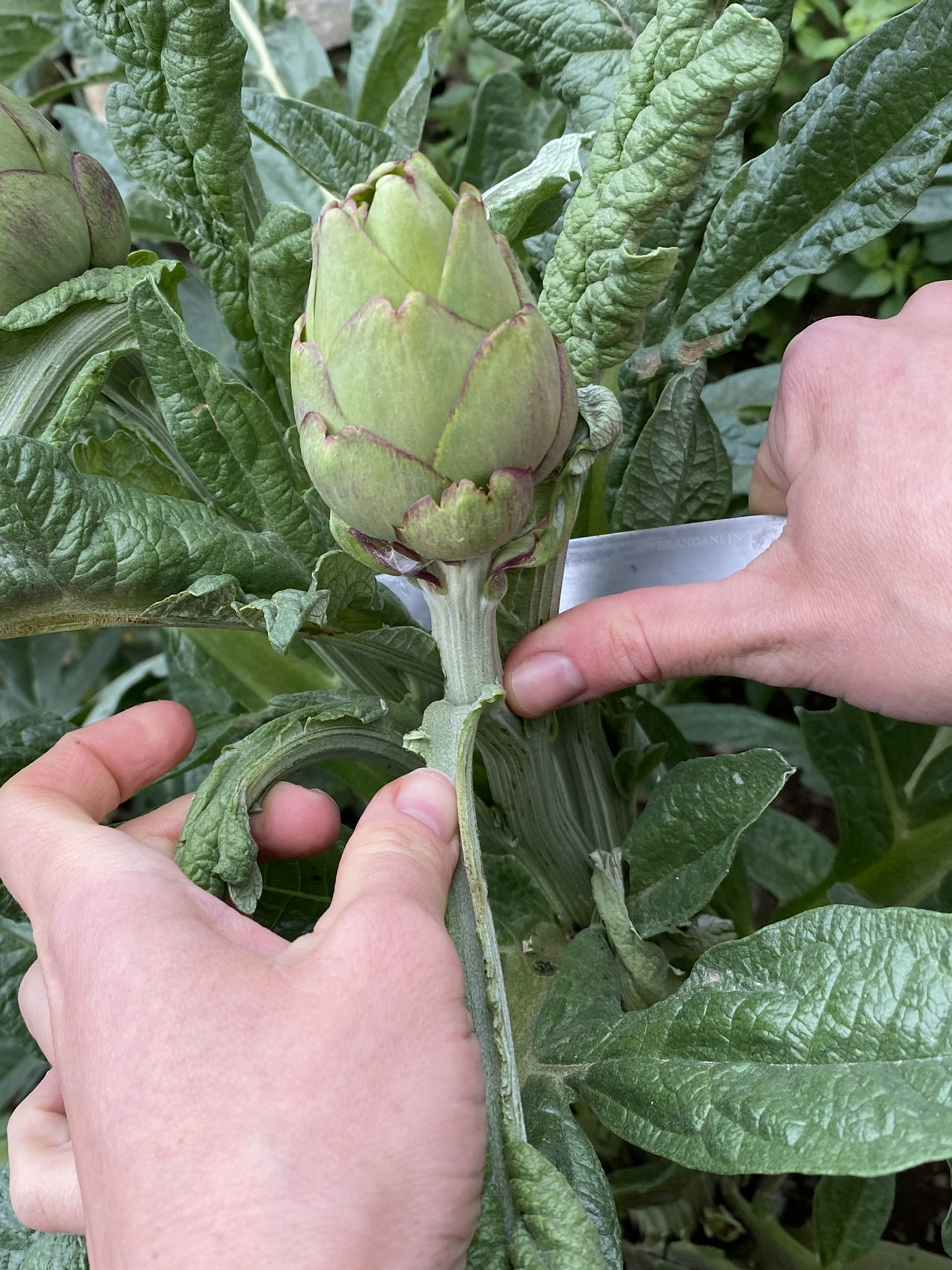
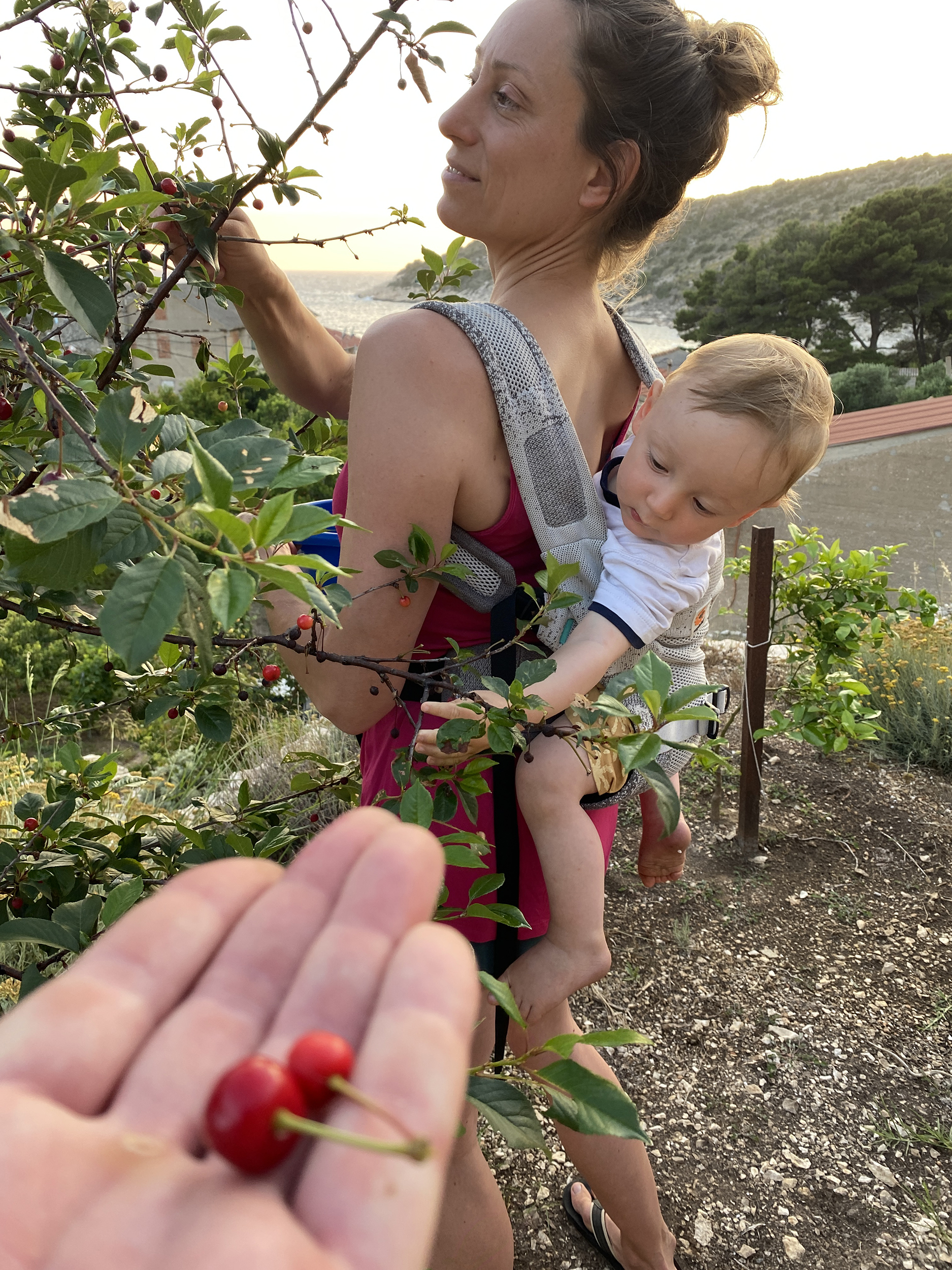
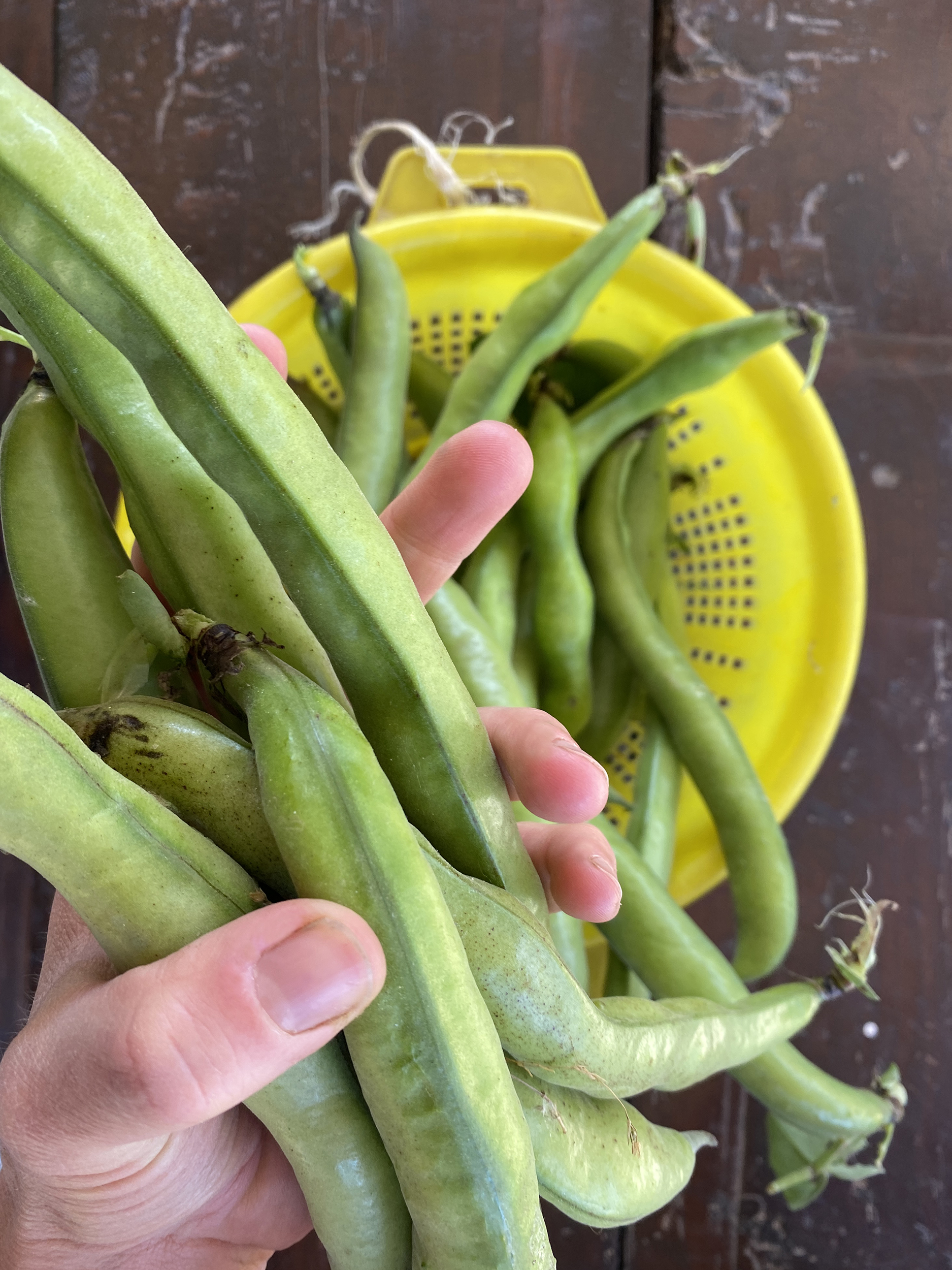
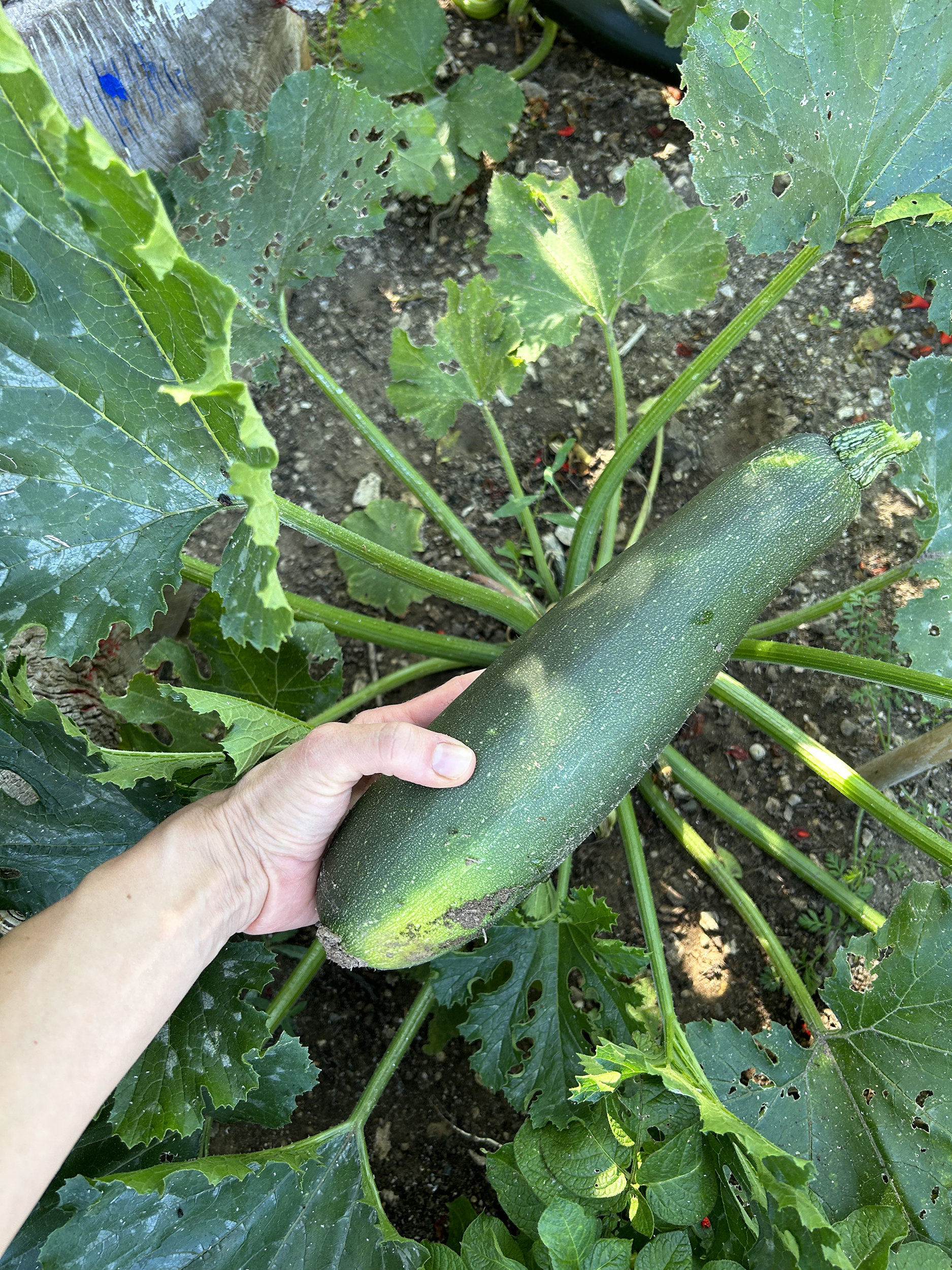
Nature is perfect; we only need to follow it. At this time it offers vegetables that immediately clear and cool my head: cucumbers, courgettes, tomatoes. They feel wonderful on summer days. Rich salads work for breakfast, lunch, and dinner. By rich, I mean adding legumes and a delicious dressing, eating them with hummus, and serving chickpea or lentil patties on the side. A little cheese, a few eggs… We cook fewer soups in summer and naturally fry and bake less. Fruit is also perfect at this time, but it is important to eat it in separate meals. We recently had sour cherries, small plums, and three little apples. Every day I inspect the figs because they may be ready to taste in a few weeks. I can hardly wait for Nikola’s first encounter with a juicy fig.
I read that almost 20 years ago you spent several months in a Buddhist meditation center in Sri Lanka. What was that experience like for you?
It was a crucial, transformative experience that directed my life. I arrived like an empty, unfeeling sheet of paper and left inspired. I learned a great deal precisely because I was deeply wounded. I had unexpectedly lost my mother two years before the journey and was still in shock. Curious and open, I wanted to learn and feel what was being taught by people who seemed carefree and in whose presence I was never judged, only completely accepted, regardless of the stone I carried in my heart. The knowledge of the Buddha’s teaching came naturally, as did the experiences, images, and friendships I gained there.
Because of that journey, I still try to apply and live Buddhist philosophy. I deeply believe that there is no escape from pain and painful experiences, but that peace with them is possible.
What would you advise someone who wants to live their dream, but whose surroundings find that dream strange? Have you been in that situation?
Yes, and I am still in that situation now.
Local people do not understand the need for yoga and meditation. It is unclear and unfamiliar to them, and they look at me with a little ridicule.
That is an excellent question, because I will again connect it with the biopsychosocial model. When we feel this way, something impersonal is happening: a complex need to please our environment in order to be accepted, even at the price of losing our autonomy. You are not alone if you feel this. It is a global pattern that Gabor Mate has recently discussed widely: we sacrifice authenticity because we fear other people’s opinions and criticism. We need to hold our truth and expression regardless of what anyone thinks. We will naturally consider well-intentioned criticism, but if we are doing something that harms neither ourselves nor another person, there is no reason not to give ourselves to it fully, proudly, and decisively. Like-minded people always exist. If they are not nearby, they are with us in spirit, and today they can also be reached through the internet, which opens doors to similar views, connections, and virtual support. Sometimes it is enough to know that others live the values we value and that we can rely on this. As Oscar Wilde put it: “Be yourself; everyone else is already taken.”
If I Were Somebody…
(the question I ask every interviewee at the end: what would the world look like if Tena created it, what would there be more or less of, and so on)
Somebody with a capital S who can influence change in the world?
I would work to introduce education about self-knowledge into elementary schools through any model suitable for that society, such as meditation and psychology. Everyone involved in raising and educating children and young people should also be required to “work on themselves,” because they do not teach only geography and mathematics. They also model relationships and problem-solving, which young people then copy. I think this small step could create great change. Educators and educational institutions should be refuges of understanding and support for children rather than places they flee or where they must fight.
Learning, education, and science should be encouraged in young people and become a joy, so that every curious pair of eyes learns to love study and can develop in the direction that genuinely interests them.
We all naturally seek knowledge and enjoy being successful, capable, and productive. We should nurture that in young people.
Thank you for the questions. I hope I conveyed the image and feeling of life on Bisevo.
Tena, Stipe, and Nikola
The interview is available on the website dasamjanetko.com