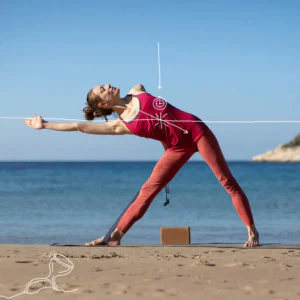
Axis of the Present Moment
Number and Duration of Yoga Lessons:11 recordings • total 8 h 45 minIncludes: 75 min, 4 x 60 min, 5 x 40 min and 10 min
Techniques that make the spine a strong axis of the body, holding us upright while the periphery relies on and relaxes around its central support.
It's possible to order a single yoga lesson from this bundle.
The Tena Yoga Method
How I guide this package
Every class in this package has a clear intention. I guide you through the pose, attention, and breath so you understand what you are doing and find your own balance of strength, mobility, and ease.
More on the lessons

YOGA FOR THE BACK – SPINAL STABILITY
I like to say that the spine is the axis of the present moment. It is a very good metaphor: our life and the time and space we inhabit truly revolve around this axis. The body is always here in the present moment, and the spine is the central nervous system through which we become present. It is the body’s principal energy channel. When we align and position it well, we can carry our presence, agility and openness with ease. With great respect, this month we stabilise, lengthen, decompress, strengthen and mobilise the back, aiming to create length from below and uprightness above. Maintaining this stable yet adaptable column is lifelong work. A comfortable, healthy spine is the foundation from which we can build our health. We therefore strengthen the muscles along it, mobilise and invert it, connect the body into a whole through it and return to the present moment.
Yoga therapy for:
- back pain and tension
- torso strength
- connection throughout the body
- opening the chest
- upright posture
- spinal strength
- spinal mobility
- endurance and strength
CONTENTS OF THE RECORDING PACKAGE
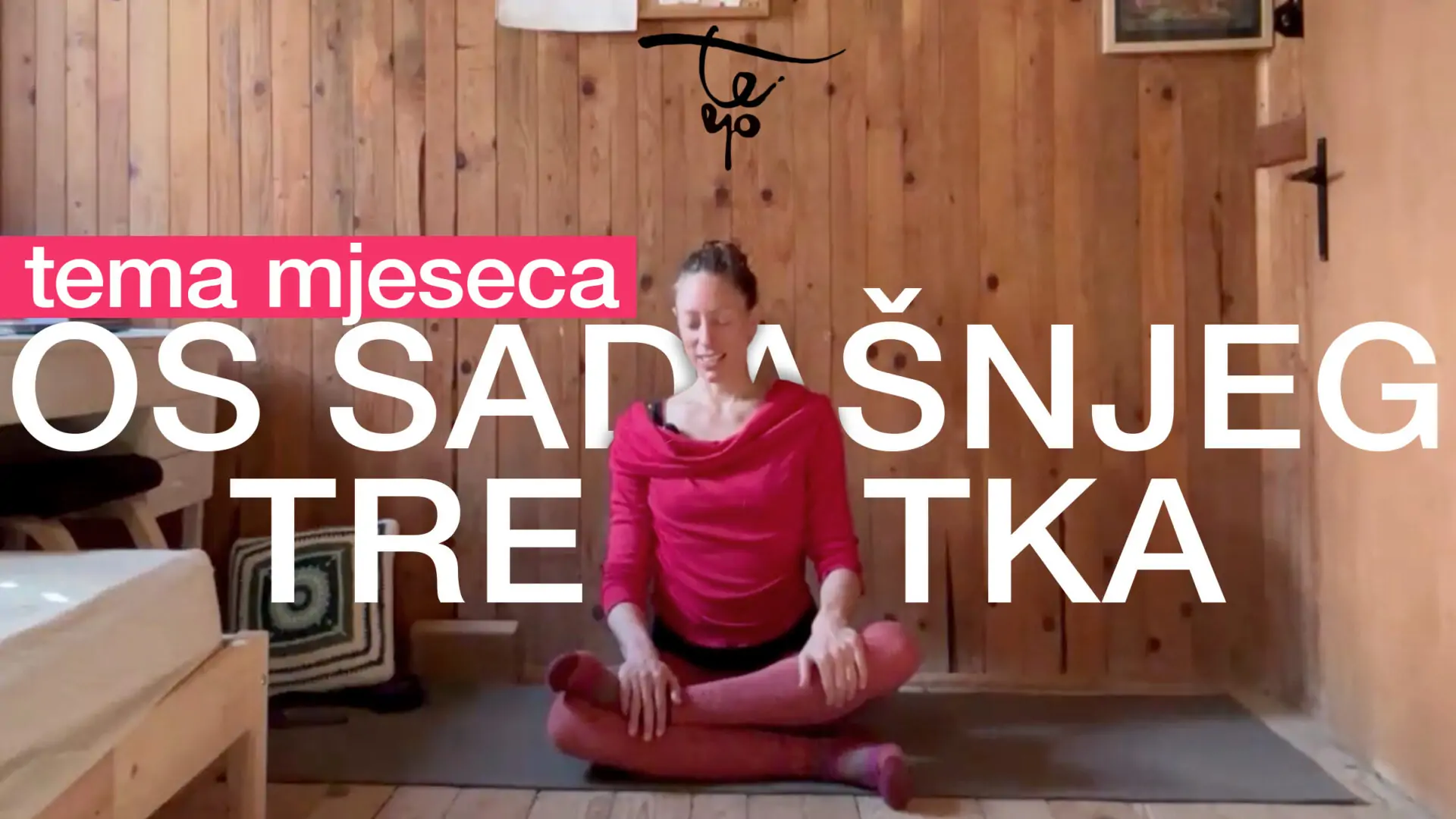
INTRODUCTORY TALK AND YOGA CLASS ON THE MONTH’S THEME – 75 MIN
AXIS OF THE PRESENT MOMENT
The month’s title refers to several aspects. First, it points to the axis within the body that supports everything, holds us upright and around which everything revolves. Through asanas, we aim to build this axis so it is stable at the base and long and open above, following what I call the principle of effortless uprightness. In this way, we carry ourselves openly and upright without strain.
This is an attitude, not merely a posture or appearance, but a relationship with life. Relationship determines how we touch something and how we are present with it. Effortless uprightness is a way of carrying that relationship, bringing openness, calm and security into situations.
The idea of the spine as the axis of the present moment also means returning to a foundation within the body where there is no judgement or prejudice. We return to the present moment through the back of the body and the deep support we received as a small baby. The support of palms beneath the sacrum returns us to that basic holding, from which our deep trust in ourselves and life can grow.
Through the asanas, we enter the body and practise a thorough meditation on awareness of the spine and the mobility of its segments. We then move through exercises that strengthen the pelvic floor and legs, together with rotations around this straight axis of the present moment. Several hip-opening asanas help the base open and align so it can become a home for the spine.
Mindful journal: Feel into the question: who am I before I was born, before experiences and relationships conditioned me? Who am I when I release my ideas about myself and about how others see and experience me? Describe what is conditioned and what belongs to your being in its honest existence.
40 MIN
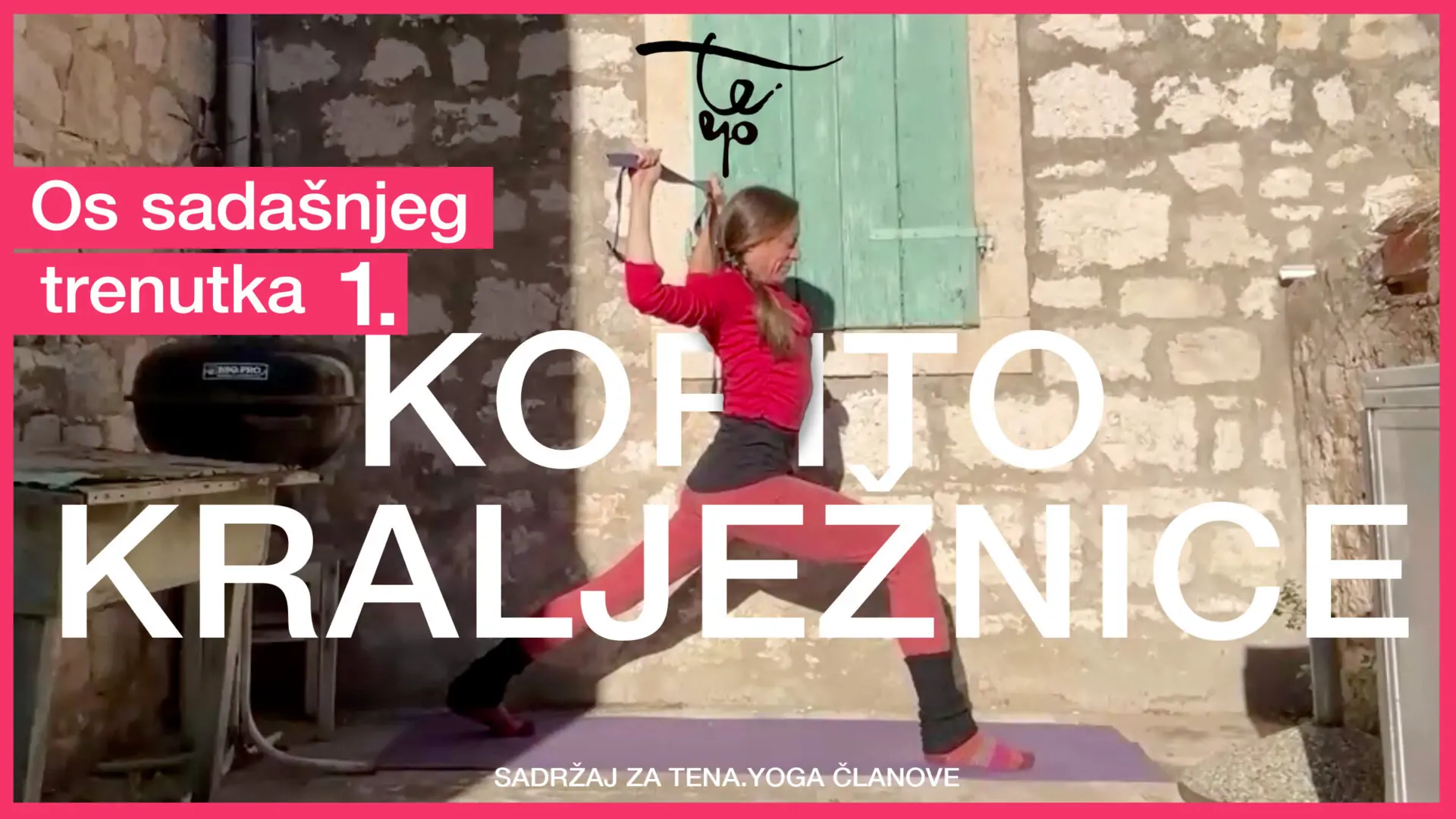
1. THE SPINE’S RIVERBED
We begin in a wide squat, arranging the spine as a straight line along which we rise and lower. The pelvis is tucked, ribs drawn in and chin lowered, while our attention observes the spine from behind as the axis of movement. In this way, we connect with the axis of the present moment and strengthen the foundation from which it is built.
The class continues in a tone of calm, straight lines, emphasising the stabilising muscles of the pelvis and legs. We practise several sun salutations and hold a few asanas. In the standing asanas, we ground thoroughly and maintain stable contact with the floor, which is reflected in the strength of the pelvic floor. We again practise and revisit Malasana as a foundation and riverbed for the spine. Remain at a depth available to you.
At the end, we relax and return the breath to depth and balance.
Several times throughout the class, we remember to return to the spine, the calm and stable axis within us, and connect with its quiet, non-judgemental truth.
Mindful journal: What can returning to the foundation of your being teach you or help you remember?
60 MIN
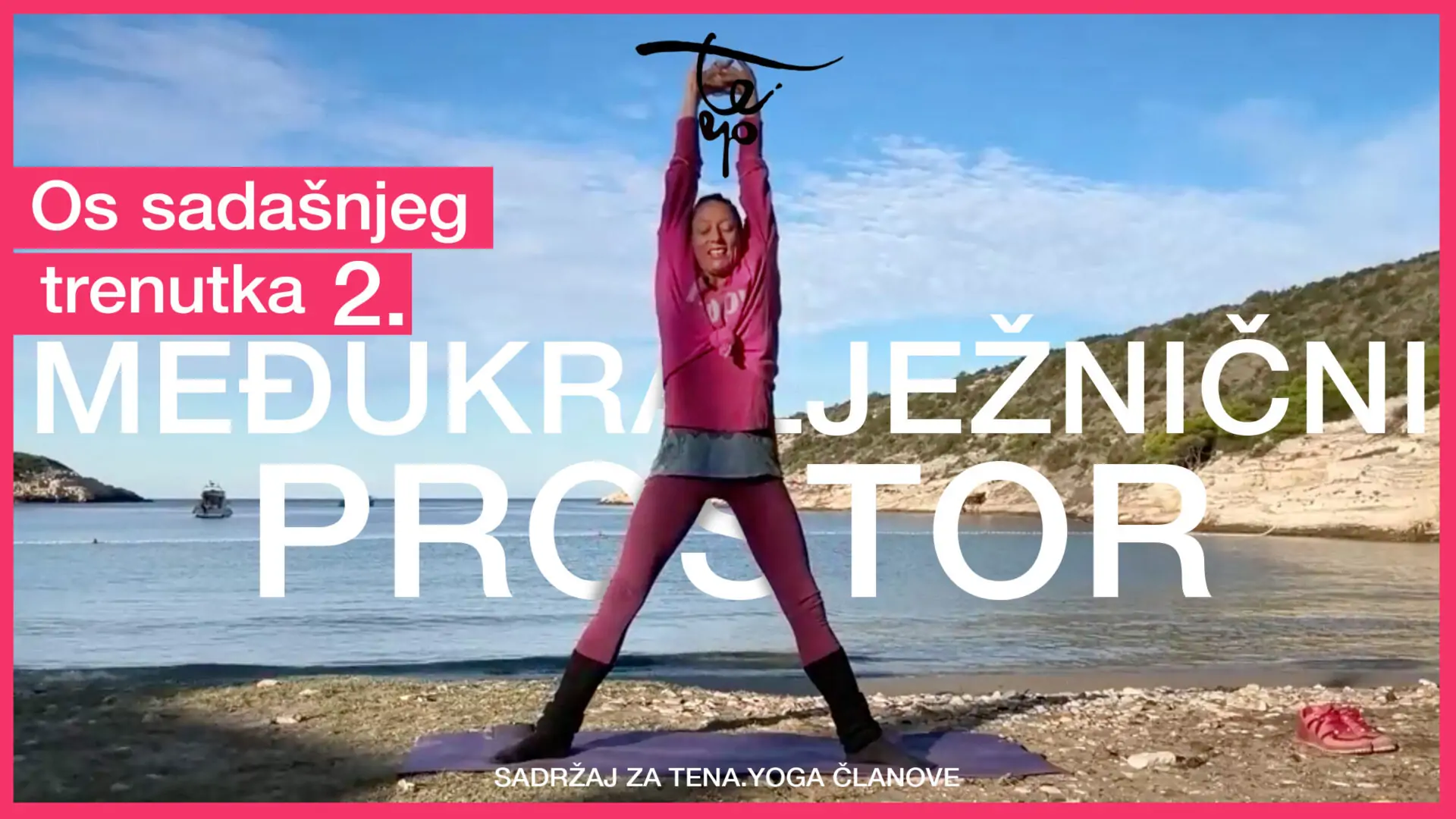
2. SPACE BETWEEN THE VERTEBRAE
We begin with a short centring practice using the breath and spine.
We connect the breath so that the inhalation travels upwards along the spine and energetically lengthens it, while the exhalation descends towards the pelvis and grounds it.
We carry this principle through the class and emphasise it through a movement in which the arms rise and pelvis descends on the inhalation, returning on the exhalation. More precisely, the inhalation lengthens the spine and expands the intervertebral spaces by moving its segments in two opposing directions. We enter a calm rhythm of sun salutations and then practise several asanas that emphasise creating space between the vertebrae.
The class also strengthens the glutes and other pelvic muscles. It is calm and stable, bringing determination as well as joy because we are doing something so beneficial for ourselves.
We return to the open awareness of the body. Through yoga, we not only honour what is here, but transform it into an even more open awareness. An awareness that notices greater detail and is more ready to accept and release with ease, without attaching to thoughts and states.
Mindful journal: Feel the spine as the axis around which everything else revolves. Several times during the day, close your eyes, feel this axis and connect with it. Notice what else can fall away when you direct your attention there.
MINDFUL SLOW FLOW CLASS – 40 MIN
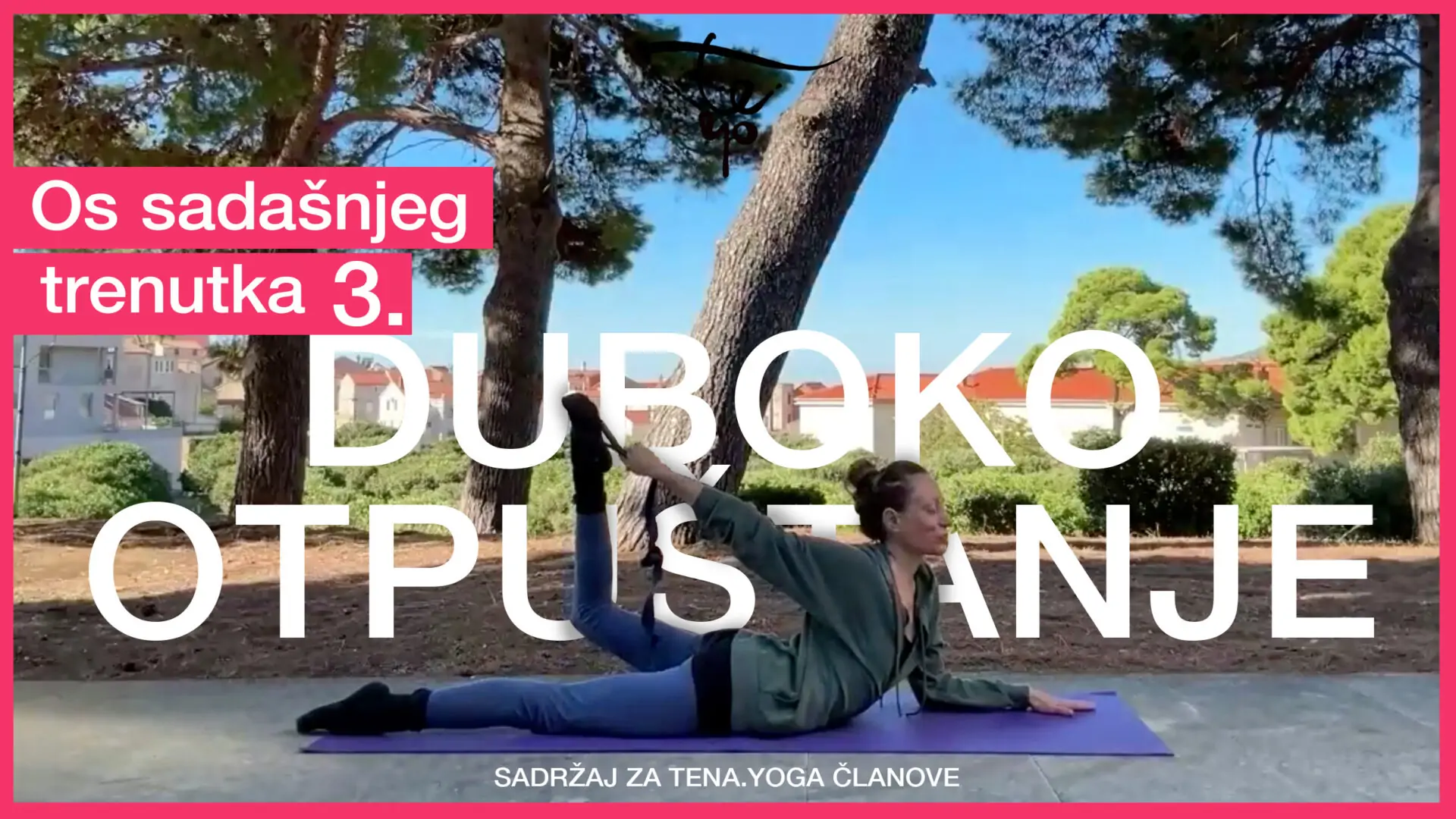
3. DEEP RELEASE
We begin lying on the abdomen and relax the body and belly into the floor. The breath becomes calm and deep, reaching the lower abdomen. Several positions open from here to mobilise the spine, and we practise them with great gentleness and precision. Between them, we rest in Balasana, where we return to the feeling of the pose lengthening the muscle fibres of the lower back.
After turning onto the back, we move through several relaxing rotations that allow deep stress to leave the body. We direct the breath towards the lower abdomen without forcing, relaxing so the breath can enter us and releasing a slow exhalation through the mouth.
Throughout the class, we move towards releasing deep contraction and stress from the back, pelvis and lower abdomen by breathing into this deep region and massaging the spine. Enjoy, gently rock into your body and rest in present body awareness.
Mindful journal: Which thought repeats itself? Become aware of the idea it carries and the energy in the body that accompanies it. A thought is part of the body’s energetic state.
40 MIN
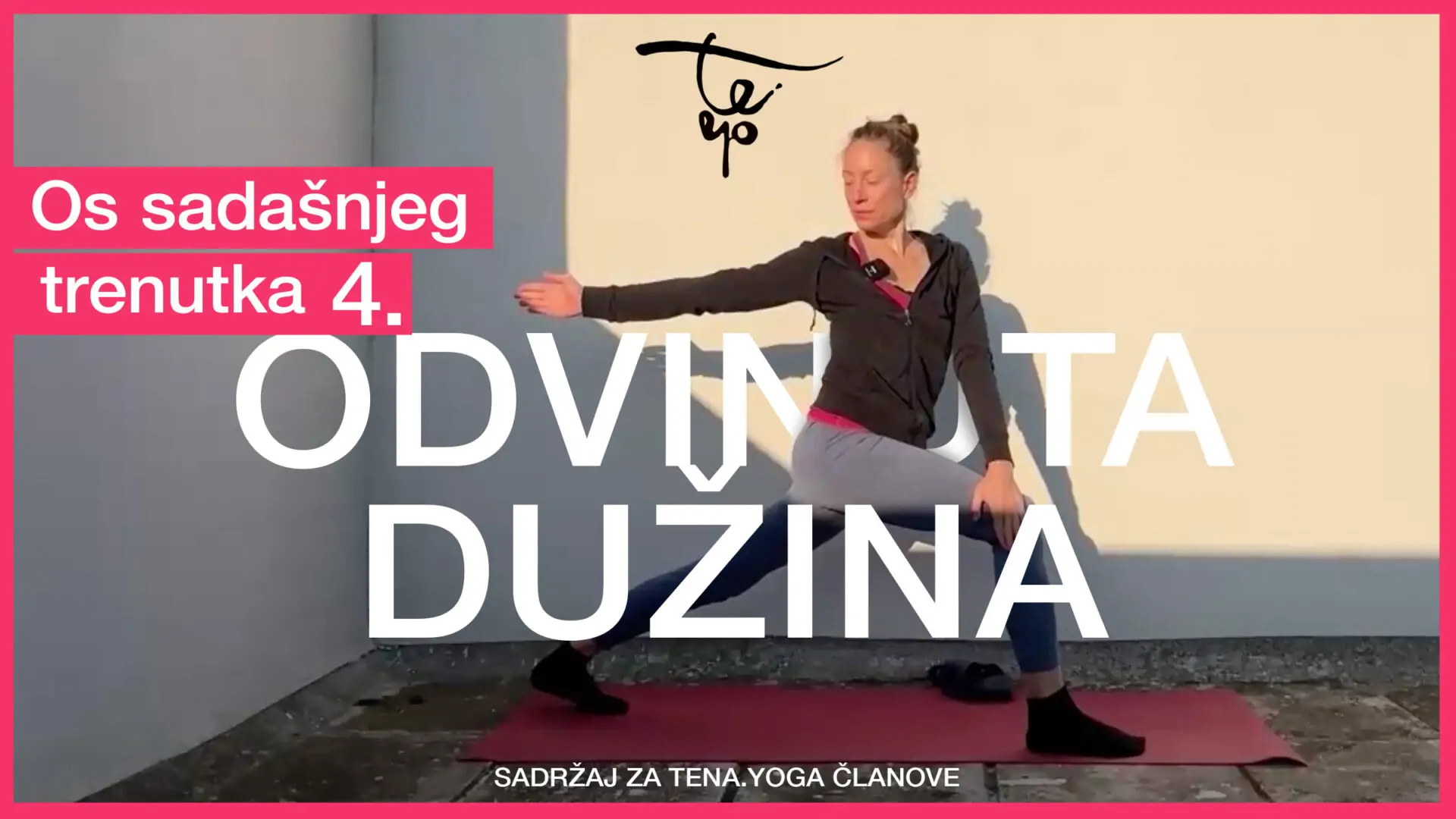
4. UNWINDING INTO LENGTH
We lengthen the axis that we recognise as support within the body, allowing energy to flow freely upwards. In this class, we unscrew the back through spiralling rotations. We practise dynamic and static rotations around the central axis, deepening the twist with the exhalation and lengthening the spine with the inhalation.
Through several positions and movements, we awaken the energy of the central channel by relying on its axis.
The class combines short dynamic segments with more static holds. Work within your own measure, slowly and precisely. I think the intention of the class will be clear.
Mindful journal: Remember a time in your life when you held a stable, determined position that you stood behind, and call that feeling to mind. The feeling of relying on yourself and your truth, with a clear YES and NO.
60 MIN
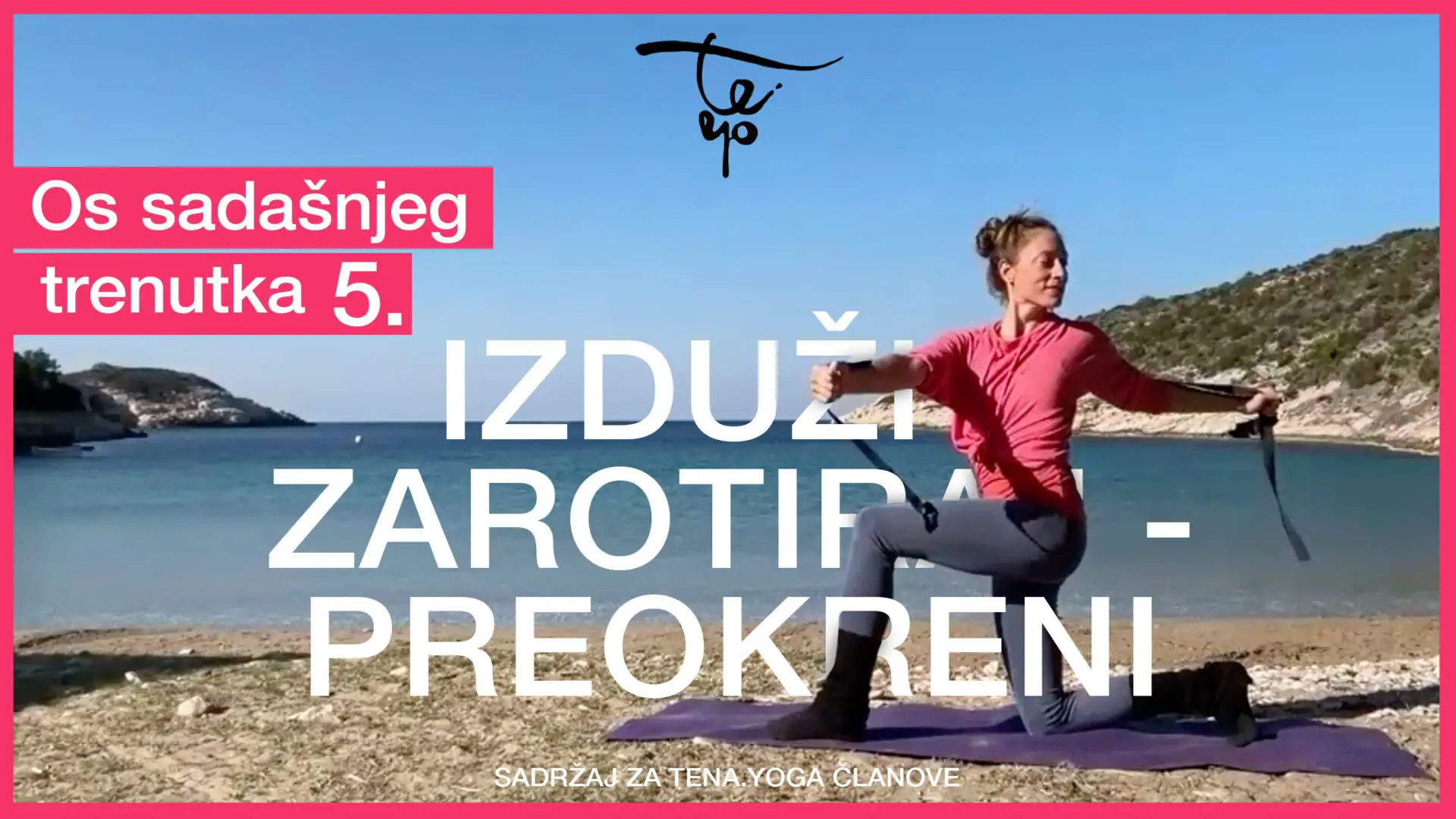
5. LENGTHEN – ROTATE – INVERT
We alternate these three principles of spinal movement throughout today’s class from different bases. Lengthening the spine means letting the pelvis descend while extending the arms and crown upwards on the inhalation, pressing the breath into the spaces between the vertebrae. Rotation follows what we practised in the previous class: dynamic turns around the spine’s upright axis. Inversion means turning the spine upside down after these two movements, decompressing the vertebrae and once again pressing a calm, deep inhalation into the spaces between them.
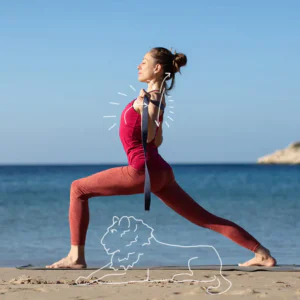
We arrange these directions of movement from four bases and repeat them several times: a wide squat, Warrior I, a narrow squat or Utkatasana and Low Lunge. It is worth investing a little effort for a short time, naturally with the clear intention of finding our long axis and free-flowing energy through it.
Mindful journal: Place one issue that troubles you in the calm space in front of you, creating the conditions to look at it with non-judgemental eyes. From a spacious perspective, notice how it feels and resonates. See unrest from a wide angle and a calm viewpoint, without running away, fighting, hiding or avoiding it. How does it feel to approach what triggers you in this way?
40 MIN
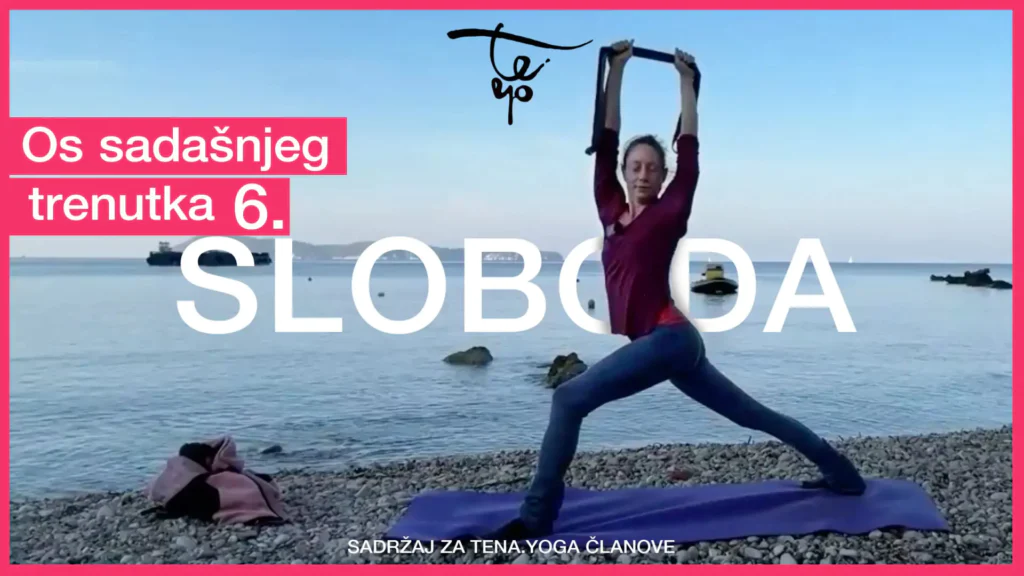
6. FREEDOM
What is the difference between contraction and tightness, and spaciousness and freedom? It is the difference in the quality of our life. The greater the part of life we spend in the sensations and mindset of spaciousness, the easier and better life becomes regardless of what is happening. Do you think this hypothesis holds true?
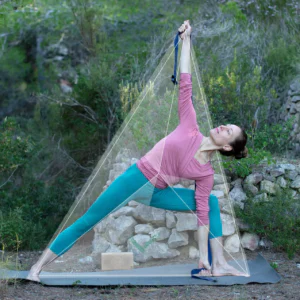
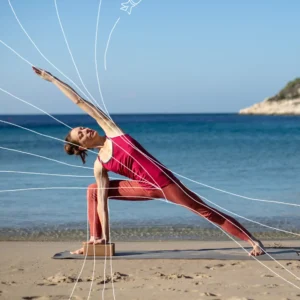
To connect this with today’s class, we create room in the joints of the spine, the centre of the nervous system and of energetic contraction. We practise a mixture of spinal movements: rotations with one shoulder up and the other down, Cat-Cow movements from several bases and inversions. We warm up with sun salutations and hold several asanas, including Revolved Triangle, for which you should prepare a block. We finish with a small Bridge and Viparita Karani.
Mindful journal: Explore the literal difference between tightness and freedom in the body and how it affects everything else in life. How do you feel when the body is more spacious and free?
60 MIN
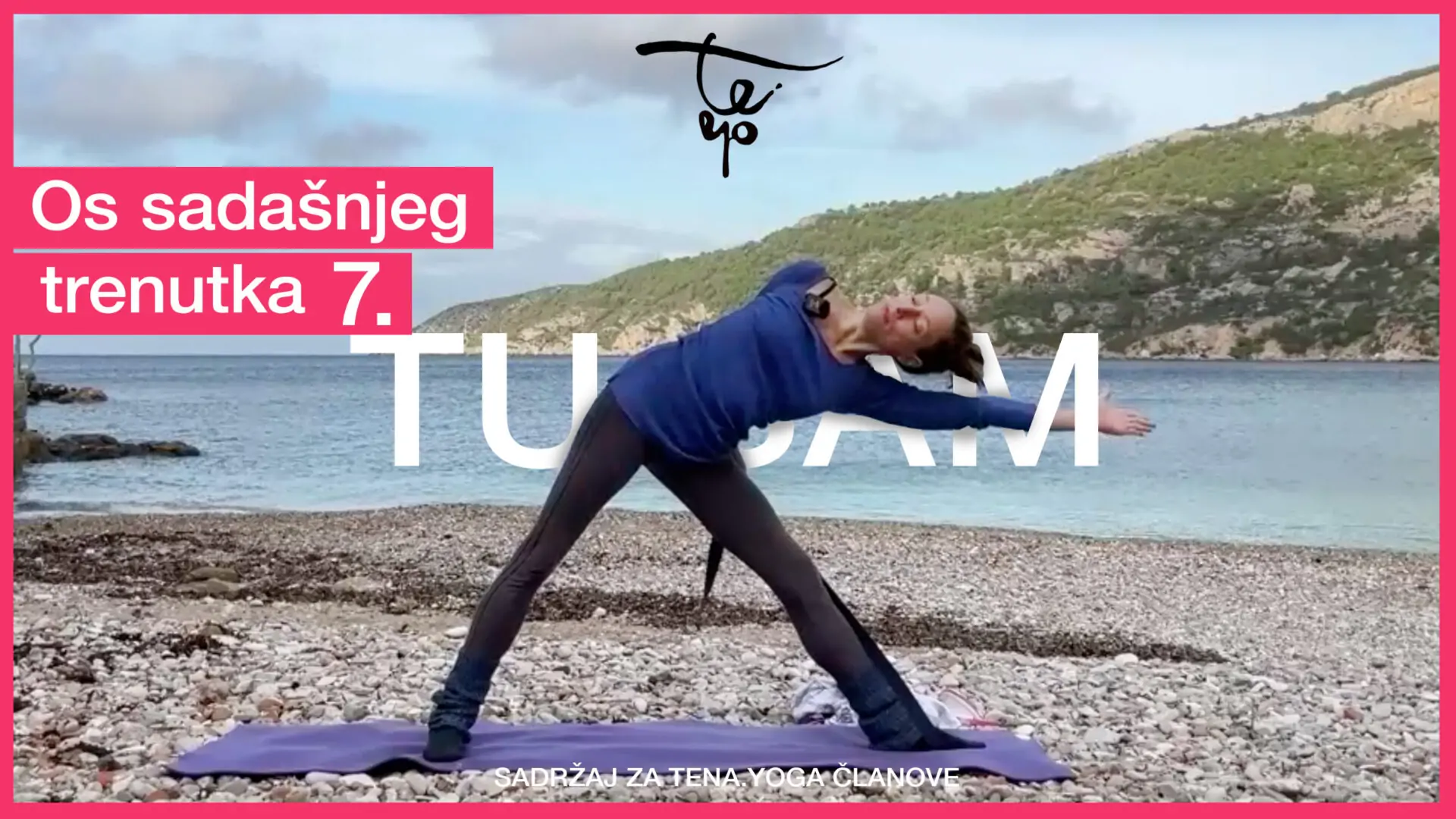
7. I AM HERE
This is another way of saying that we return to the axis of the present moment. The reminder I am here runs throughout the class as we repeatedly return attention to ourselves through movement and breath.
Today, we practise lateral back movements, some dynamic and some static. The dynamic movements emphasise slow motion from a well-grounded base, with the abdominal muscles engaged so the obliques work precisely. From the start, we attend to the back as a line built from many small segments and visualise it bending correctly to the side. Every segment participates equally, together creating a full range of motion. We practise a variation of Trikonasana with a strap, holding ourselves steadily and using the support to stack one shoulder above the other.
Strengthening the obliques may feel, shall we say, interesting, but simply give your best. A few minutes of effort create the wonderful feeling of an awakened abdomen for the rest of the day. We finish by resting in Bananasana , passively stretching the sides and relaxing into the present reality of the body.
Mindful journal: As often as possible during the day, simply remember: I am here. Write down what you find within yourself in the moments when awareness returns. Which thought, sensations and state are present? Observe what is here now without judgement and describe it as a witness.
40 MIN
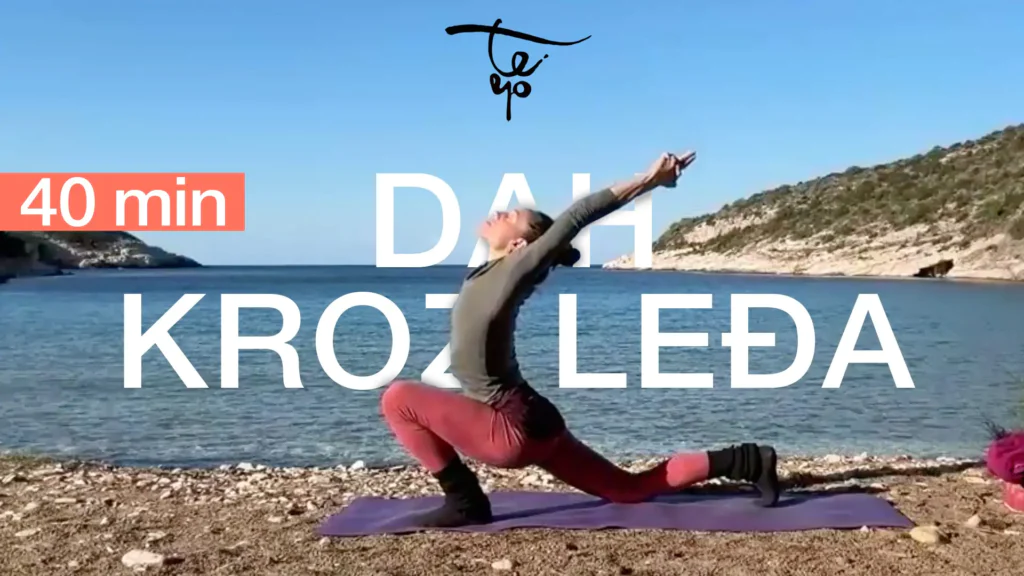
8. BREATH THROUGH THE BACK
WATCH THE VIDEO
We begin with three-part breathing, awakening the body’s three chambers with the breath. The inhalation travels from below upwards and the exhalation reverses the direction, not only along the spine but through the entire volume of the torso. We emphasise this pathway through spinal flexion and extension, the waves of Cat-Cow. We move as though the breath itself moves the body and the body, hungry for breath, bends beneath the wind within.
The entire class follows these directions of spinal movement. We pulse through sun salutations and then through several asanas. We rise and dive, roll and unroll, allowing the direction of energy to wash through us.
At the end, we lie down to relax and once again place an intention in the calm space: something we are ready to release and change, expressed positively.
Light, give me the strength for my mind to respond less reactively to this situation. Give me the strength to let go more easily. May I remain open more easily in my true nature, the nature of presence with impermanence. Here I am one with nature and with what is greater than me, free from small worries and identifications that separate me into a cage.
Mindful journal: Recognise the difference between being one with the whole, open and surrendered to the flow of life, and being enclosed within your identifications, worries and narrow attitudes that feel real and rigid. These feelings can intertwine and alternate very quickly, but it is important to recognise them and know: aha, here I am; now my attention has narrowed; now it has expanded.
60 MIN
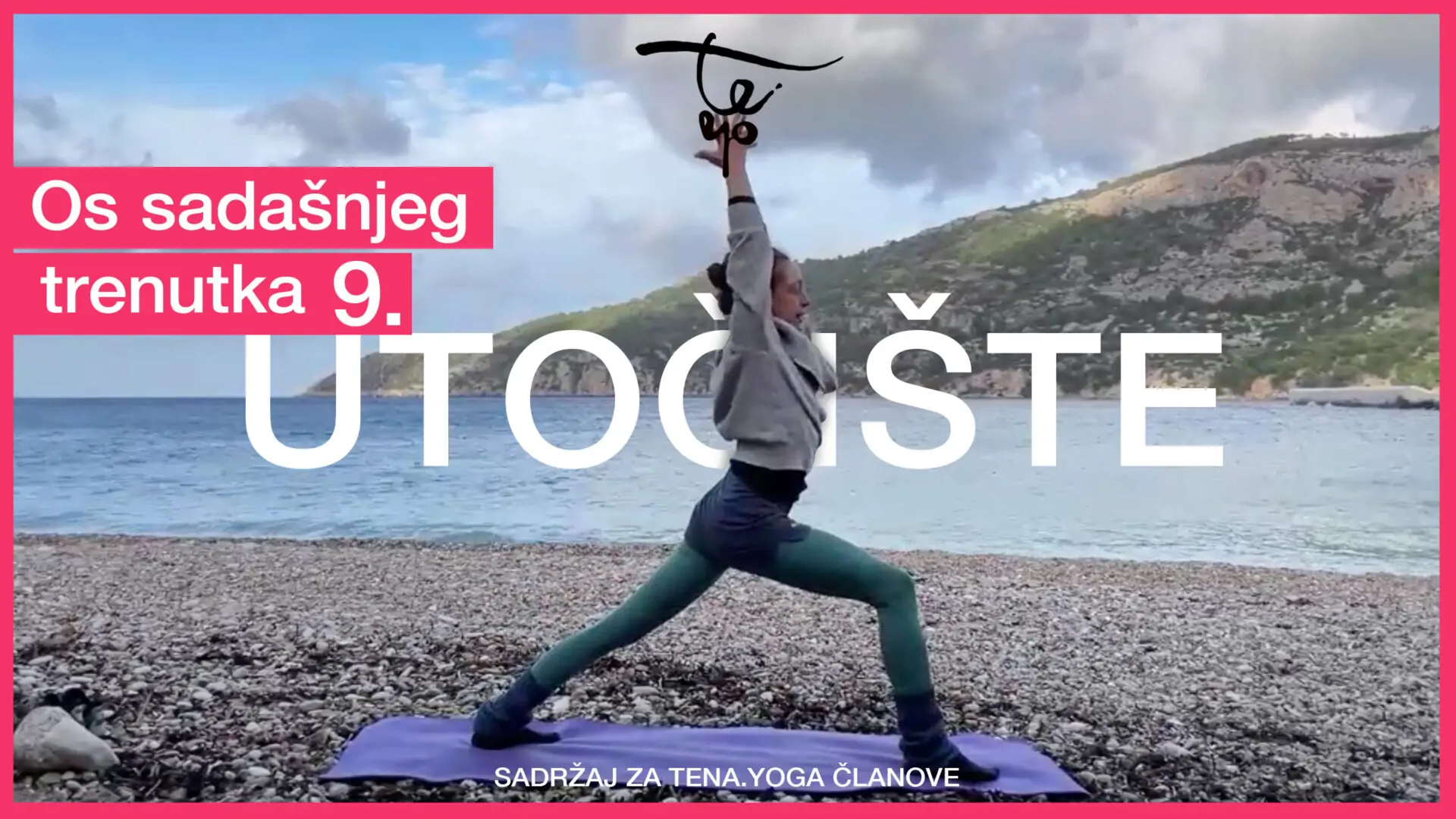
9. REFUGE
To complete the month, we integrate the whole body and repeatedly find the long axis of the spine. The asana of the day is Warrior III, like a plank in the air supported on both sides by the back and abdomen and, naturally, by the strength of the thigh muscles. We revisit several principles you will recognise from this month’s classes, such as lengthening the back by moving the pelvis and chest in opposite directions on the inhalation and generally breathing into the spaces between the vertebrae.
The class is pleasantly active, and Warrior III naturally asks for plenty of engagement. Consider that effort an offering of your best to what you are doing and an expression of love for yourself.
Finding refuge means withdrawing towards the foundation from which life began and through which life energy eventually returns when our life comes to an end. It is the awake, luminous channel within us that is always here, now. Around this channel, we relax and surrender to our life, purpose and connection with what guides us and is greater than us. I see that the sound stopped after I rose from Shavasana so simply finish with a Namaste greeting.
Mindful journal: Emotional refuge, shelter, dwelling, habitat or support are all within us. We are the support for our life through which everything we experience unfolds. Describe what these words mean to you. What does it feel like to take refuge within yourself and in your Buddha nature of pure awareness?
Light, give me the strength for my mind to respond less reactively to this situation and to let go more easily. May I remain open more easily in my true nature, the nature of presence with impermanence.