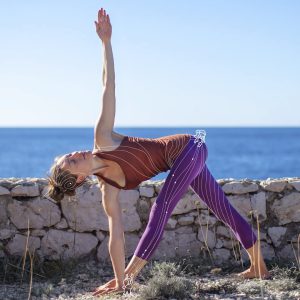
Calm Body, Calm Mind
Number and Duration of Yoga Lessons:11 recordings • total 8 h 45 minIncludes: 75 min, 4 x 60 min, 5 x 40 min and 10 min
Mindful yoga classes that develop stable, calm strength with a relaxed attitude.
It's possible to order a single yoga lesson from this bundle.
The Tena Yoga Method
How I guide this package
Every class in this package has a clear intention. I guide you through the pose, attention, and breath so you understand what you are doing and find your own balance of strength, mobility, and ease.
More on the lessons
We hold asanas calmly, decisively and for longer periods, practise poses for balance and stability and draw long lines through the body. The body expresses stability and determination. We become aware of transitions between poses and move mindfully. We ask questions that illuminate the sparks behind our actions and the intentions that move us. We become sensitive to the origin of habits we want to release or change and introduce affirmations for new ways of acting. Read more on the blog: The Power of Intention.
Mindfulness: We often associate meditation with returning attention to the breath, a technique for improving concentration. This month, we practise Anapanasati,, mindfulness of breathing, a meditation that settles attention upon the flow of breath.
Yoga therapy for:
- calming the nervous system
- connecting the kinetic chain
- calm strength
- slow stretching
- upright posture
- improving body awareness
- mindfulness meditation
- positive affirmations
Recording package
INTRODUCTORY TALK AND YOGA CLASS ON THE MONTH’S THEME – 75 MIN
CALM BODY, CALM MIND
Yoga practice is our meditation. During the time we have on the mat, we practise becoming aware of thoughts, emotions and states without reacting to them, knowing how to let them pass.
We release not only “negative” states but constructive ones too; even excellent ideas do not need to be developed now. I emphasise honesty towards what we feel, because the body is intelligent and communicates through a simple binary language: yes or no. On the path of knowing ourselves, it is essential to remain honest about what we feel and know what is true for us. Everyone has their own set of difficulties and inner dialogue. Our personal heaviness and ease live within the body, so we listen not to another person but to the body’s intelligence. This “pain” is harmful and I should go no further, or this “pain” is useful and I can relax into it: the body will tell us.
40 MIN
1. OPPOSING FORCES
We continue in the direction established during the introductory workshop. We practise calm, clear Sun Salutations followed by fundamental forward-bending asanas that lengthen the lines of the legs, primarily the back lines, while activating the front thigh muscles. Padangusthasana, a standing forward bend, requires quadriceps strength so that the hamstrings can release and allow us to enter the pose. We establish inner strength through opposing forces. This strength arises when we move in two opposite directions that meet in the centre. Naturally, how firmly we engage depends on us and our willingness to make an effort.
We move beyond lethargy and the feeling “I cannot do any more” by remaining with sensations of intensity and strength and noticing how interesting they are.
Within this principle, strength gathers in the centre while the periphery remains free and soft, with a smile on the face. May the body become a little tired through practice for the sake of health, while the mind rests.
60 MIN
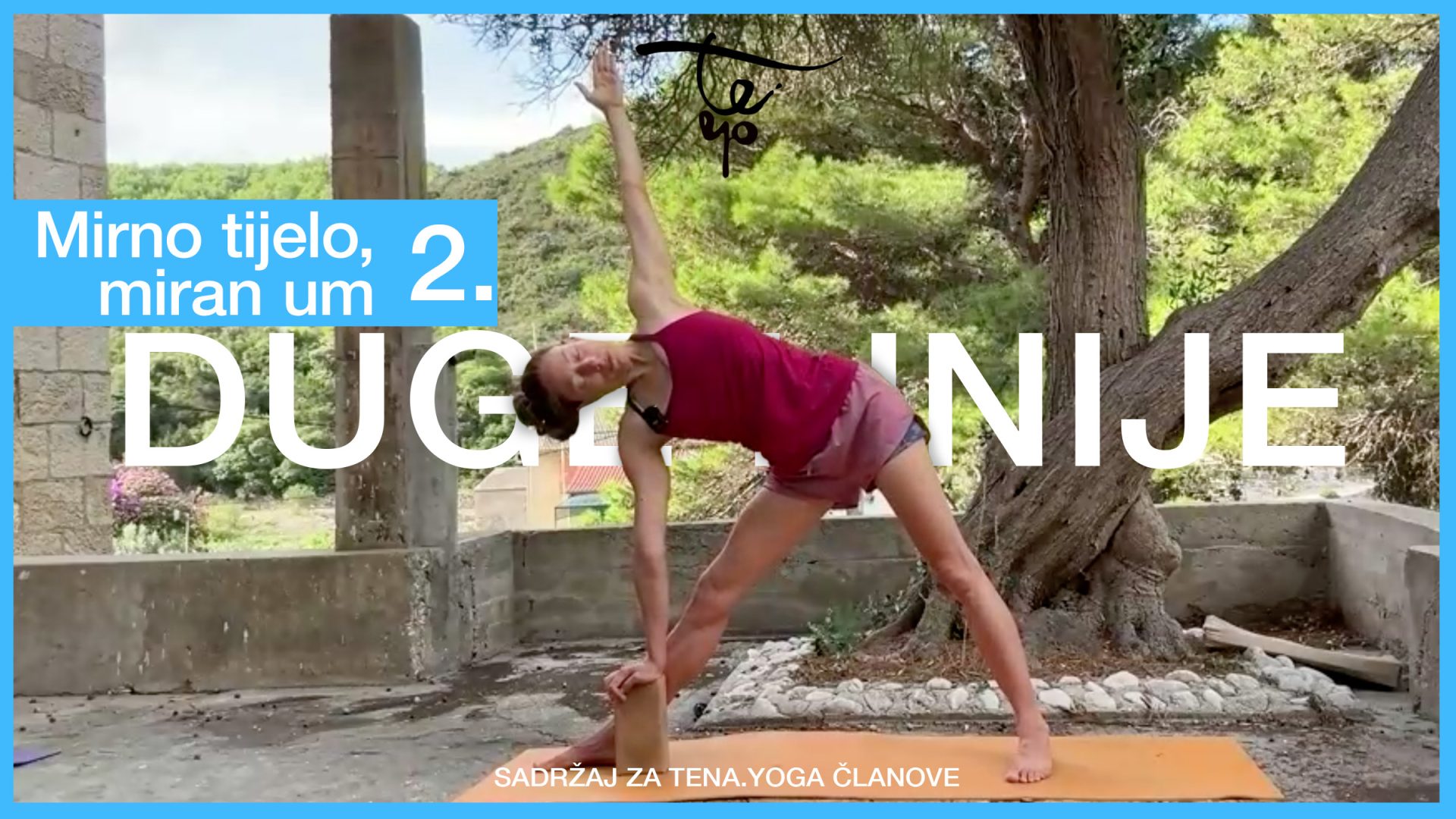
2. LONG LINES
We build upon the previous class’s theme of opposing forces by shifting weight and directing length so that opposite forces arise and strength appears in the centre. We create length across the body’s diagonals, for example opposite arm and leg, extending them into a stretch. We then move through several calm Sun Salutations. I know I keep repeating that you can place the knees on the floor and avoid lowering too far when it becomes difficult, and naturally you can always move into Downward Dog and wait there.
A more challenging element is lifting the hands and block away from the floor in Parsvottanasana and Trikonasana. If this is not available, leave the hands on the blocks. Another important principle we repeat is calm and strength beneath the navel, with relaxation and ease above it, for example in standing asanas. When we arrange ourselves this way, strength and ease can coexist within one experience.
Feel that “difficulty” is not the ultimate or only experience; we surround it with lightness, gentleness and spaciousness.
MINDFUL SLOW FLOW CLASS – 40 MIN
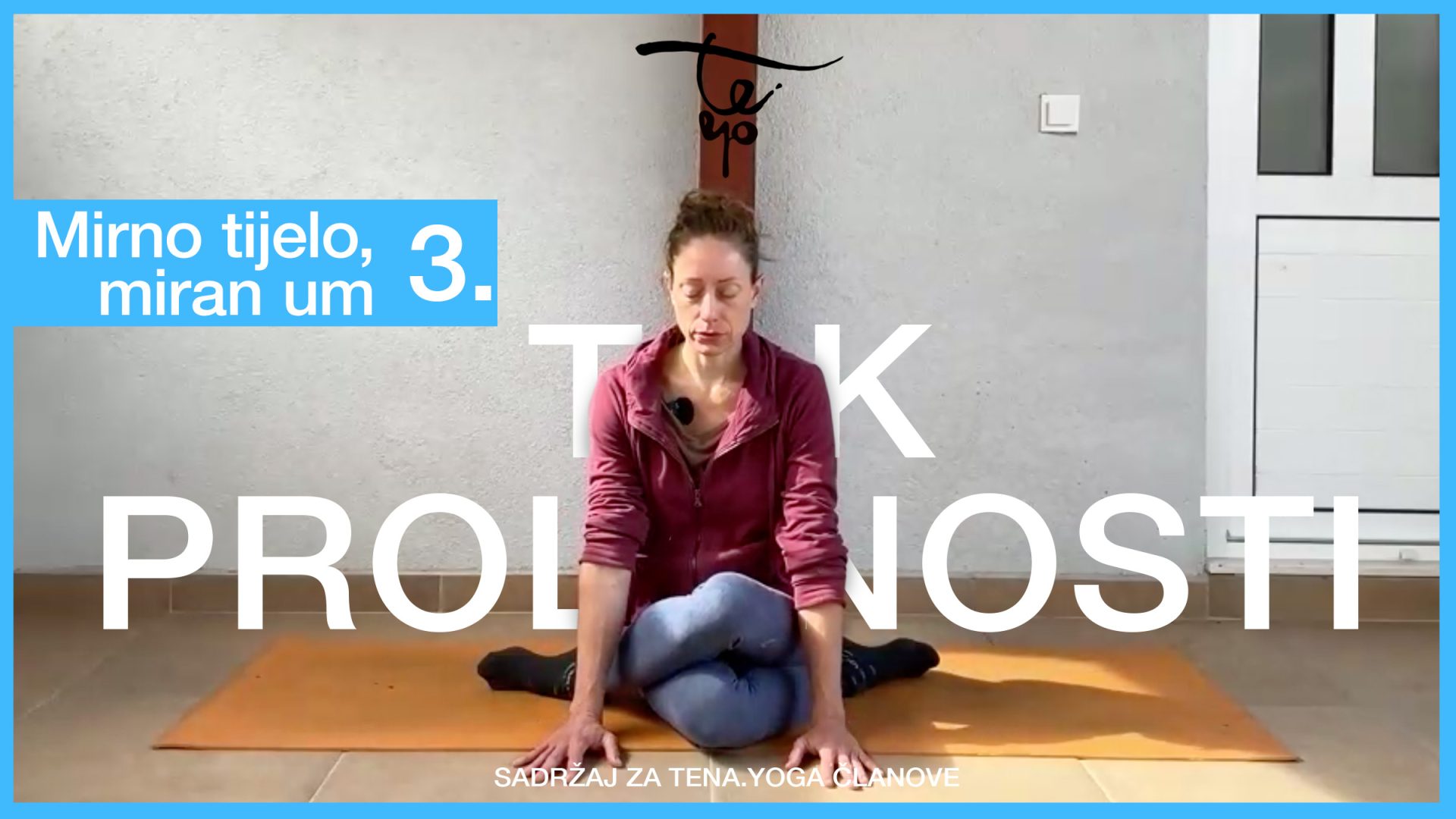
3. THE FLOW OF IMPERMANENCE
We bring attention into the body through two principles: while still and while moving. In stillness, we observe the impermanence of physical sensations and the body’s pulsing nature. During slow movement, we observe sensations arising from the body’s relationship with gravity. Awareness of impermanence shows that no experience is unchanging, including a rigid, permanent sense of self or “I”. We can therefore motivate ourselves to experience everything with new eyes. What appears fixed and challenging is actually always changing and flowing; we need only release previous experiences and allow the next situation to be new. We practise several asanas that mobilise the hips, a yogic squat and Gomukhasana Legs.
Within every intensity of physical sensation, we also recognise the calm space through which we perceive it. We take care to have more peace than pain and heaviness and maintain the ability to remain here calmly.
40 MIN
4. CALM LINES
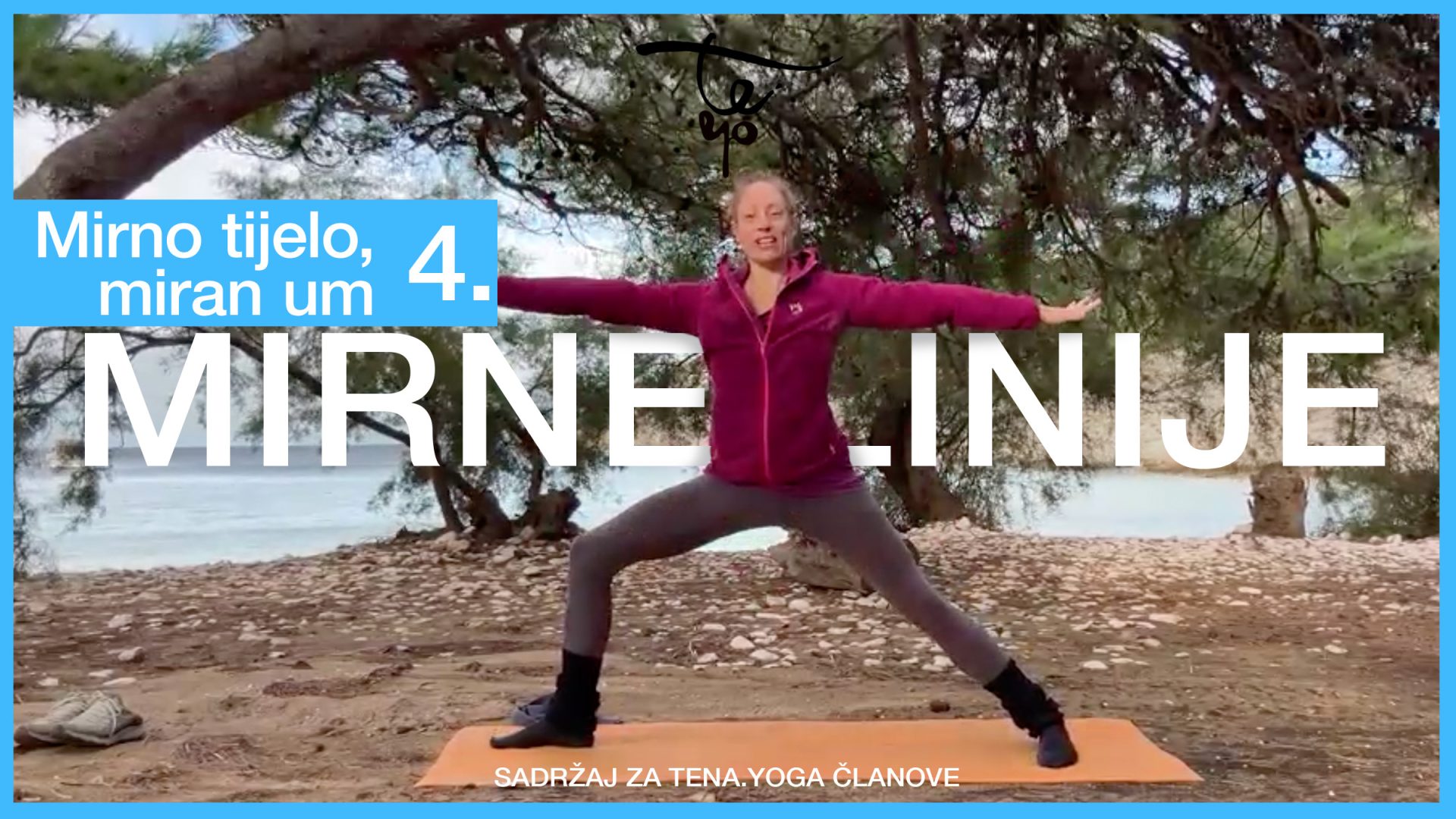
Our long, calm lines and quiet strength give us a new possibility in every moment to establish Sthira and Sukha. The most important element in practice is remembering that only now, in this moment, can we arrange the body’s energy to create the best balance of strength, alertness and determination alongside relaxation, ease and joy. When we practise this attitude through the body in yoga, we can more easily bring it into daily situations after class.
We again lengthen the lines of the legs and side body through several fundamental asanas. We extend the boundary of strength a little by remaining in poses longer. Through breath, we stretch the surfaces that open and lengthen the body’s calm lines.
Our practice is our direct support, time that helps us feel well during the other 23 hours of the day.
60 MIN
5. DEEP, CALM, SLOW
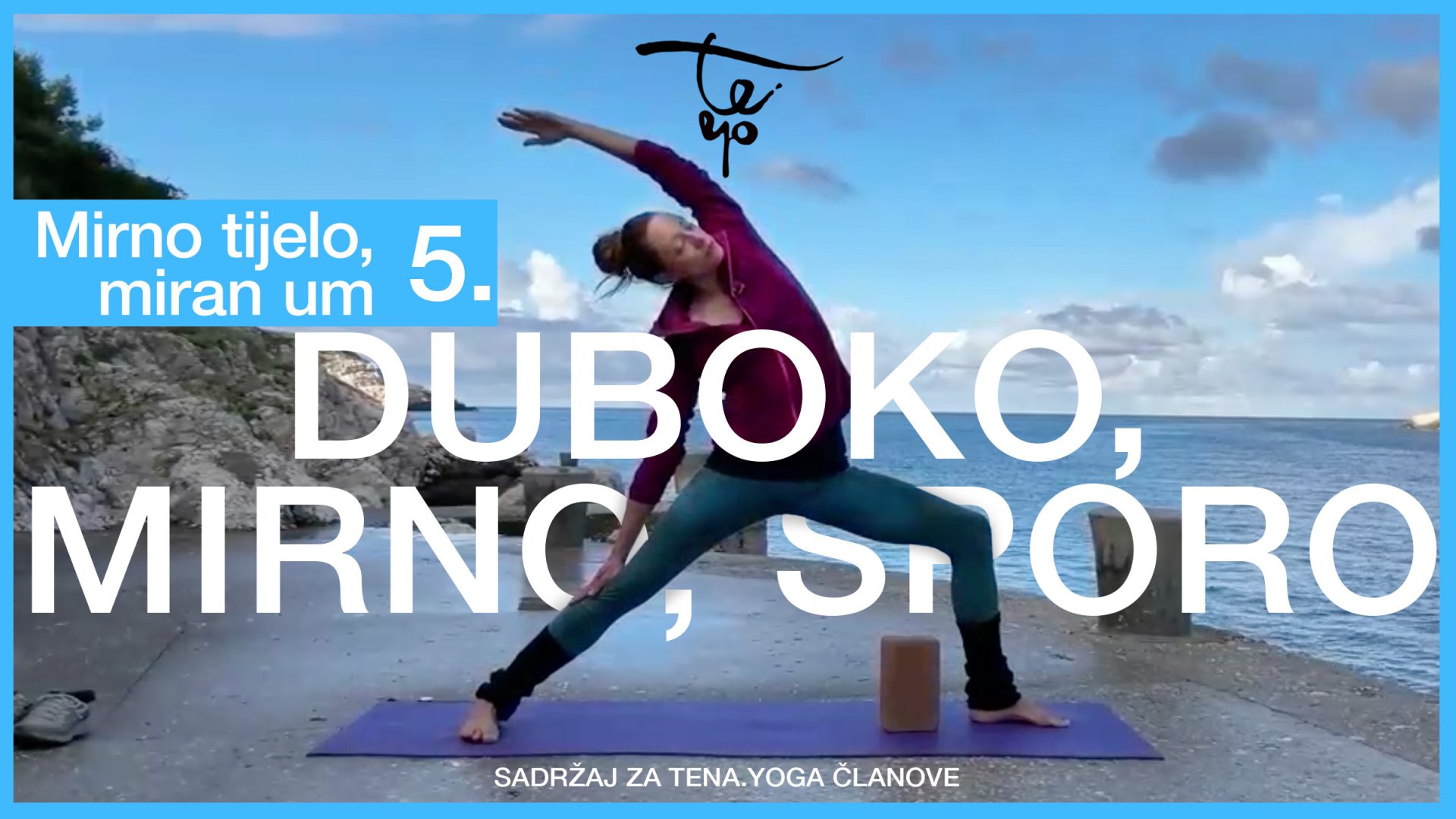
Breathing, naturally.
Deep means breathing deeply into the organs and from within the body, abdominally. Calm means following the breath with steady attention. Slow means that the diaphragm moves slowly, and therefore so does the breath.
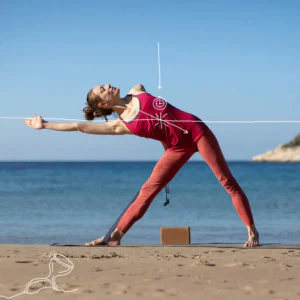
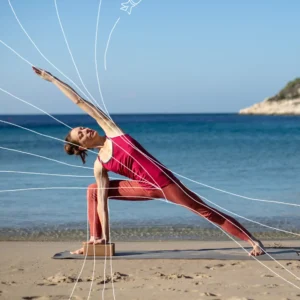
We begin gradually from standing and awaken the breath. Sun Salutations are also slow and modified with several pulses, allowing the breath to colour the body deeply. We bring freshness to the abdominal organs so that the cells truly receive oxygen. We practise only a few standing asanas but hold them longer: Warrior II and Trikonasana. We practise Trikonasana with a block so that the body’s lines can lengthen with ease and we can feel peaceful comfort.
40 MIN
6. PARIVRTTA TRIKONASANA
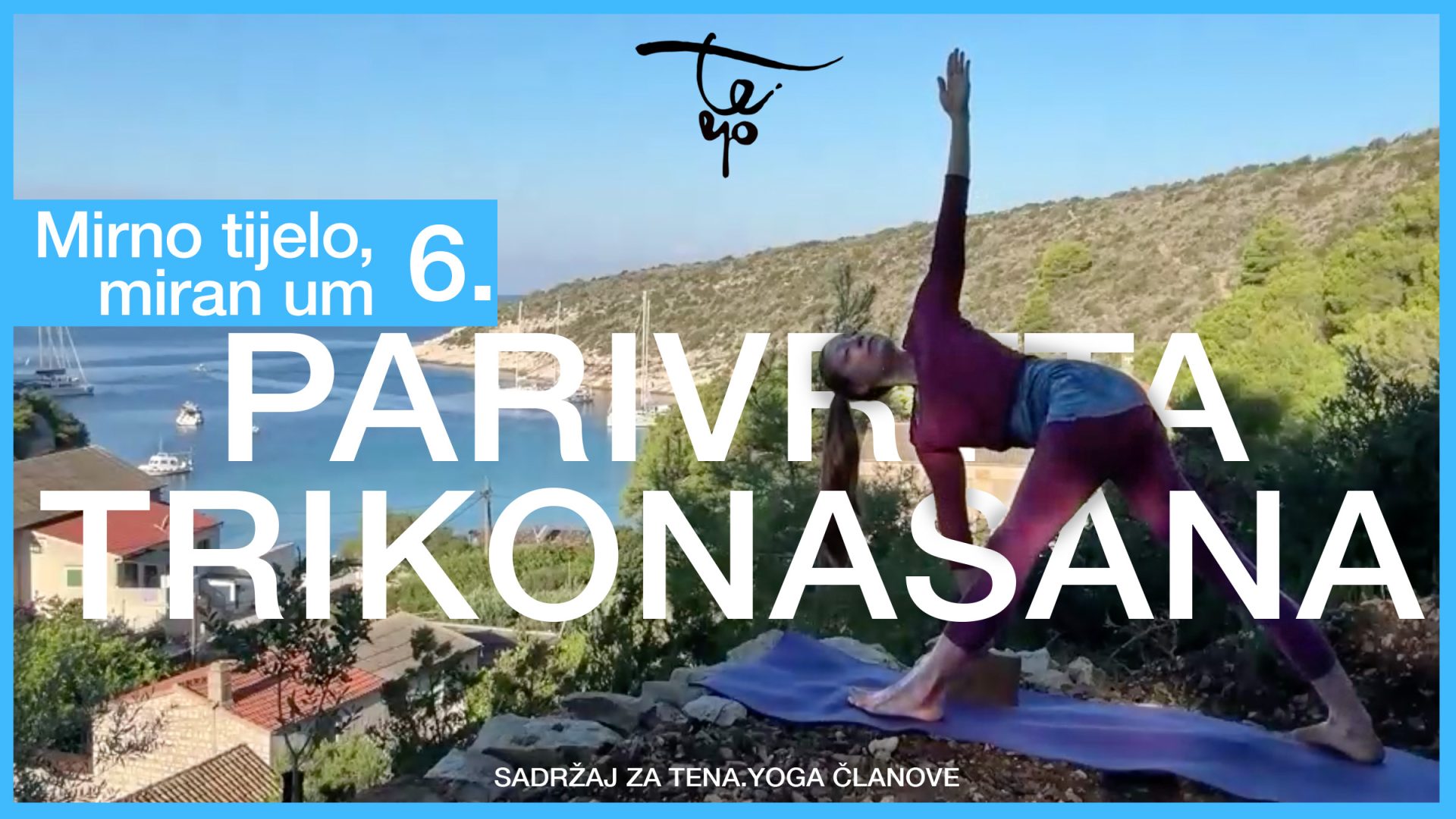
Revolved Triangle is today’s “asana of the day”. We hold it longer and give it our attention. Through several preparations, we give the spine better rotational mobility from a stable base and keep the back extended. Little by little, we build long lines within the demanding Revolved Triangle. We practise with a block so that you can genuinely lengthen and stretch rather than chase a direction merely because you believe it is the pose’s final goal.
An asana is our effort to arrange ourselves well in every moment and create more space, breadth and openness.
We create more space than whatever narrows us and feel every sensation within the same experience. Parivrtta Trikonasana is an excellent exercise for this attitude and naturally for the back, legs, arms and whole body.
60 MIN
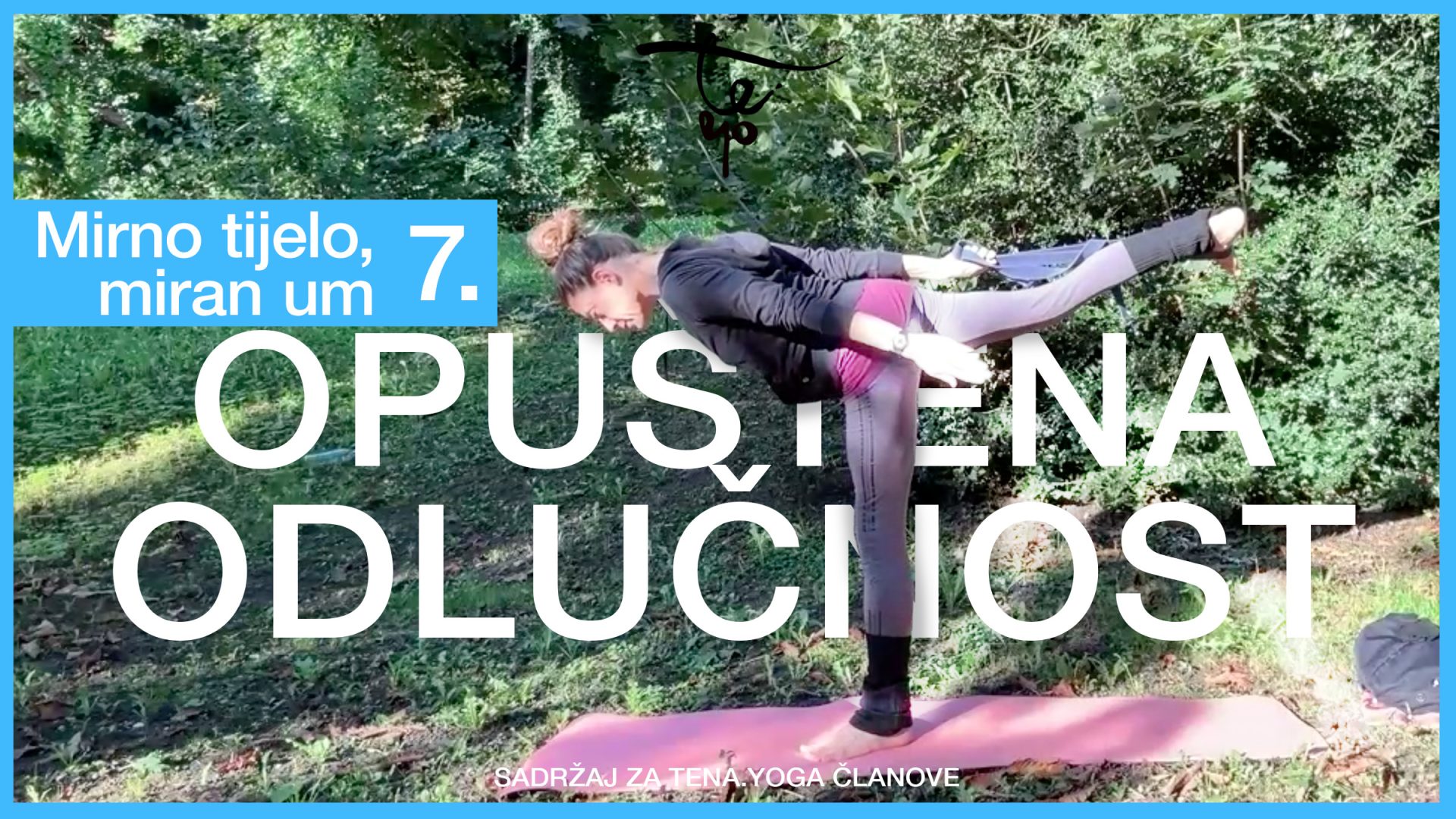
7. RELAXED DETERMINATION
Determination appears in the body as strength and security, the muscles that hold us upright. Upon this foundation, we relax and experience the present moment without effort.
Every present moment is the most important and the only one in which we can establish an attitude of relaxed determination or determined relaxation.
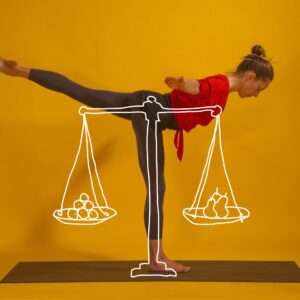
Today, we lengthen the lines of the legs and whole body, the kinetic chain. We work with stability and balance through these long lines. In an asana such as Vrksasana, Tree, we grow and work on balance. Transitioning from Utthita Hasta Padangusthasana to Warrior III develops stability. We play a little, so proceed gradually. Core strength is in the pelvis and lower abdomen, and we lengthen from this centre.
40 MIN
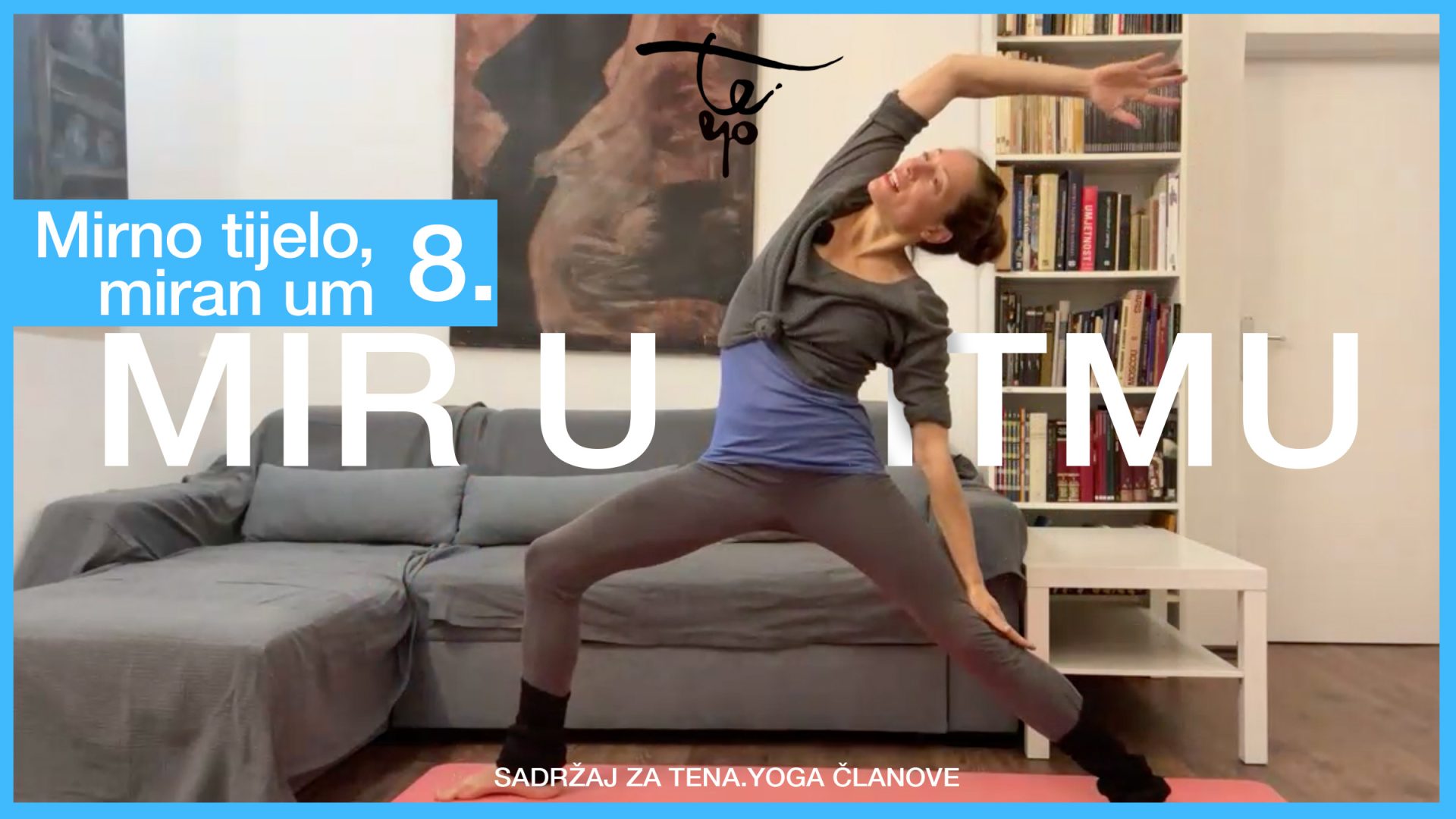
8. PEACE IN RHYTHM
We begin with rhythmic movements that mobilise and expand us, releasing the apparently rigid boundaries of body and breath. We transition from Warrior II on one side to the other. Once we enter the rhythm, we slow it further and expand movement in every direction. We continue with familiar Sun Salutations, which you can practise with closed eyes. We move through several asanas, including Half Moon,Ardha Chandrasana,a more interesting balance, so place a block nearby. We know how balance works: strength is in the pelvis and lower abdomen.
60 MIN
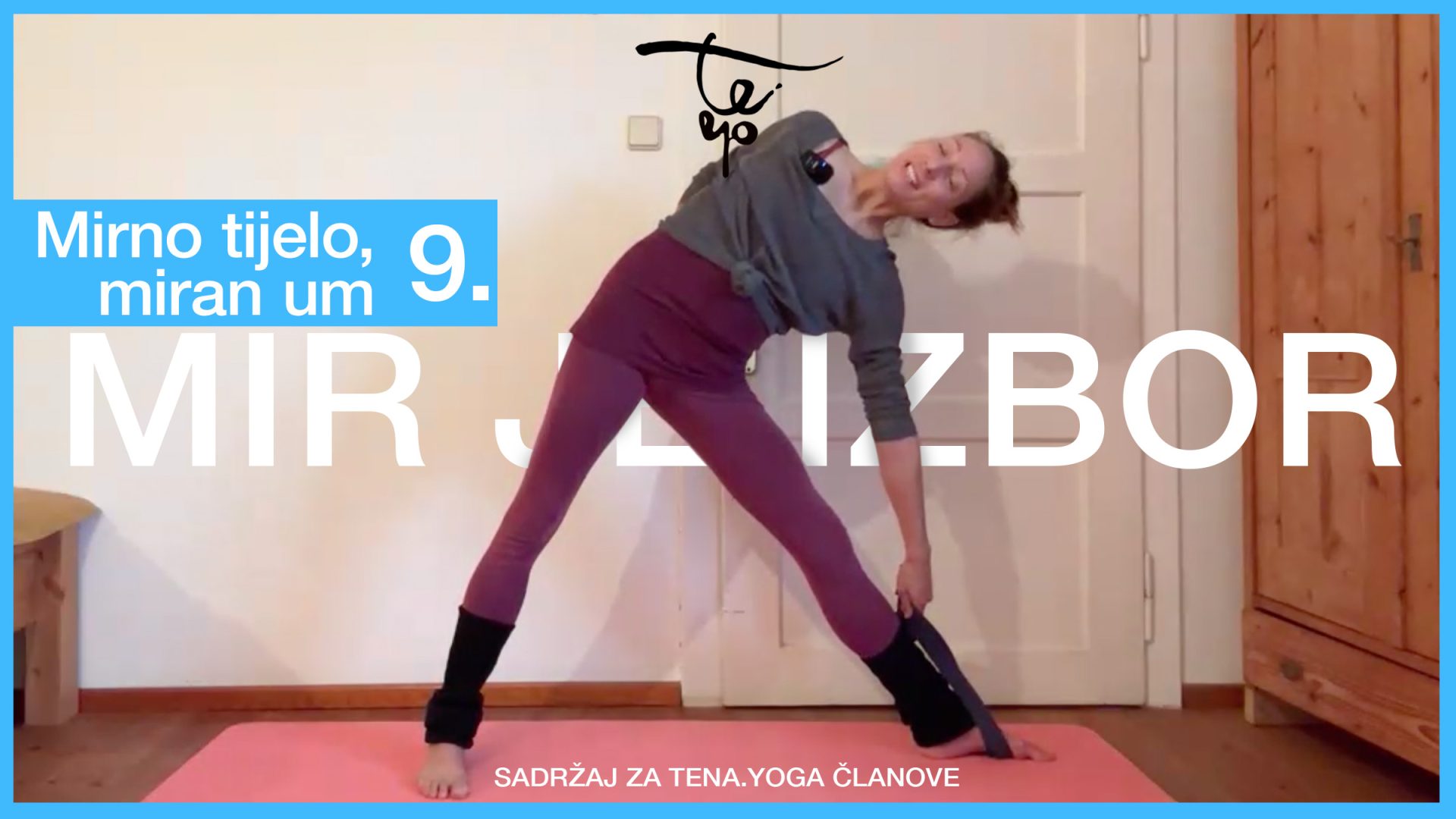
9. PEACE IS A CHOICE
We sit calmly, close the eyes and feel ourselves becoming still. We deepen and settle the breath and try to perceive it with every available sense. Naturally, calm breath and peaceful energy spread into the space around us and enter every situation we meet. We become generators of peace, which means bringing breadth and the possibility of awareness with less automatic reaction into situations. We practise a stable, familiar sequence: several Sun Salutations and fundamental standing asanas enhanced with a strap and held a little longer so that the body’s lines lengthen thoroughly. We complete a full set of standing exercises, then lower to the floor for several even calmer asanas.
I know where I am because I feel where I am, and I choose how I am by choosing how I breathe and move. This is my choice.
Yoga is our meditation. I invite you to cultivate a healthy balance of alertness and relaxation. This is the great value we carry from the mat into our day, relationships, projects and problems.
This is our true Buddha nature, always here within the body.
+ A 10-MINUTE CLASS FOR EVERY DAY
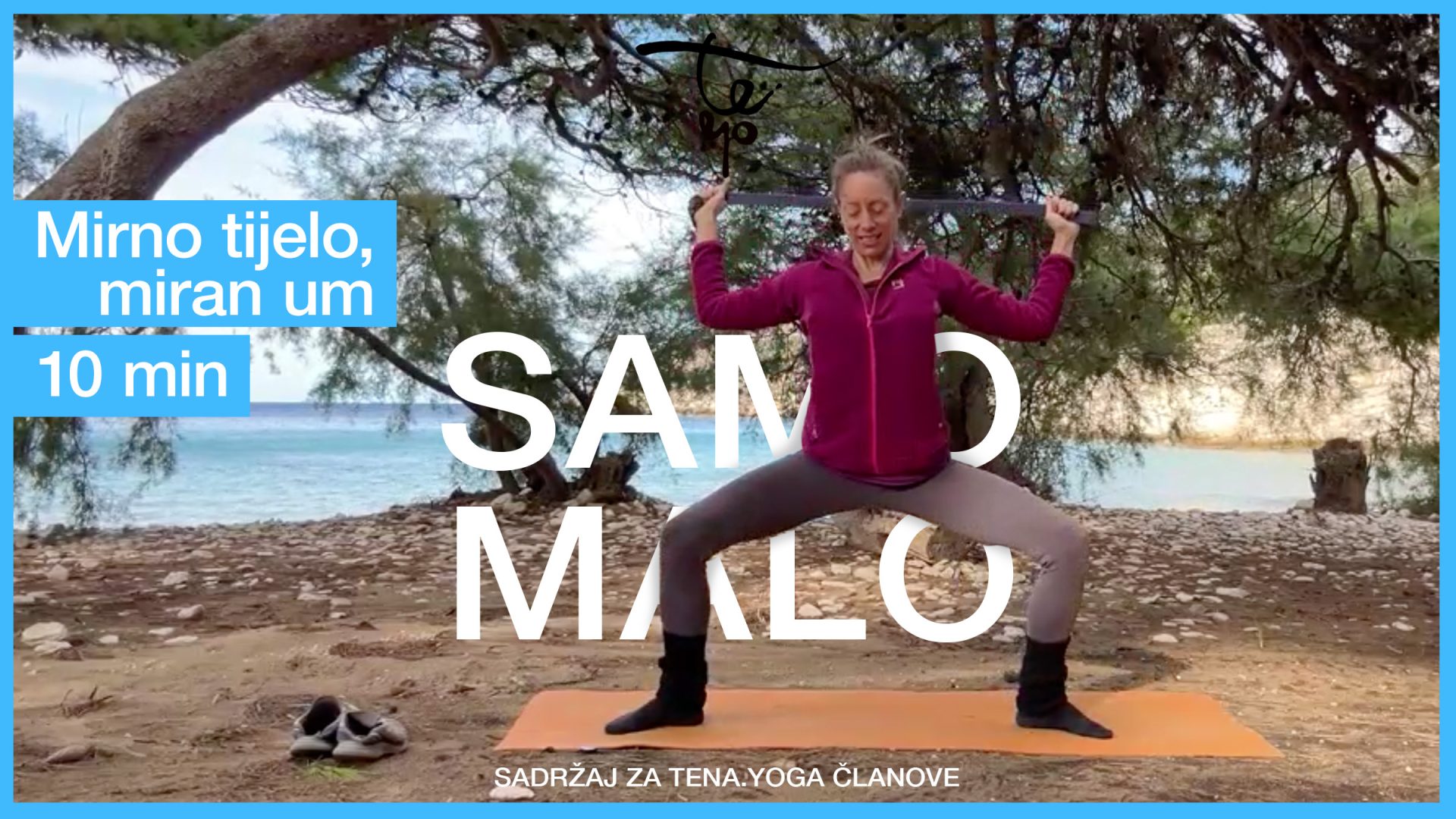
JUST A LITTLE
A short practice to bring the body into a healthy state each morning. These are our familiar morning squats, this time performed calmly and perhaps even more slowly than rising on one inhalation and lowering on one exhalation. Let us truly feel the details of slow movement. This gives us an opportunity to distinguish clearly between strength awakening in the legs and ease and softness spreading across the shoulders. We remain with a smile that says it is all right for one experience to contain both difficulty and ease. We practise several squats with a strap, a lateral stretch and finish with a beautiful, intense wide-legged squat.