Yoga for beginners
Welcome to yoga!
You probably know what your intention is, why you want to start yoga, and why you are here. In order to successfully implement your intention, we need to put in the effort. Yoga is not a “magic pill” that solves problems on its own; such solutions usually come at a high price and take away our independence. The practitioner invests energy and consistency in each step of the practice with their effort, will, and love to fulfill the initial intention.
In yoga, we say that everyone has a predisposition to practice, except those who are lazy.*
That’s good news, you’re in the right place, we can start.
You may think: “Okay, I’m going to practice so I can achieve my intention,” but there is an even better approach. We will start with the attitude that we want to adopt a new technique, have presence with our body in motion, to give our best from moment to moment, and let the result come by itself.
We practice out of love, with patience and respect for our body, in order to achieve the positive effects of yoga, so that the changes we have achieved are long-term.
My intention is to guide and motivate you, to explain and show you how you can follow each lesson with ease and understanding.
Through the practice of yoga, we equip ourselves with knowledge and techniques on how to maintain health and vitality.
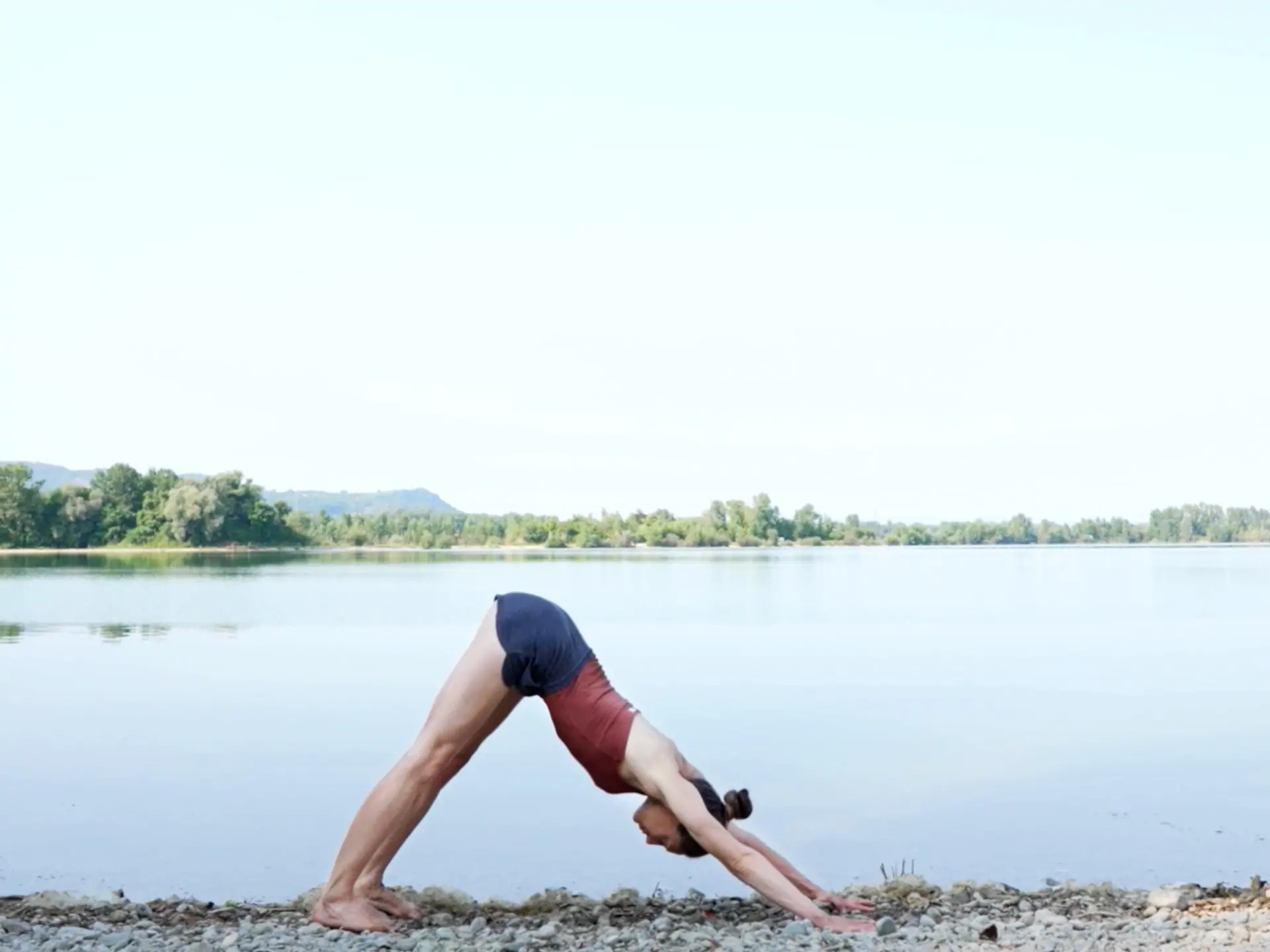
What type of yoga do we practice here?
The method I teach is based on Ashtanga and Vinyasa dynamic yoga styles and restorative yoga, which I have refined with the science of anatomy and healthy life force. I teach with an emphasis on a therapeutic approach based on mindful principles so that yoga is a true medicine for our body and mind (and not a goal in itself). Read more about my approach on the TENA YOGA METHOD page.
In each class, I explain how to position the body, what our intention is when we do something (what we want to strengthen or stretch), how to breathe and where to put our attention so that the practice is effective and safe. When we practice with understanding, the positive effects of yoga are available to us from the first class. With regular repetition, a clear understanding will descend into the motor system and become a healthy habit.
While we practice, I motivate you to notice the relationship you have with what you feel. Through the practice of yoga, we learn to feel and respect our body so that we push our limits without fighting – we become stronger but more flexible, we relax but become more agile. For example, if we feel intense sensations of exertion, we will not force ourselves to go deeper into discomfort because of some unjustified belief. It is with this mindful attitude that we create the conditions in which the body and mind heal themselves.
Encourage curiosity, love and trust in your body, remember the true values for a meaningful and healthy life.
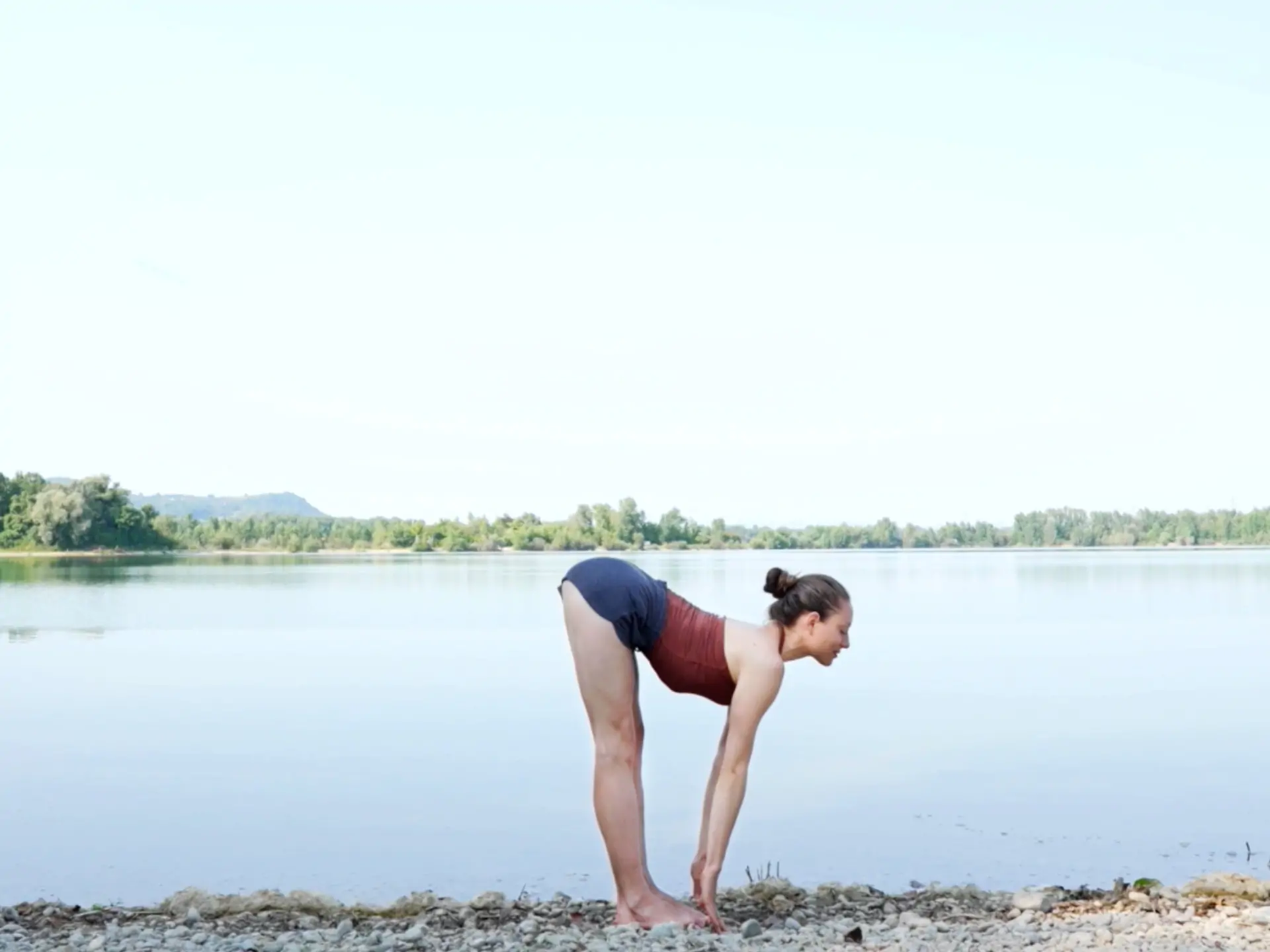
The main instructions and features of yoga
ATTENTION INWARDS
Formal yoga is an introverted activity, meaning that we draw our attention inward, to focus on the inner atmosphere. Sometimes we close our eyes, because they are the sense that most “draws us out”, and sometimes with our eyes open, our attention remains within us.
By paying attention inward, we come into direct contact with bodily sensations. Bodily sensations are everything we feel with our body and they are the way the body communicates. From this body language, we learn to understand what is healthy and good for us and what is not. Listening to the body is more important than listening to the mind, which may suggest that we force what the body resists, and this is not the right path. The inner atmosphere and intelligence of the body open when we respect what we feel.
DEEP BREATHING
Yogic breathing has several qualities that we learn in yoga classes. We try to breathe calmly, slowly, deeply and in a balanced rhythm. To consciously carry out inhalation and exhalation of equal length or to choose if we want to prolong one aspect. When we breathe consciously, we feel the breath in the body as a movement of expansion and contraction, lifting and lowering and use it as a direction for body movements (for example, we raise our arms on inhalation and lower our arms on exhalation). Yogic breathing is abdominal, in this type of breathing we use a larger space of the abdominal cavity for the movement of the diaphragm. In this way, we heal all body systems and have an anti-stress effect.
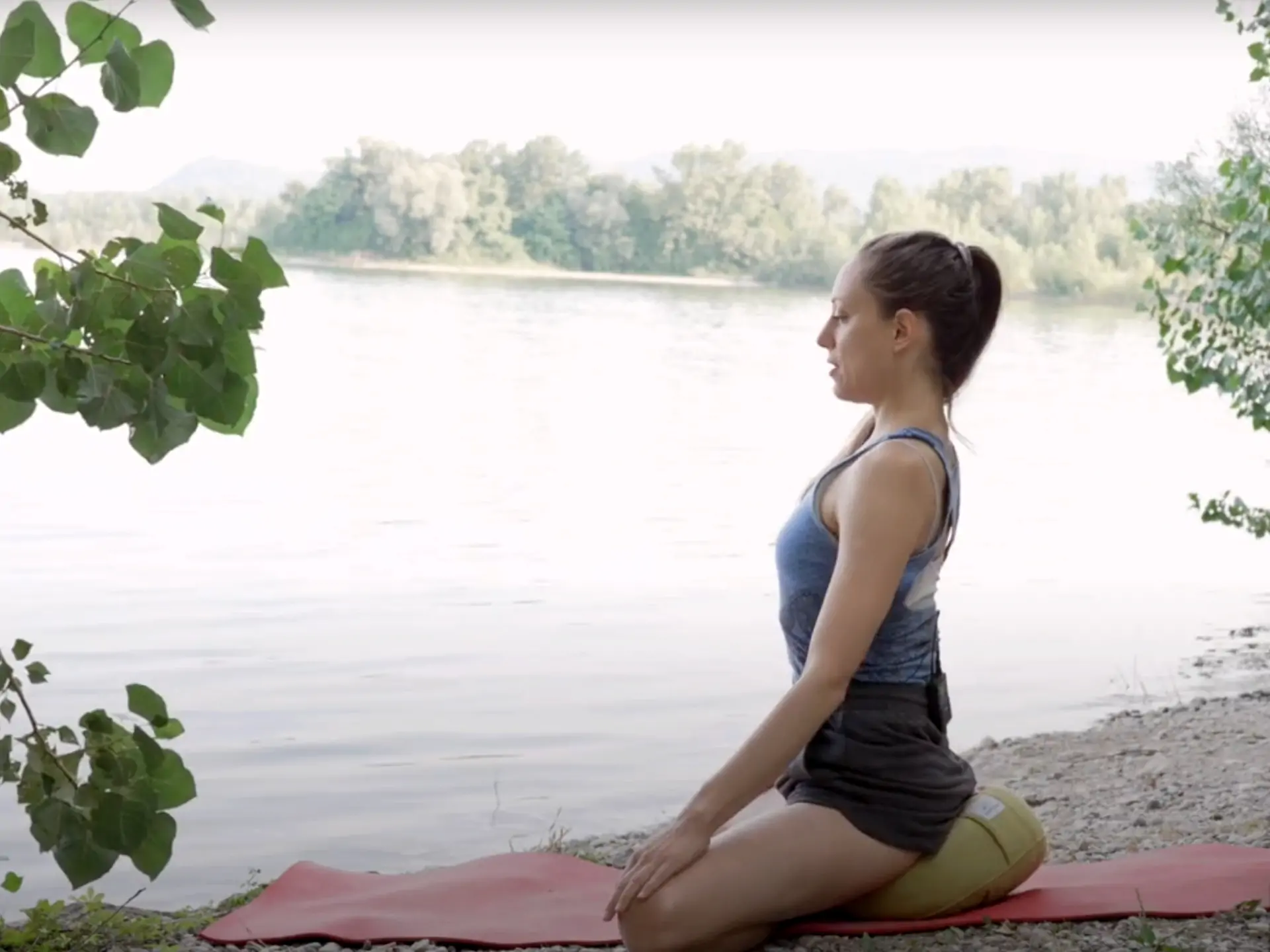
STRENGTH AND FLEXIBILITY
Dynamic yoga is a practice in which we strengthen as well as stretch our muscles, what I like to say is that with yoga we create a healthy quality of muscle tissue. Muscles that are strong and capable of performing powerful tasks but also completely relax when they no longer need to be contracted (when we are no longer using them). This also applies to the spasm that creates stress. Health is fluidity, which in this sense means that we can experience stress and feel it as tension in the body but easily let it pass, that we no longer hold it in (that we do not have cortisol in the body for a long time after a stressful event).
One of the main principles of yoga says that the positions we take should be stable and firm but comfortable. This does not only apply to the position of the body but also to the attitude we take. We establish determination and relaxation that we carry with our posture and our mind. For example, in the same position we feel the strength of calm legs on which we build openness and lightness of the arms, chest and breath and we stand with a smile. **
Basic concepts of yoga
Since yoga comes to us from Indian culture, some terms and words are used in Sanskrit. For me, it is the same as the language of mathematics is Greek. So that you don’t get confused, the same position can have multiple names or one name can mean multiple positions. In one style of yoga, the position is called mountain, and in another, downward dog. There is nothing wrong with that, I will mention a few key terms that I often use to help you find your way around.
Prana – life energy, vital principle, breath energy.
Pranayama – yogic breathing techniques or directing Prana.
Nadi Shodhana – technique of alternate nostril breathing.
Vinyasa – Connecting breath with movement, sequences of yoga postures.
Bandha – using isolated segments of the body to direct energy.
Dristi – focus of attention or direction of gaze.
Mudra – gesture with the palms, fingers or the whole body that creates an energy seal.
Ujjayi breath – deep breathing with slightly compressed vocal cords that creates a noise in the throat and achieves better control and strength of the breath.
Hatha yoga – a branch of yoga that uses body postures and deep breathing to maintain health and vitality.
Yoga Nidra – Yogic sleep is a method of guided relaxation of the body.
Yogi – one who practices yoga and meditation.
Namaste – a greeting at the end of class in which we thank each other for the effort, time and will we put into the practice of yoga.
Kundalini – spiritual energy, the life force that rises along the spine.
Karma – the law of cause and effect of actions through thoughts, words and deeds.
Mindfulness – one branch of the Buddha’s eightfold path, a meditation technique.
Asana – body position, exercise.
Down dog – For the downward facing dog position (Adho mukha svanasana) I usually use the English name.
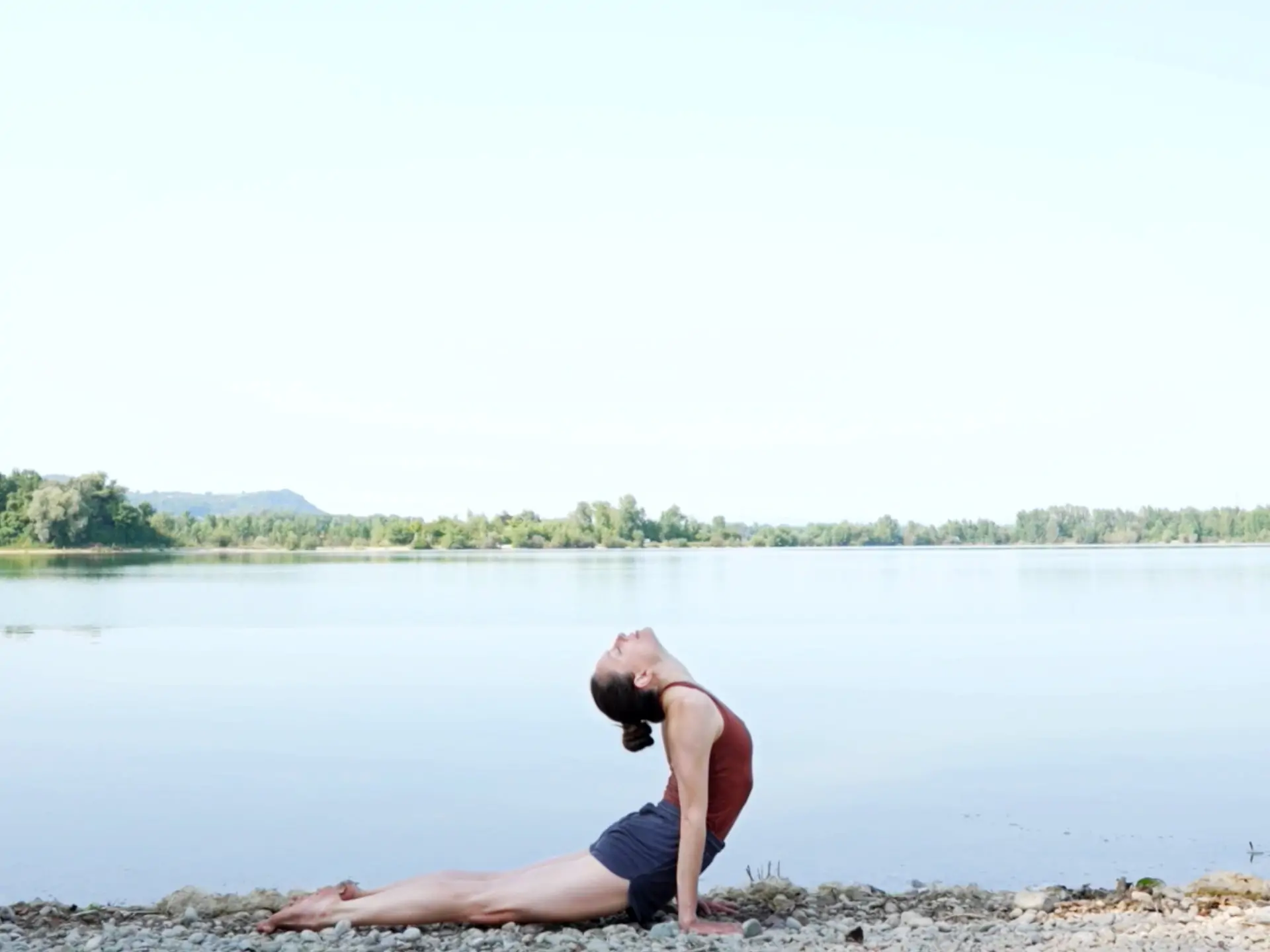
Up dog – For the upward facing dog position (Urdhva mukha svanasana).
Cobra – I use the Croatian name for the position called Bhujangasana.
Sun Salutation – Surya Namaskar is a set of movements and changes of positions combined with deep breathing.
Tadasana – mountain pose, a basic standing pose in yoga.
Balasana – child’s pose, a relaxing forward bend with the chest on the thighs.
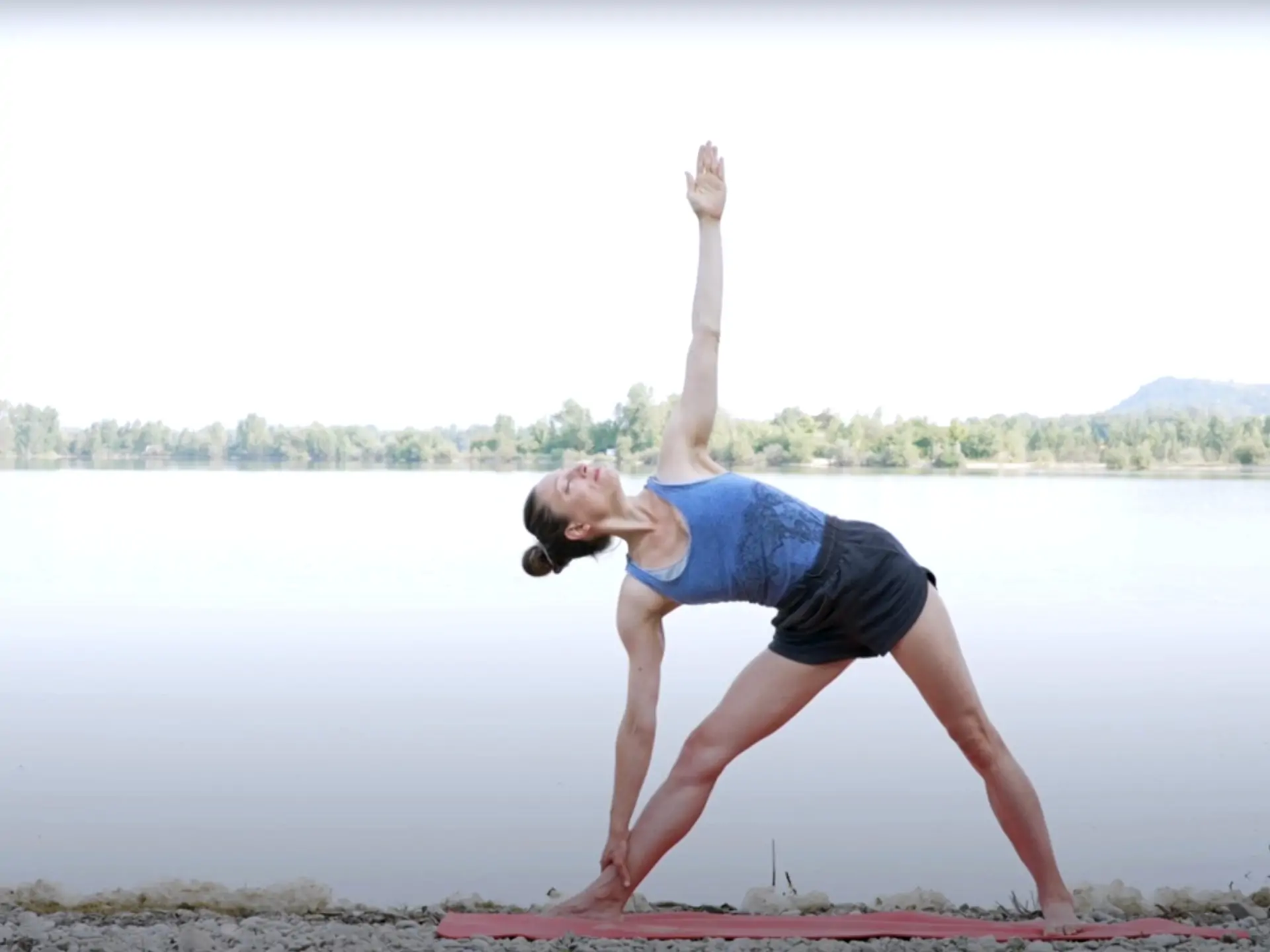
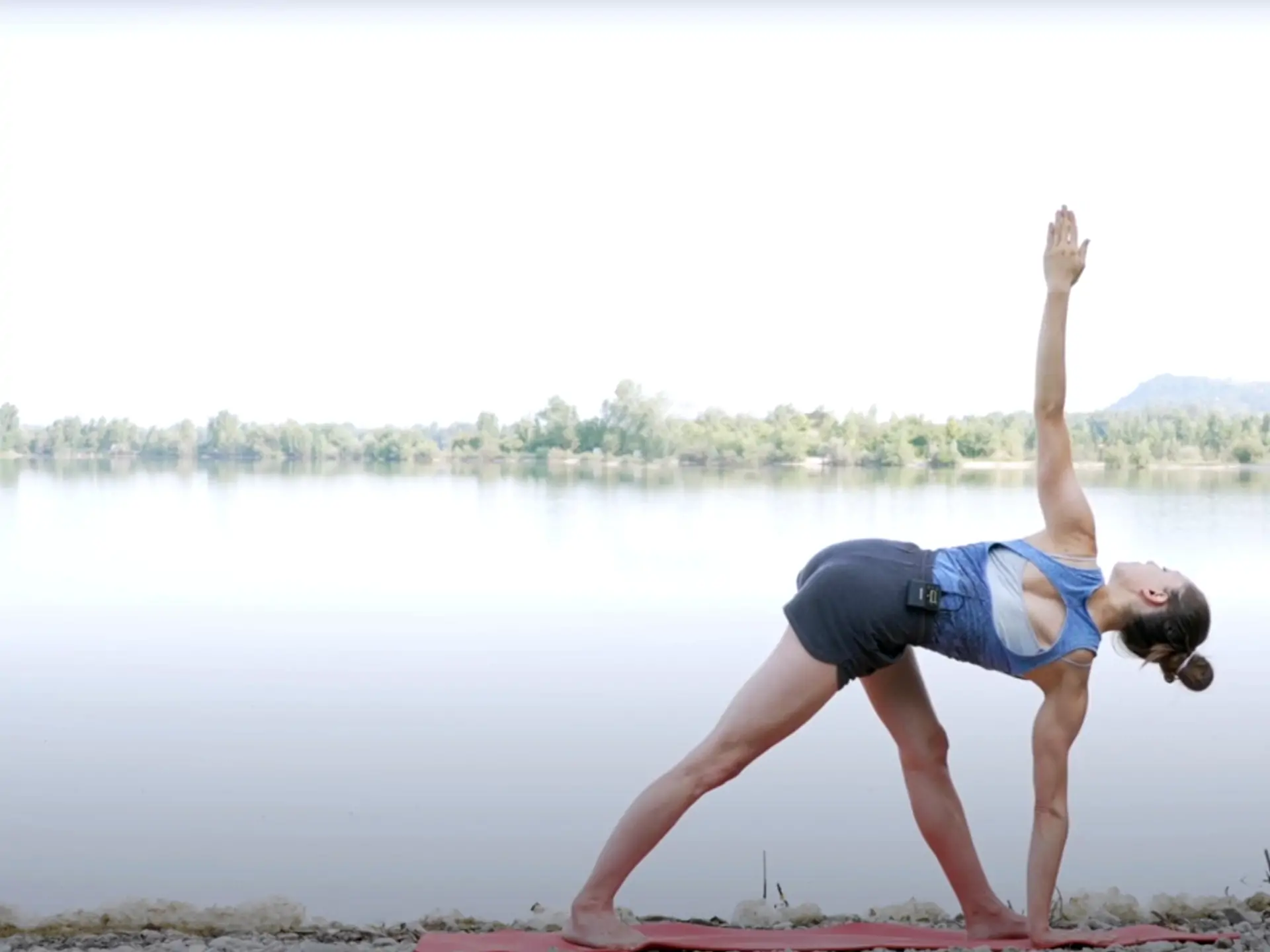
Trikonasana – a stable standing triangle position with both legs straight.
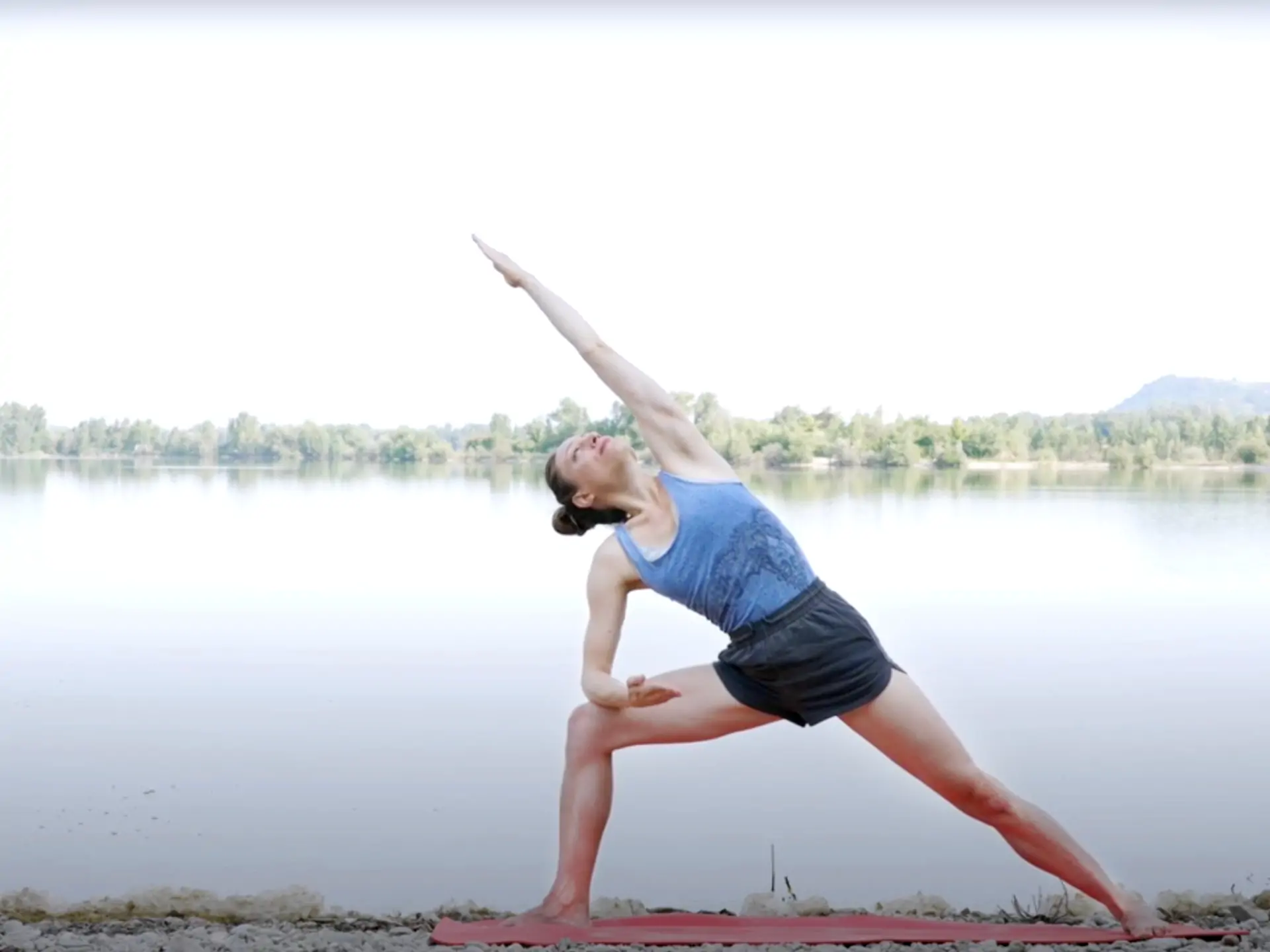
Parsvakonasana – a standing position in which the entire side of the body is stretched.
Prasarita – standing forward bend with a wide stance.
Paschimottanasana – seated forward bend.
Utkasana – chair or lightning pose, a squat with both legs together.
Warrior – Virabhadrasana is the name given to several strong and stable standing postures.
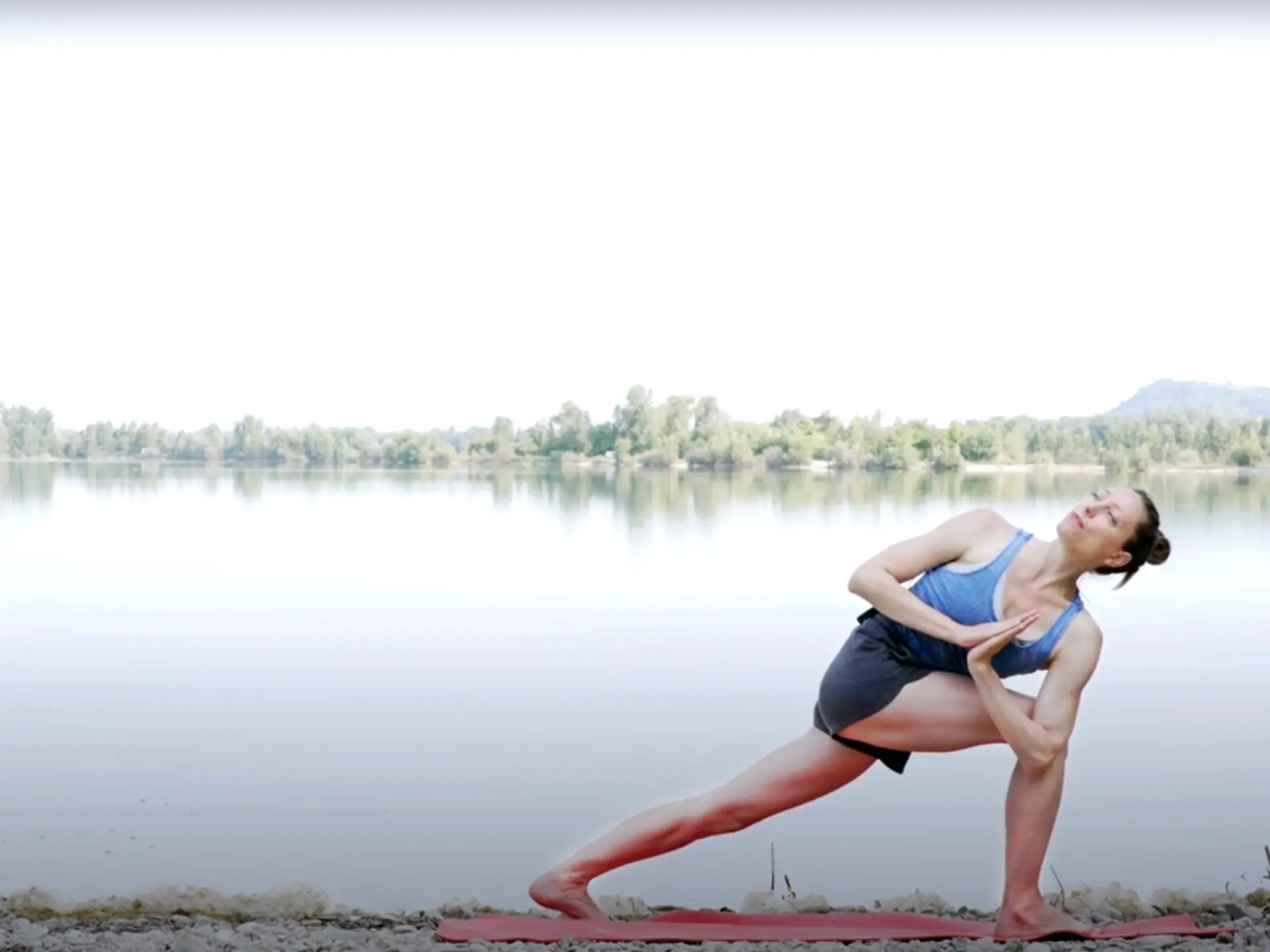
Twist – when I say “twist” it refers to the rotation/twisting positions around the waist.
Shavasana – a lying position with a completely relaxed body, as if for sleeping.
What do you need to start yoga?
For yoga, you only need your body, we say: whoever breathes can do yoga. But to start with classic exercise, it is useful to have a mat, a yoga brick and a strap. These are yoga props that will make it easier to adjust to a position for it to be effective, to be able to lengthen and open, and to remain stable.
To practice, you need to take your time and reduce distractions from the environment so that the hour is rounded, to get the full benefit of the exercise. Time for yoga is our “time for ourselves”. The word yoga itself means to unite, exactly that – conscious attention with what we are doing and the way we awaken the energy of the body through movement. Read the blog 7 STEPS OF SELF-DISCIPLINE and motivate yourself to get going.
Read more about how to incorporate yoga and Mindfulness into your daily life on the blog YOGA NOW.
Watch four videos that cover the BASICS of YOGA to learn the technique and details of movement, position and breath.
To get started with yoga, I have put together a yoga intensive for complete beginners, 45 minutes every other day, in which we go through and learn the basics of yoga in 5 days. LEARN MORE.
Sign up for a 5-day yoga intensive for complete beginners and start practicing yoga, just be brave and cheerful. See you, Tena
*Citat K. Pattabhi Joisa: “Svatko može vježbati yogu. Mladić može vježbati. Starac može vježbati. Vrlo star čovjek može vježbati. Čovjek koji je bolestan može vježbati. Čovjek koji nema snage može vježbati. Osim lijenih ljudi; lijeni ljudi ne mogu prakticirati Ashtanga jogu.”
** Princip sthitra sukham asanam.