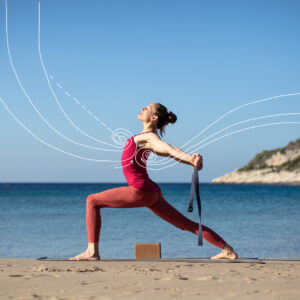
Breath Through the Heart
Number and Duration of Yoga Lessons:11 recordings • total 8 h 45 minIncludes: 75 min, 4 x 60 min, 5 x 40 min and 10 min
When the breath is free, the heart moves in a wider, more comfortable space and gains greater capacity for patience and understanding in difficult states.
It's possible to order a single yoga lesson from this bundle.
The Tena Yoga Method
How I guide this package
Every class in this package has a clear intention. I guide you through the pose, attention, and breath so you understand what you are doing and find your own balance of strength, mobility, and ease.
More on the lessons

YOGA FOR THE CHEST – OPENING THE CHEST
This is a month for tenderness towards ourselves and awakening heart energy. Love is goodwill and acceptance of ourselves, others and every state we experience, and these are qualities we can learn. By awakening the heart, we develop non-judgement and compassion, before which fear, doubt and criticism begin to melt. To cultivate this way of being through yoga, we soften the ribcage, shoulders and torso and breathe through the heart. The lungs embrace the heart, while the rhythm of breathing directly affects the rhythm of the heart and the entire nervous system. We dedicate this month to coherence between breath and heart, creating a place from which we can live more sincerely and express our true nature. When the breath is free, the heart moves in a wider, more comfortable space and gains more capacity for patience and understanding in difficult states: more love. When the shoulders, neck and ribcage are mobile, the body becomes a comfortable home to which we love to return.
Yoga therapy for:
- mobilising the shoulder girdle
- mobility in the respiratory muscles
- antistress support
- deep, calm breathing
- upright posture
- improving bodily sensation
- mindfulness meditation
- positive affirmations
CONTENTS OF THE RECORDING PACKAGE
INTRODUCTORY TALK AND YOGA CLASS ON THE MONTH’S THEME – 75 MIN
BREATH THROUGH THE HEART
Breath represents Prana, through represents flow, airiness and the ease of letting go, while the heart is the emotional and energetic centre of the body.
We open the workshop with a short meditation on breath through the heart. First, we simply become aware of natural breathing, expansion and contraction, then deepen it comfortably and massage the heart space with the breath.
We notice the absence of fixity and solidity in the chest. While we are alive, it moves. We discover the flow through which Prana enters the body. We talk briefly about Prana , the life energy wider and greater than ourselves. We might say the goal of our practice is to fill ourselves with Prana. Through practice, we learn to breathe, move and live in a way that nourishes Prana, supports life and helps us heal. We discuss scattered Prana in contrast to focused Prana.
Sources of Pranainclude the sun, nature, healthy and vital food and drink, good and sufficient sleep, exercise and movement, yogic breathing, an embrace, a kiss, giving, receiving and caring.
During the month, we soften the chest and shoulders and mobilise this area of the body to deepen the breath. As we understand and cultivate heartfulness, we seek the central position between craving and aversion: a position in which the heart is open and growing, which means inhabiting the body rather than the head.
After the talk, we move through a gentle, flowing class that awakens the breath through the heart and heart space as the body opens.
Mindful journal: What is Prana and how do you nourish the body through breathing?
40 MIN
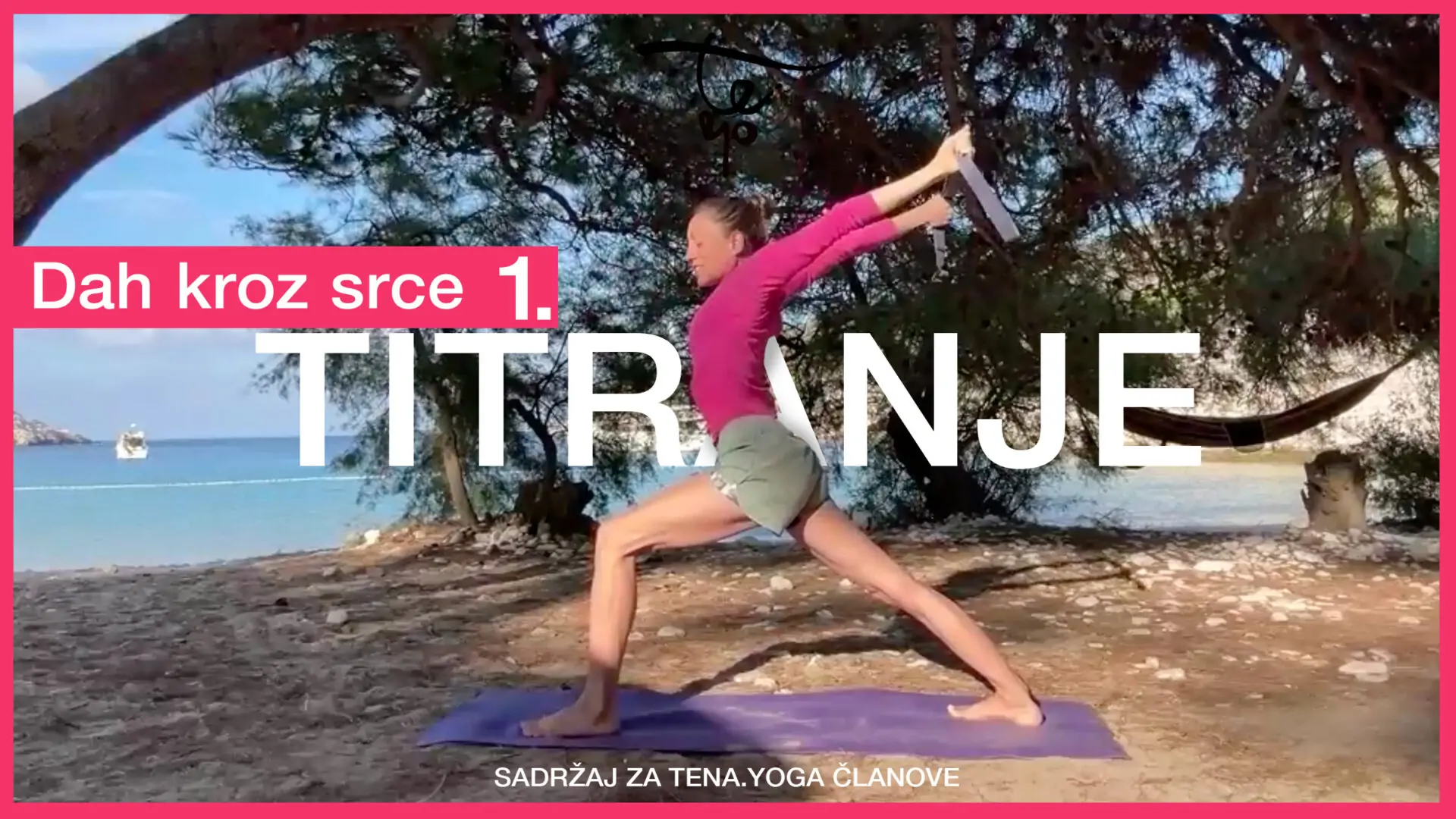
1. VIBRATION
Following the question of how Prana nourishes the body, today’s class explores what Prana is. This is not a rational definition but a felt one, not theory but practice. Everything in nature resonates, vibrates and has its own rhythm. We can describe Prana, as life energy, as a spectrum of vibration and resonance. Everything alive naturally has Prana, but the conditions we discussed influence how we vibrate and resonate. A Pranic quality therefore increases through lifestyle and practice.
We balance our resonance with the resonance of health and the laws of nature by releasing ego and allowing the body to live its own truth and health.
We begin with the breath and a focus on pulsation in the body. The class is slightly longer because we give ourselves time to breathe.
We mobilise the shoulders with a simple strap movement that creates healthy mobility in the shoulder girdle. We strengthen the upper back muscles between the shoulder blades and lengthen the trapezius fibres.
Throughout everything we practise, we try to roll through the body like Cat-Cow, opening and closing like a flower.
Enjoy and dive into the expression of movement and breath, expressing your heartfulness.
Mindful journal: Become aware of the change in the vibration of your energy during different activities. How do situations and relationships affect your resonance? Write down your impression of these subtle differences. The point is to begin seeing ourselves more as a pulsating body and energy than as something solid and rigid.
60 MIN
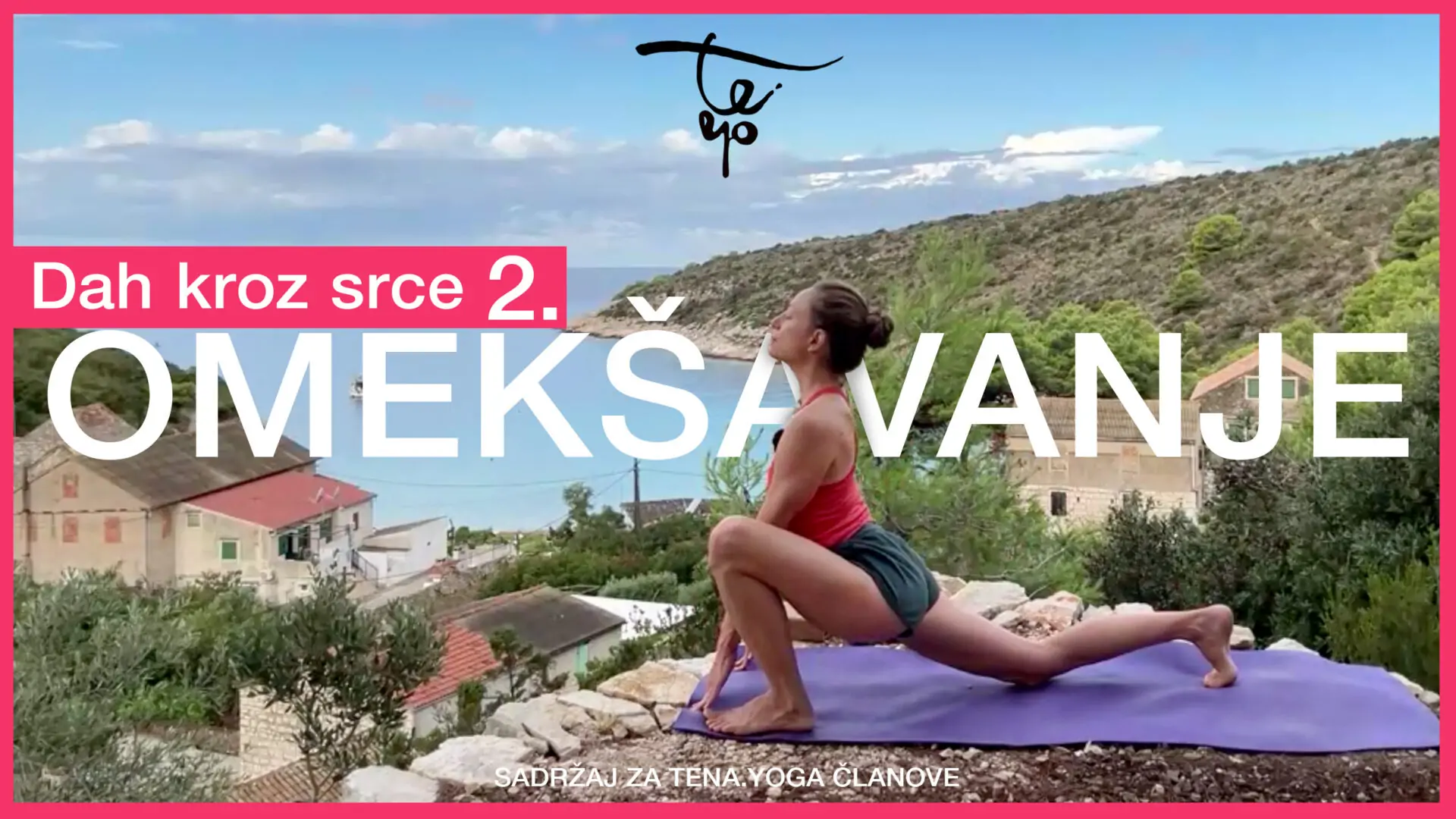
2. SOFTENING
Softening the ribcage literally means releasing micro and macro contractions in the muscles so that everything in the chest and shoulders can move more freely.
We begin by shaking while standing, awakening subtle energy and shaking tension out through the shoulders and fingertips.
We then practise sun salutations that awaken and roll the spine like a plant expanding, with large arm circles opening like petals. This is our movement language for the month: using the arms to open an airy heart space.
In the poses, we mobilise the shoulders with a strap from a Warrior I base and add twists that bring attention to the way breath expands the body from within. We radiate breath from the centre and press it into the pose.
May we breathe freely and openly, touching everything and everyone in our life with these qualities.
Mindful journal: Notice differences in the softness of your shoulders and chest and in the freedom available to the breath. During the day, when do the shoulders contract and when do they relax? How often do you remember to help the chest soften through gentle movement and breath? Our intention is to notice the contraction we take for granted: shoulders rising towards the ears and falling forwards, closing the chest and making the breath shallower. Write down when you become aware of contraction and when you notice relaxation, and how you balance this area during the day.
MINDFUL SLOW FLOW CLASS – 40 MIN
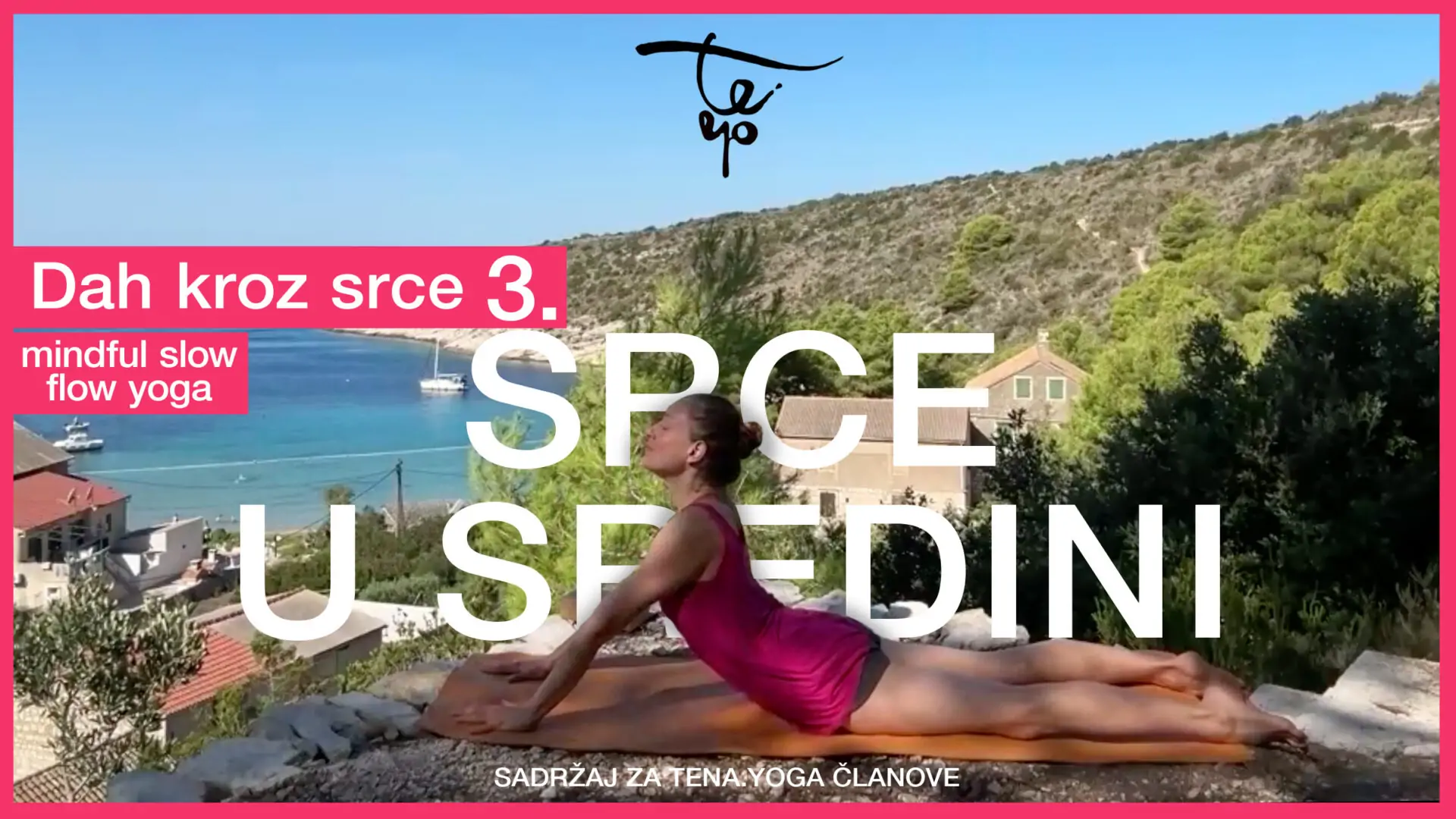
3. THE HEART IN THE CENTRE
When we are caught in craving and aversion, the body is restless and contracted. The heart closes because it hurts not to be here, open with what is. Craving and aversion are our relationship to reality, our attitude and identification. They are painful states. A happy life is free from this see-saw, while still allowing ourselves to feel everything and to act.
They say everything is ego but the breath. We neither crave the breath nor feel aversion towards it, which is precisely why it is a central focus for attention in many meditation techniques, together with the heart.
Our intention is to recognise craving and aversion clearly and feel how the body differs when we simply remain in the heart with the same feelings but do not feed them through an aversive attitude.
We practise several asanas that gently mobilise the back, including Cobra and wave-like back movements, and remain in Anahatasana and the pose of the cat chasing its tail.
We do not change positions often. Instead, we meditate, return to the body and heart, and enter pure feeling where we are free: what is here without our criticism. :)
Mindful journal: Clarify for yourself what craving and aversion actually are, not merely as words but as states. Feel the cold jolt when an aversive thought strikes and recognise it. Know clearly what aversion is and the difference between thinking and being.
40 MIN
4. SOFTNESS BENEATH THE WINGS
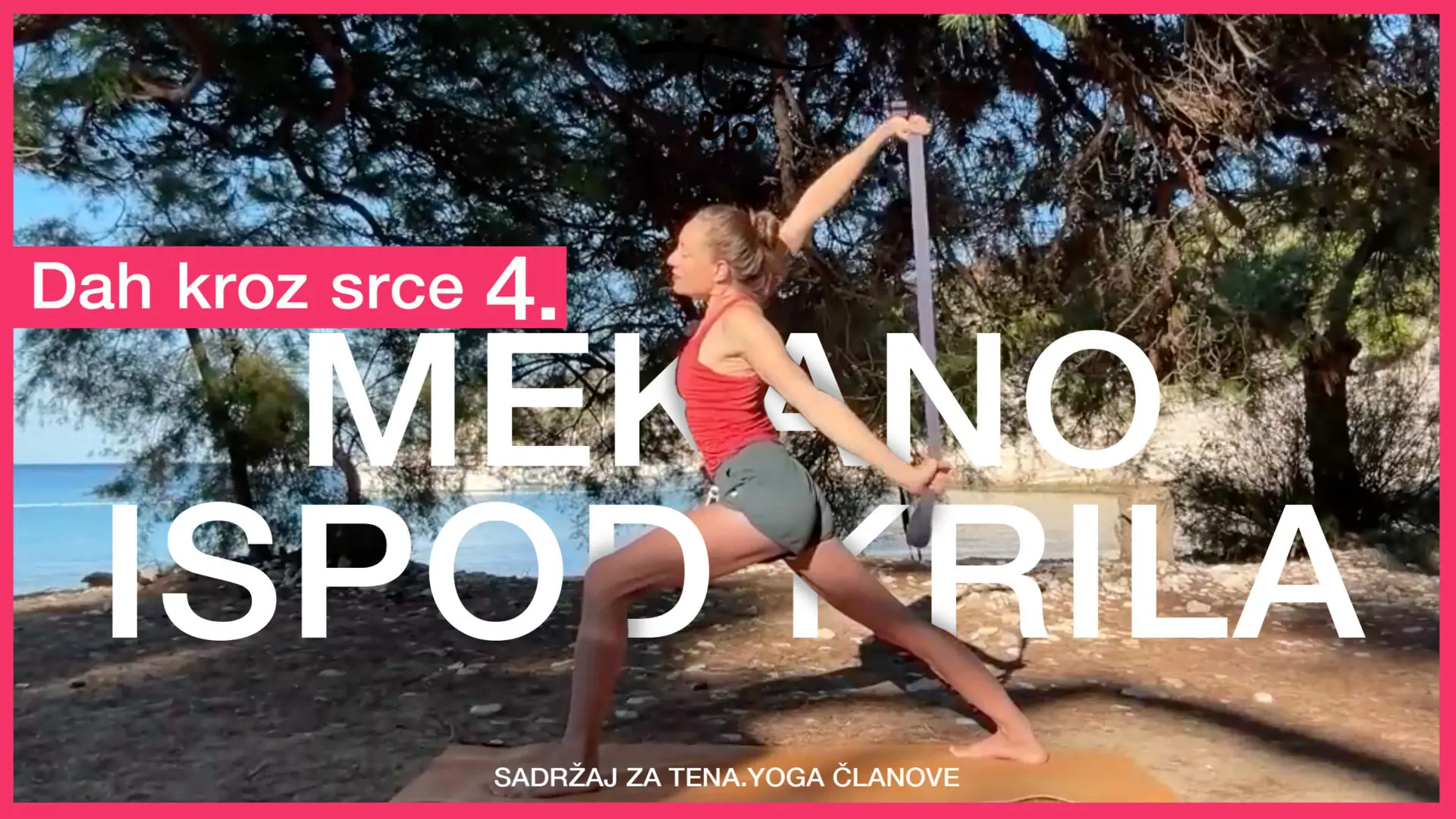
We play with mobilising the shoulder girdle, raising and spreading the arms while holding a strap to reach the areas beneath the armpits and shoulder blades and between the ribs: the space beneath the wings. These movements improve mobility in the shoulders and neck and create greater ease in breathing.
We warm up this way through sun salutations and practise several asanas, such as Warrior I, repeating circular arm movements with the strap. We include Ujjayi breathing, a dense movement of breath through the body and chest. We also practise back-strengthening exercises while lying on the abdomen, which are especially useful for improving upright, open posture.
Enjoy the class and gently press everything old out of yourself, making room for fresh energy.
Mindful journal: Continue to observe the range from relaxation to contraction in the chest and shoulders. Become aware: I am contracted now; can I relax? Help yourself with gentle movement and breath. Notice which thoughts are in your mind when the body is tight.
60 MIN
5. RIVER OF LIFE
We begin by inhaling softness, literally bringing that quality into the muscles, and exhaling softness so they can release. Softness fills the heart and helps it soften too.
This present moment is itself a flow. We cannot catch it because it is always moving. We live a current, not a point in time. It feels like surrendering to a river that carries us and, through that surrender, entrusting ourselves to a higher plan, whether we call it higher intelligence, God or nature, to care for us.
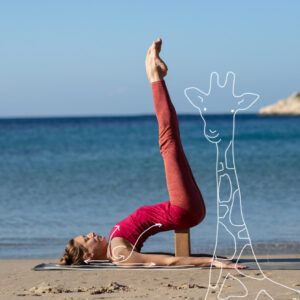
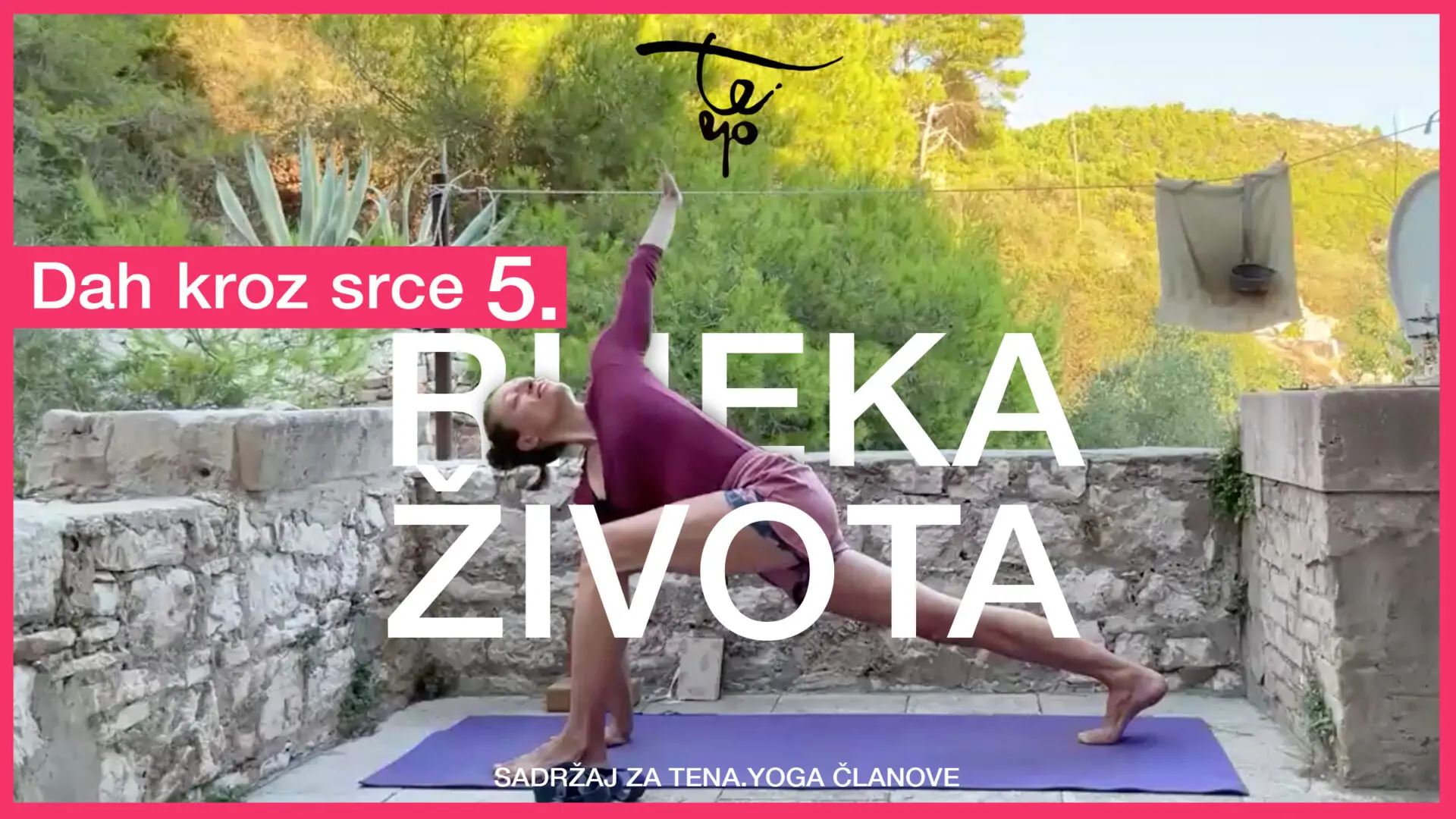
Today’s physical theme is ironing and lengthening the trapezius from the neck muscles, across C7, the final cervical vertebra, to the lower edges of the shoulder blades. We introduce a strap exercise for this at the beginning and repeat it throughout the class. At both the beginning and end, we play with stimulating the point at the crown of the head. Other exercises also create space in the shoulders and chest, and we complete the class with a slightly longer Shoulderstand.
Shoulderstand is very useful for stretching the neck muscles and trapezius, but it can be too intense if you do not practise it often. I provide all the instructions. Move slowly, pay attention to how you feel and avoid sudden movements, especially while the body’s weight rests on the neck.
Enjoy the river of the present moment flowing through your body, heart and life.
Mindful journal: Can you see the present moment as a flow? Close your eyes and feel it moving through the fluidity of bodily sensations.
40 MIN
6. THE GIFT
At the beginning, we recognise: this practice is a gift for me. I receive the gift of health through movement and breath. I give my attention and presence to myself. This is one of the most valuable gifts. Through this class, we receive it and share its benefits with others.
The first half contains plenty of mobilisation for the shoulders, arms and chest, together with flowing movements. We develop mobility through the hips and spine so everything connects in a flowing chain and the body awakens. We learn to breathe into the deepest part of the lungs and eventually through the whole body. We also practise a sequence of lateral movements with broad arm gestures.
In the second half, we lie on the abdomen for several back-strengthening exercises and practise Shoulderstand once more. You already know all the instructions. :)
Mindful journal: What can I give another person? A little of my attention, time or patience. Giving is a practice of releasing ourselves and our needs while becoming aware of the needs of others.
60 MIN
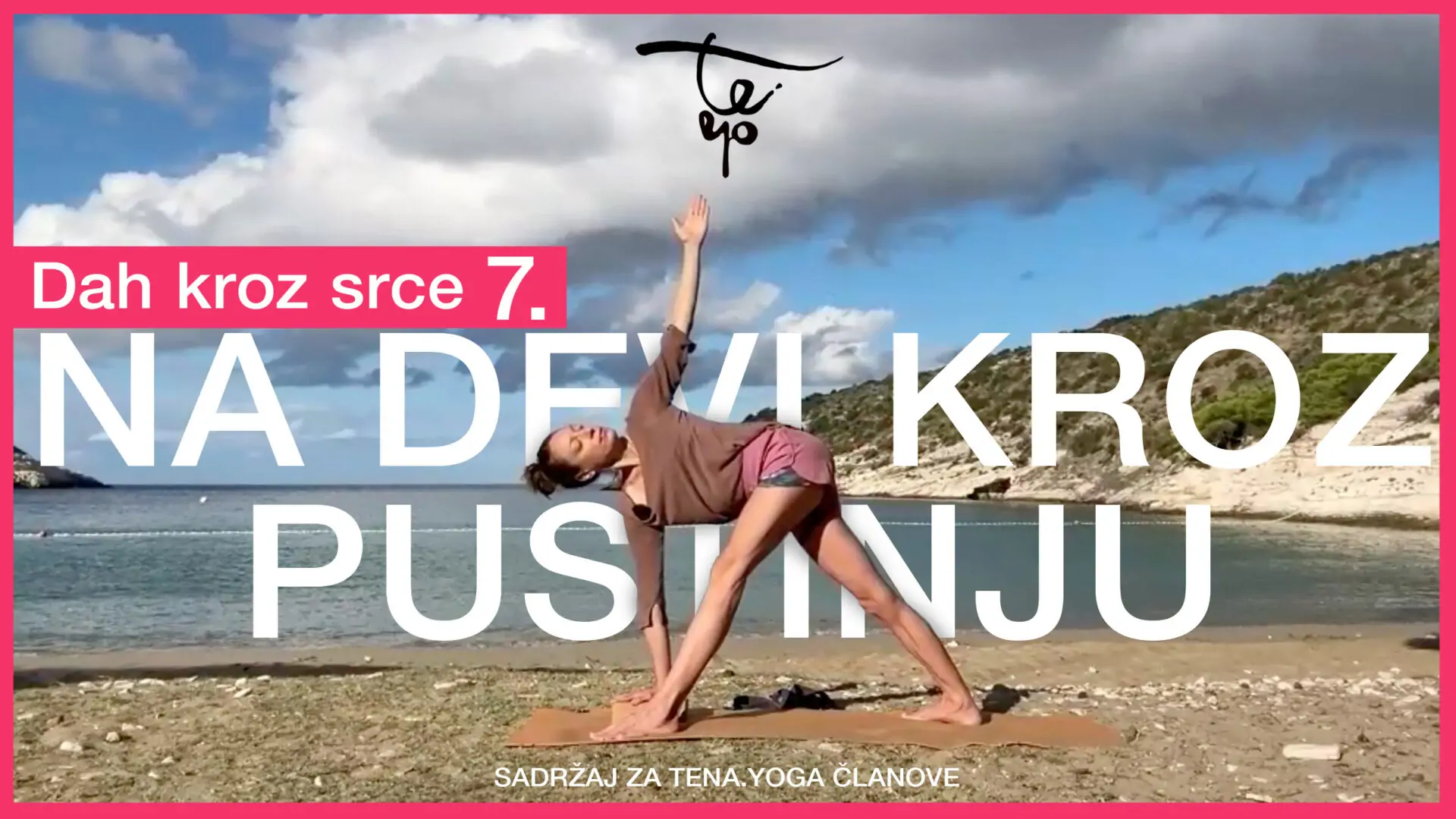
7. ACROSS THE DESERT ON A CAMEL
We begin by focusing on the body in the present moment and lengthening the breath so that it massages the heart space. We release everything else and simply arrive in the body: present moment body awareness.
We gently warm the neck, continuing from the previous class, and move the head slowly and deliberately in several directions. We strengthen the upper back and practise a preparatory exercise for Camel that warms the shoulders. Several rounds of sun salutations bring us into a pleasant rhythm of movement and breath. In the standing sequences, we practise variations of Warrior I and twists. The entire class prepares us for Camel, Ustrasana , a fairly intense chest-opening pose. You will notice that it is important to keep the abdomen active, so we include plenty of centring and stabilisation.
The purpose is to allow ourselves to feel the intense stress sensations that backbends can awaken, so that we can work with our resilienceand capacity to recover.). In yoga, under controlled conditions, we place the nervous system under higher activation and create support and stability from within ourselves.
Alongside mobilising the shoulders and spine, opening the chest and strengthening the core, we therefore practise breathing calmly through unrest.
Mindful journal: Notice stressful moments during the day and how thoughts and information affect the body. Write down what helps you meet cold-sweat moments more easily and how you return to balance.
40 MIN
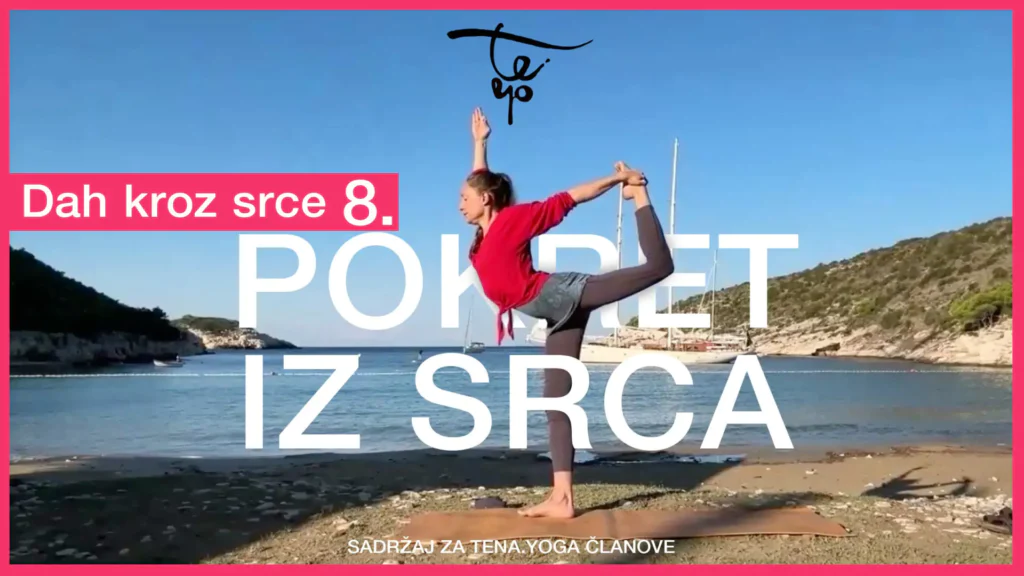
8. MOVEMENT FROM THE HEART
The heart’s moving energy. We move often and fan the little fire of the heart through movement. We make broad circles around the chest to awaken the shoulders and ribcage and stir the flow of air in the space around us.
Everything begins to turn and move. The motivating energy of the heart is positive: a will to live, faith and meaning. When we awaken it, we awaken our true nature, reduce the power of concepts and return to real life, to our body and heart.
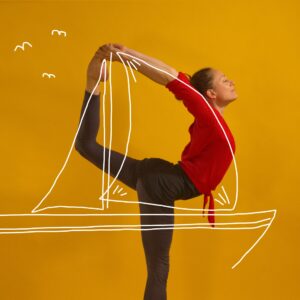
Several times, we move the arms as though swimming backwards, awakening stagnation around the heart. We then circle through sun salutations and Warriors before dancing into Natarajasana, the dancing Shiva.
Enjoy the class, flow through your heart and awaken your original love, the heart energy and will to live expressed through everything we do.
Mindful journal: Remember your heart energy. The heart always has good intentions; our confusion sometimes produces mistaken ones. What would it be like to act only from pure, sincere motivating energy of the heart? Surrender to your heart energy and trust it, placing less faith in thoughts and concepts. Write down when you can return to the heart and breathe through it, and when the heart can become your guide.
60 MIN
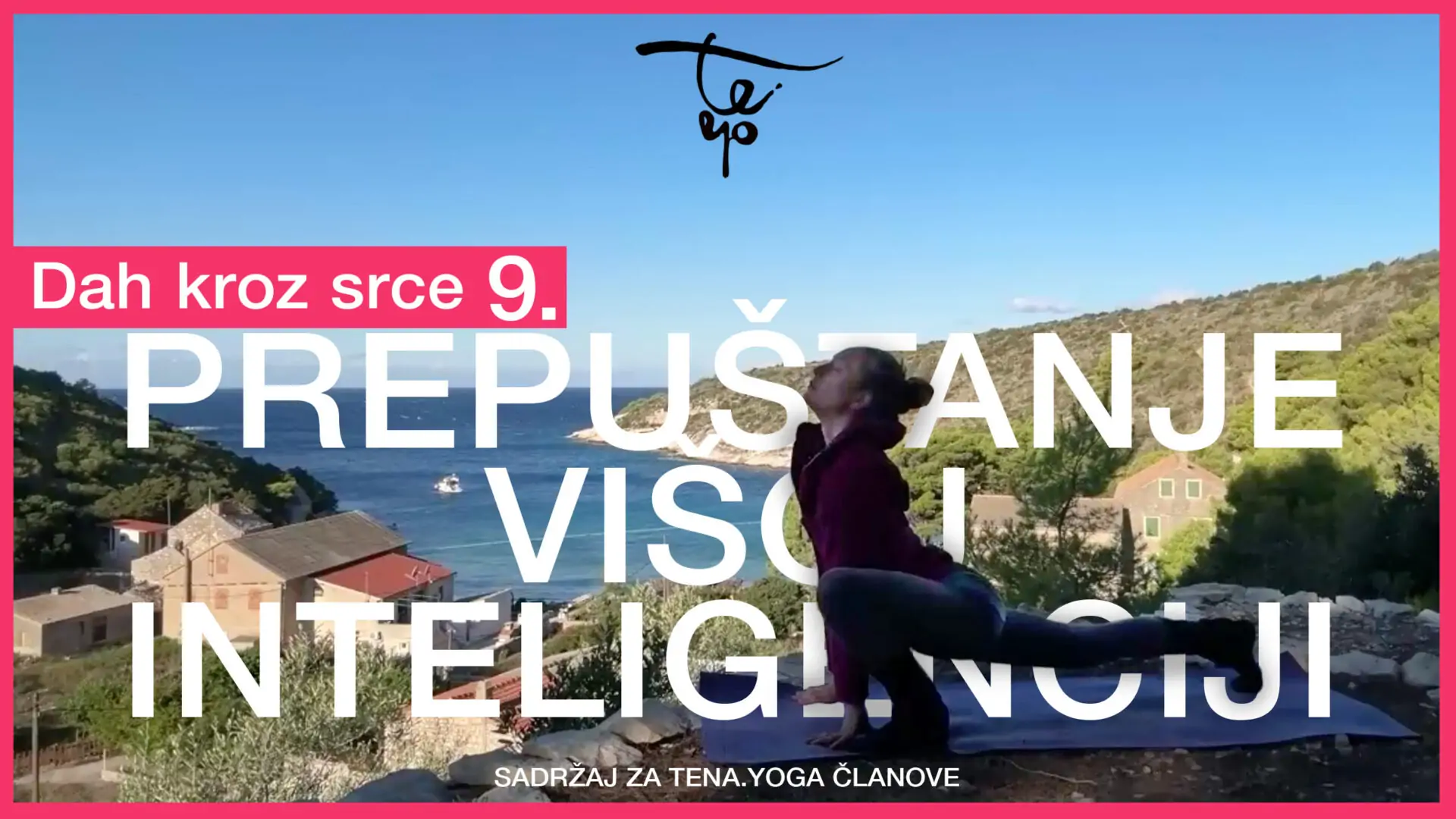
9. SURRENDERING TO HIGHER INTELLIGENCE
Surrendering with trust to the higher intelligence of health that naturally flows through me. That is the full title. :)
By returning to the body in the present moment, we connect with what is greater than us. We may call it divine intelligence, a force of nature or God. We surrender to this intelligence in which healing and health are already inscribed. Just as everything in nature moves towards balance, our being naturally moves towards health in body and mind. What a relief to know that this principle is already here and that we only need to surrender to it.
Our opening dedication is: I feel the present moment, direct attention towards the heart and say, may I surrender to the higher intelligence, the law of nature and the health of my body. May these express themselves, and may I create healthy conditions for myself.
We warm up through flowing sun salutations and, in several poses, hold the arms in the Gomukhasana position. The shoulders rotate in opposite directions, one externally and the other internally. These rotations mobilise the shoulders thoroughly and open deeper corners of the chest that we reach less often.
The class consists of several sequences of changing poses and finishes with a few exercises for the back muscles.
Mindful journal: Ask yourself: am I surrendered to divine intelligence? Do I trust enough to let health flow through me and release my concepts of how things should be?
+ A 10-MINUTE CLASS FOR EVERY MORNING
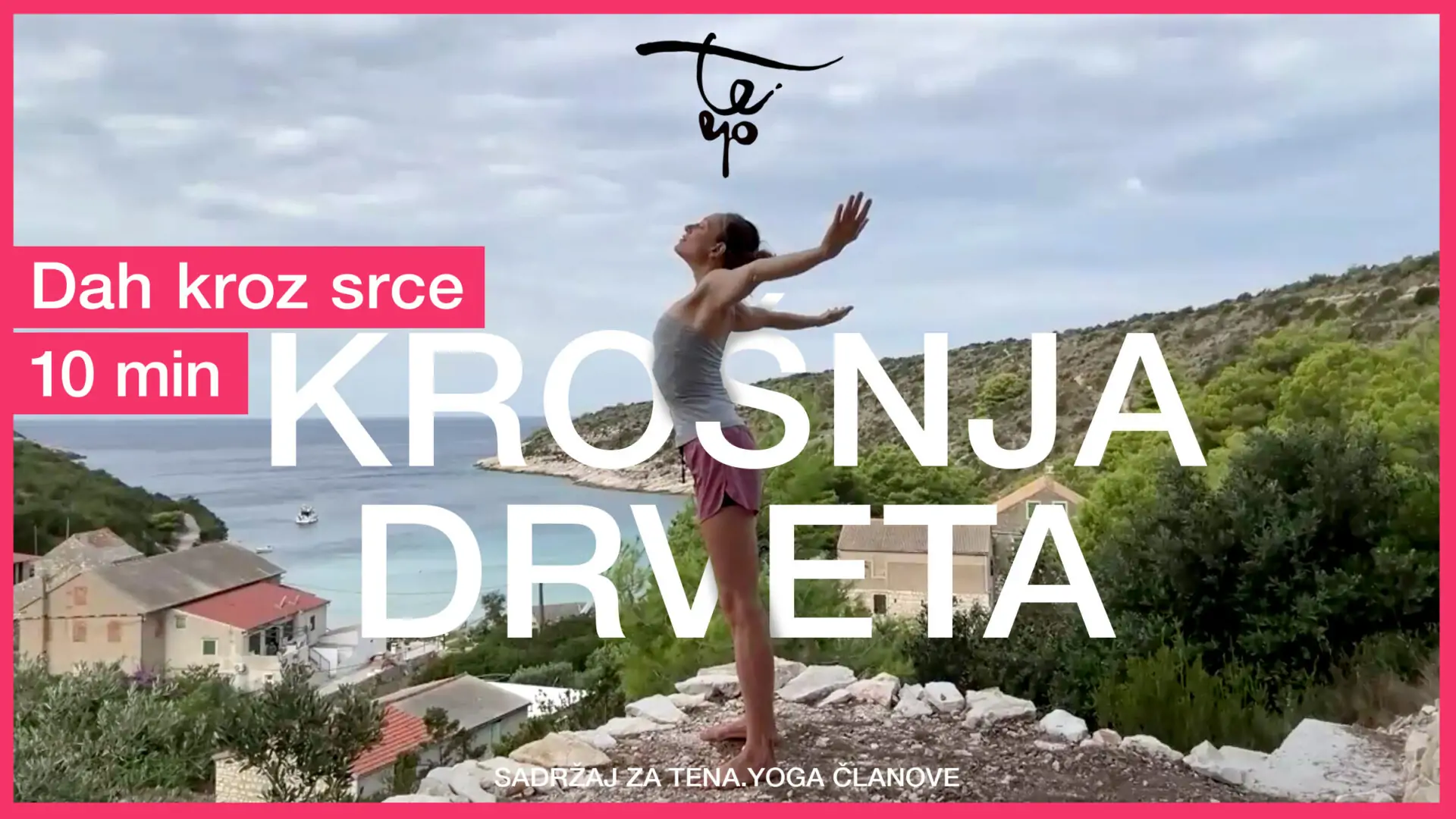
TREE CANOPY
In this short class, which you can practise at any time of day, we gently awaken the body’s energy, mobilise the shoulders and back and breathe deeply.
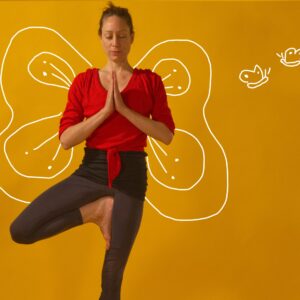
We practise Tree pose, growing and expanding the lungs and receiving oxygen through our canopy, just like a tree.
Enjoy your body and the breath through your heart. :)
May we enter the day open and ready to remain relaxed with everything we experience.
We breathe through the heart and return as clearly and purely as possible to ourselves and the body, to the direct and unique vibration of being.