Responsible tourism
Everything starts with intention.
How do you feel when you hear these terms: mass tourism, illegal construction, concreting, commercialization of resources, destruction of nature, crowds at sea…? Terms that are linked by one main denominator – earnings in the season.
Tourism, which is an expression of greed and laziness, seduces with solutions with instant goals that only need to be temporarily worked on, and for whose consequences no one is obliged to take responsibility. The mass consumerist tourist is the answer to the intentions of mass profit of large investors whose investments are mostly foreign and who do not care about our economy and the problems that remain after the season. Greed for profit blinds a person and makes it easy to justify building what and where he should not. Without thinking, he will damage the relationships he has with his fellow citizens just to reach his goal – another floor for rent. Greed springs to the surface as soon as the opportunity presents itself. The opportunity has presented itself, the coast is the most beautiful for us (for now), we build so that others can consume at the expense of the resources of our nature and society.
Have you ever been to the Spanish coast? It’s a true example of a sold soul, no nature, no tradition, just hotels, it’s clear that their intention is to make money.
Is there a good measure and a right way to keep tourism sustainable in the long term, with earnings distributed so that the end is taken care of as much as it was taken care of at the beginning?*
*So give as much care to the end as to the beginning – a quote from Chapter 64 of Lao Tzu’s Tao Te Ching.
Is there a way to, with the intention of making a profit in the season, become aware of the whole picture, a broader perspective? To know what our impact is on the relationships we depend on, the one with nature and the one with society? Can we, within a system, chaotic as it is, foster values that will not alienate us from ourselves?
The problem of concrete giants, as they are called, was humorously illustrated by Valentino Bošković in his poem Cruiser in Postira.
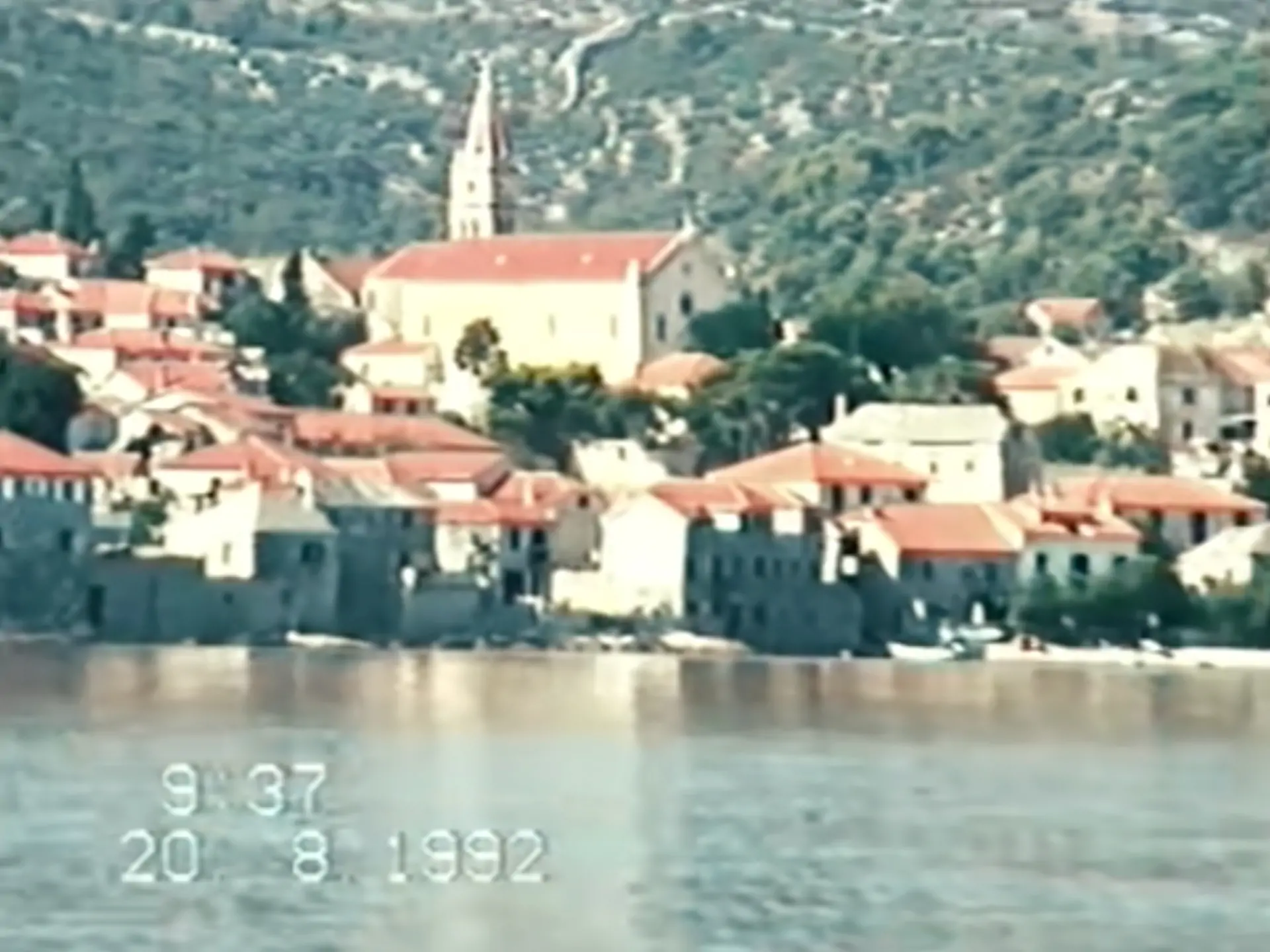
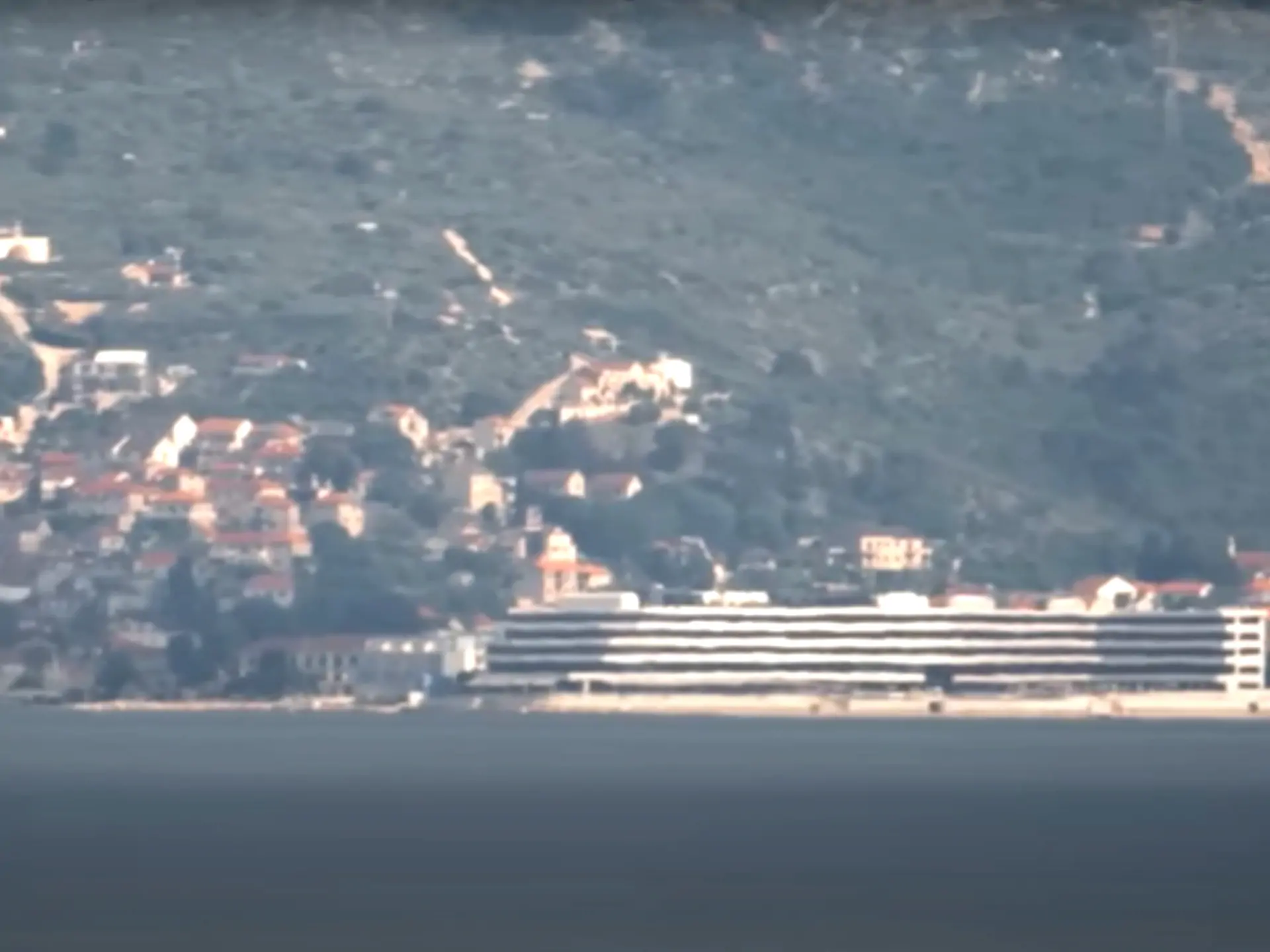
Johnny and apartments
Johnny, who lives in a small town by the sea, realized that the easiest and by far most profitable way for him to make money was to rent out an apartment. He and his family can live peacefully all year round from two apartments that they will rent out for three months. Johnny invested his savings to raise a floor of the house and build apartments (it is questionable whether he stayed within the dimensions of the spatial plan of his town). And it paid off, Johnny rents out apartments, his wife and children clean and they have enough money for a peaceful life and all their needs, even to invest in further equipment and construction.
Who wouldn’t be Johnny if they had such an opportunity?
With this approach, everyone in the small town by the sea starts to engage in tourism. It becomes a ghost town and apartment blocks as soon as schools start in Germany and the Czech Republic. It becomes destined for tourism and the needs of foreigners, not those who live there. The quality of life of the inhabitants drops because the meaning is reduced to only three hellish months of the season. And in the end (and in the beginning) the tradition of the hosts is the reason why tourists even enjoy visiting this town; it is the spirit of the place and its value should be cultivated without compromise. Does a place have its own authentic spirit if the meanders of modern architecture hang over the old square with the church, the cardo and the decumanus, with empty windows for most of the year?
City municipalities support tourism, because if an individual is rich and they are, anyway, the city, municipality and county make money from the tax that Johnny pays. Our entire country feeds from that source.
You can immediately stop being appalled by concreting and apartment building, because your standard of living will also rise from Johnny, a small town by the sea.
The question of why the resources earned from tourism are not invested in production within the country to encourage domestic producers and industry, why are not investments in culture and science so that we all do not raise each other’s living standards is a question for another discussion. As well as the question of how much tax someone pays on their tourism earnings and where (to whom) that money goes. The answers to these questions should be in contracts for any tourism investment, from the smallest to the largest. It is known what your intention is – fast and safe earnings, and with that it is your duty to take responsibility for sociology and ecology, that your tax is invested in those sectors of the local community.
Tourism with personality
Debrah and Jonnathan, who came to the small town on vacation, are curious people, they get mental nourishment from culture, and spiritual nourishment from the nature they find here. They want to know more about this town, they even have a Lonely Planet Croatia guide in their pocket. Maybe they wouldn’t “just consume” if they were offered to explore, find out, connect, hear what challenges Johnny has and how he lives throughout the year. Johnny can learn their life stories, so they will no longer be just a number on paper. Johnny probably has a relatively genuine relationship with the ten guests who return to him every year. Certainly more than tourists who consume megalomaniac hotels and have no one or nothing to connect with. They are often unaware of what goes on behind the scenes of a fancy hotel. How much food is thrown away, how much garbage is produced and left unsorted in the community where the hotel is located, on some small island that remains overgrown with garbage after seasonal consumption (where the garbage burns and releases toxic gases to those who live next to it, of course not to those who spent the summer. That was the case on Vis this year). How many hotel staff members are exploited, how much poverty is hidden from the eyes of the rich. If a tourist saw this deliberately hidden but true picture of things, he would certainly not be able to enjoy himself carefree on the beach.
The tourist does not ask, it is not up to him to worry about it, he paid to come and relax. The system apparently works, but somewhere, something must break.
Are we creating these “mindless, mass consumerists” with what we offer them, or are they making us greedy renters and caterers because they don’t appreciate the place they came to and have nothing/no one to connect with?
We, as a state and individual hosts, need to take responsibility to break this vicious circle because we receive tourists as guests and can say: you cannot behave like this – you have come to my home, on my rules. Money cannot buy the value that our homeland, the land and nature that feed us have for us. It cannot be a justification for consuming our home and values that, for us alone, have no price and are not for sale (they should not be).
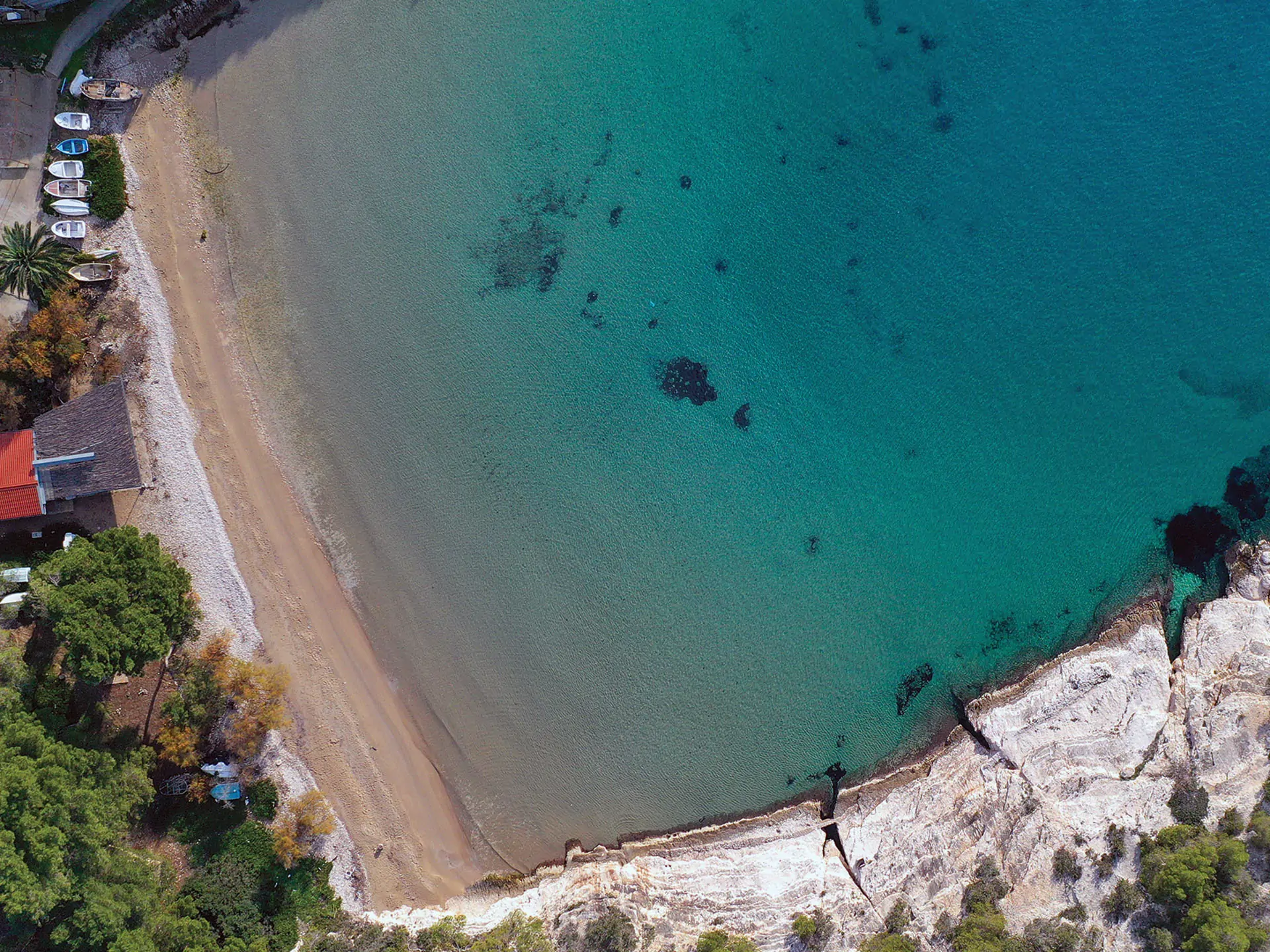
Conscious tourism
Ecology is a matter of respect and responsibility. We are responsible for the item we buy and its packaging. If we can’t do better, at least we should dispose of those two properly when we no longer use them. I deal with this topic on my blog: Where does ecology begin?
Tourists might not so lightly throw garbage in the area around them if they didn’t have the feeling that they are only there in pass by, but that they belong and that they too are harmed by garbage thrown into the Adriatic. Perhaps they would have a relationship with the place they came to, as if it were their home, and they would consciously maintain the hygiene of the environment and relationships. How can we awaken in them that feeling of belonging and attachment?
Read the criticism of nautical tourism at: The sea bore fruit peels.
The prefix Mindful can be added to anything, including tourism. The term “Mindful tourism” is used to explain these very aspects that I am writing about. As hosts, we should promote them, even impose them on our tourists. This should be the condition under which we agree to play this game of supply and demand.
The idea of this text is to invite all those who expect to earn money from tourism to recognize that the expectation of that income is one side of the coin (what will be good for me), and on the other is their duty to invest material and non-material resources so that after their work the community and the environment are richer (how can others be better off because I am here). That is why this text is permeated with many questions, let’s look for answers to them.
This is, of course, also a call for local units that should direct individuals to this through rules, and for larger state institutions that can form laws that direct the flow of tourist – seasonal income and stay positively, back to us.
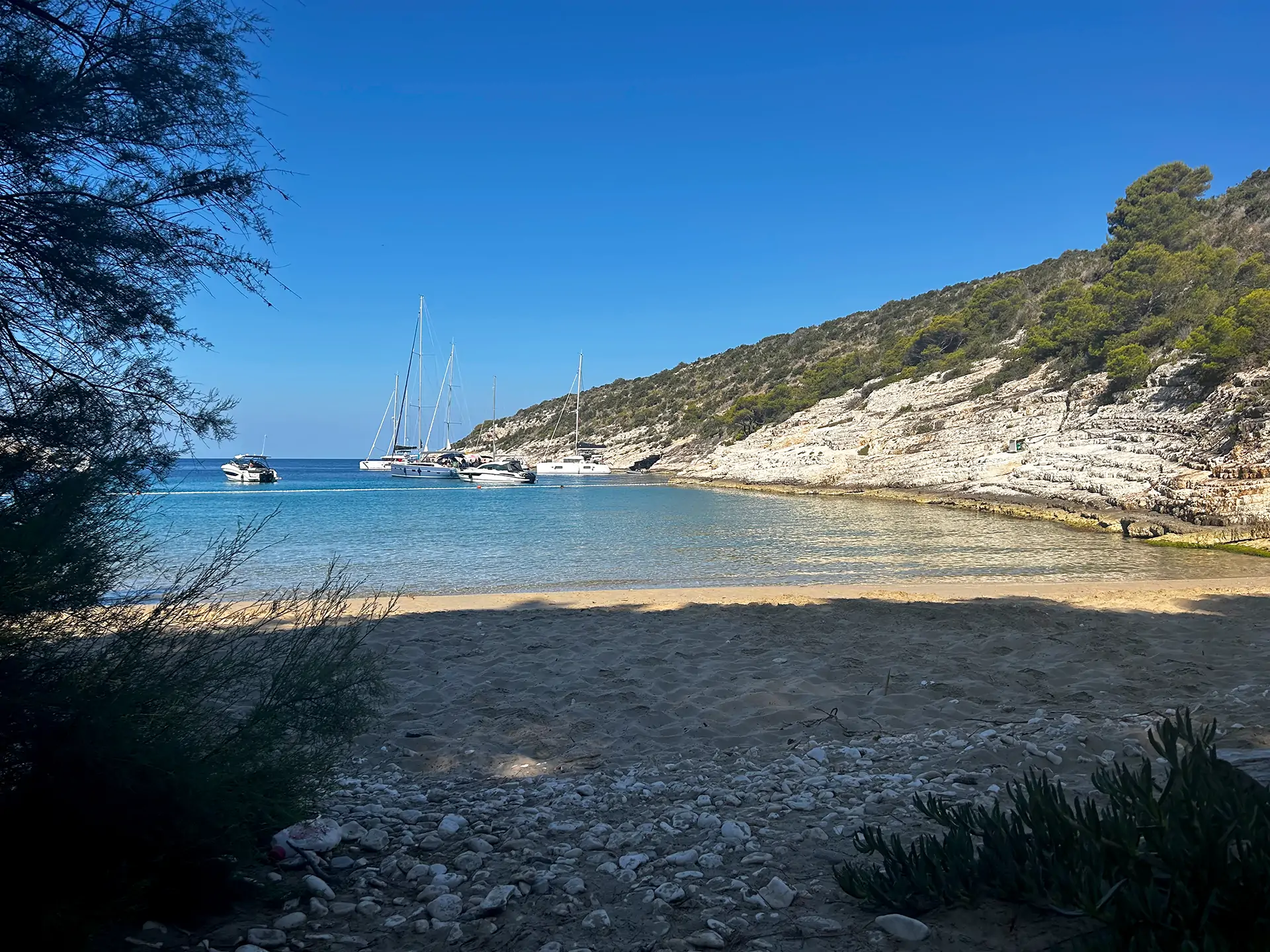
My family and I now live in a top tourist zone but we are not involved in tourism, we live our lives alongside tourism and the opposite, in its complete absence, when in winter only the sea currents rush here. We have shown our devotion to this place as it is, and not just when it is “financially fruitful”. Here, where tourism has not yet metastasized, I recognize many positive examples of individuals who cultivate and do not exploit. They work hard and work hard. They clean, tidy and refine. I recognize the initiatives of the residents to connect and grow together even in winter when everything is “deserted”. Let us cherish these qualities.
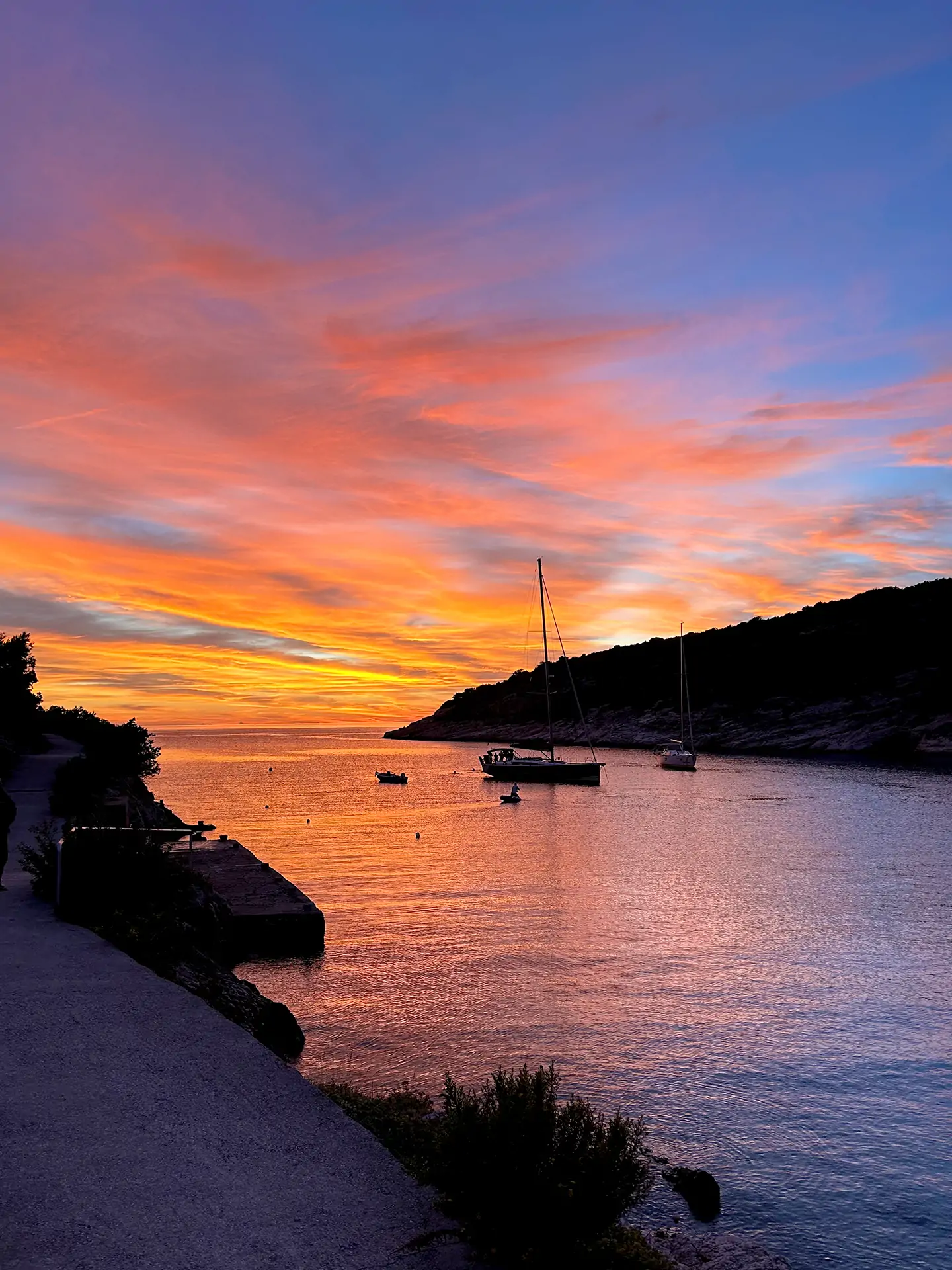
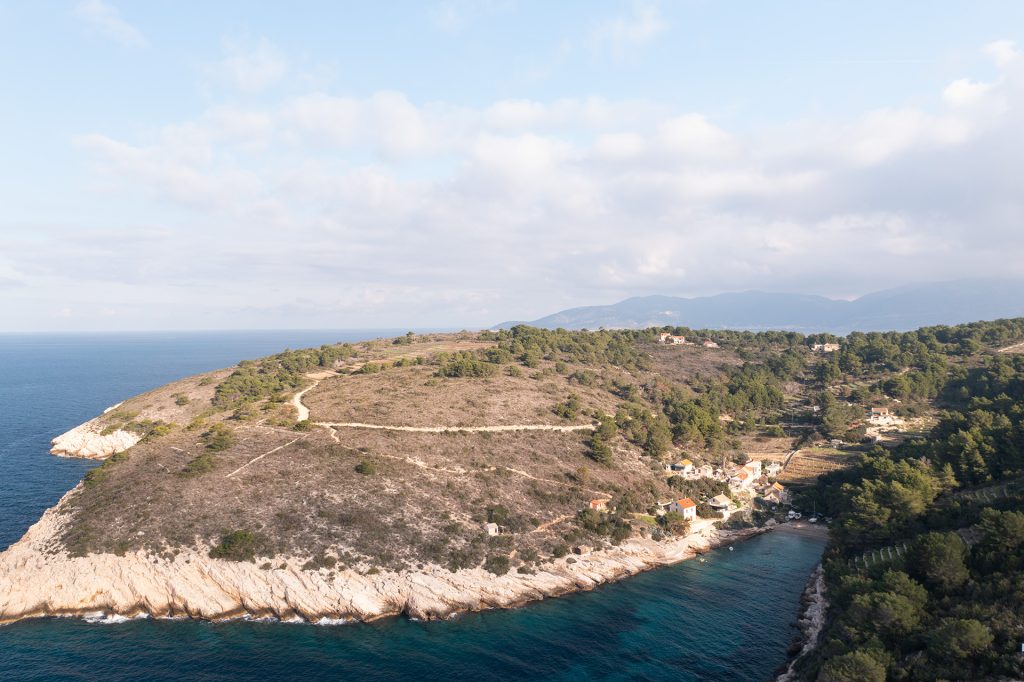
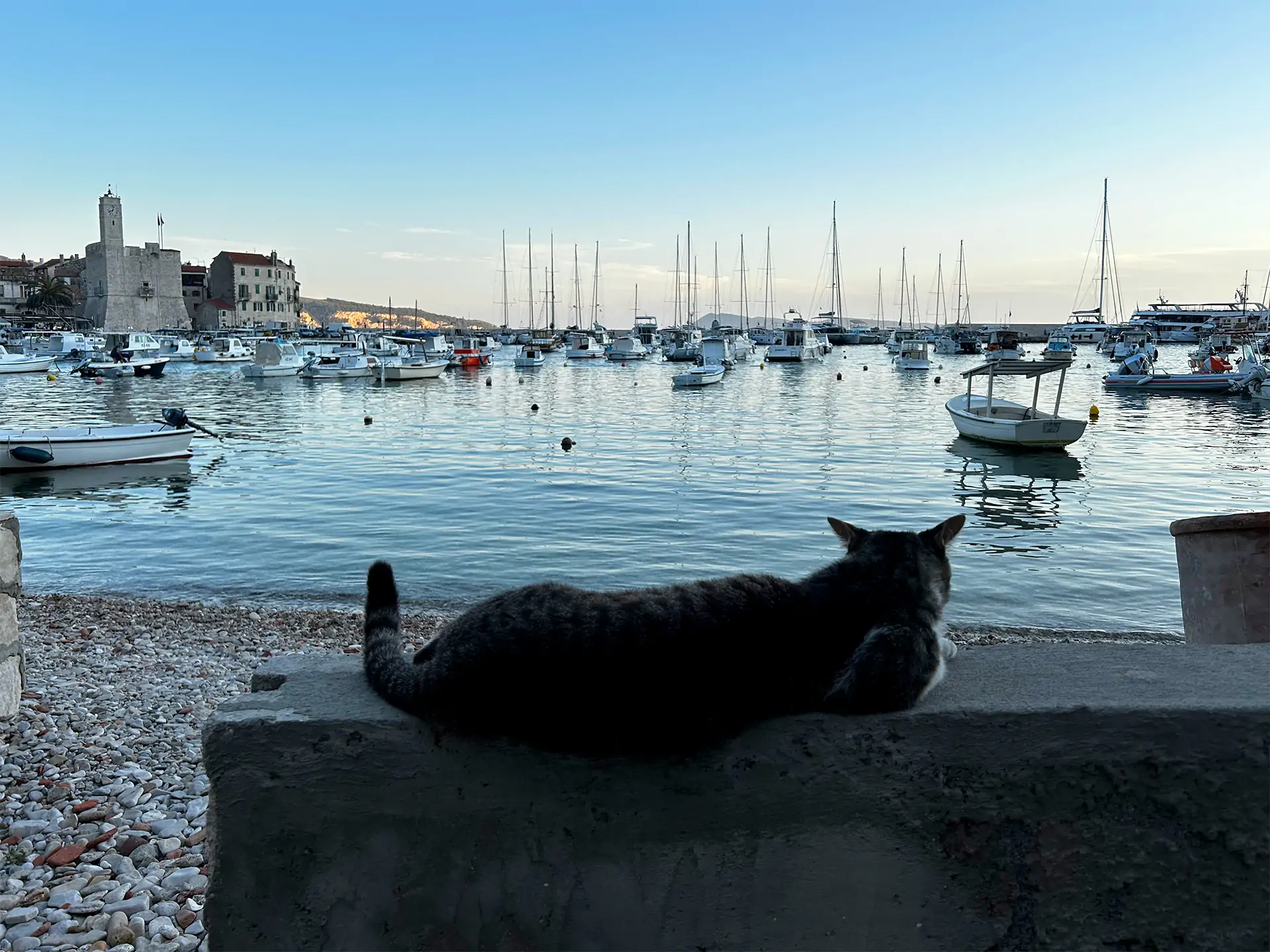
As you can see, I have included affirmative images of what is beautiful and valuable, to remind us that we want to preserve it, to remain in the emotion of wonder and joy for what we have instead of being disgusted by what we have already lost.
Can anything be done?
- Everything starts with an intention anyway, but there is also a branch of tourism whose intention is not to make a profit, and that is health or educational tourism, which are oriented towards the well-being of those in demand.
- City authorities can make an effort to ensure that people who are primarily involved in tourism have other life values that fulfill them outside the season. For example, offer workshops and socializing in which traditional crafts are revived (for example, lace making, repairing and building ships and dry stone walls). I saw several positive examples and initiatives recently in Komiža.
- Open up options for professions that people can pursue all year round, regardless of tourism. Biologists, archaeologists and geologists would have their hands full on Vis.
- Encourage locals to offer tourists experiences (experience tourism), and not just products and services, for example, “an old wooden ship repair workshop” or “beach cleaning”, this way the tourist can delve deeper into the true values of the local community, and along the way help instead of hinder.
- The local community can encourage events and institutions that build a direction for the culture of living and emphasize values that are not commercialized for profit. Cities can literally advertise (on advertisements and with brochures) these values and invest in them. In Hektorović (ferry), advertisements for pizzerias and travel agencies are playing on the screen, why not play the philosophy and call for responsible tourism that the island of Vis represents, so that while you are traveling towards it, you can get a sense of the value you are arriving at.
From the distant shores of our blue Adriatic, I believe in responsible and sustainable tourism and I hope that we can discuss these difficult topics and seek solutions, for the long-term benefit of all.
Greetings from Biševo