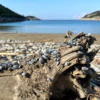
I am sorry that, among the journal’s stories of beautiful flora, fauna, and natural wonders, I have to put up a post about rubbish. But I do. I do not regret posting it — otherwise I would not — I regret that we, as a civilisation, have come this far and still manage to close our eyes to the problem. Because we have, and because the truth about rubbish floating through the world’s seas is painfully visible on these shores, this story belongs in the Biševo Journal. You know I cannot keep quiet about it, and that I have written before: WHERE DOES ECOLOGY BEGIN? and RESPONSIBLE TOURISM.
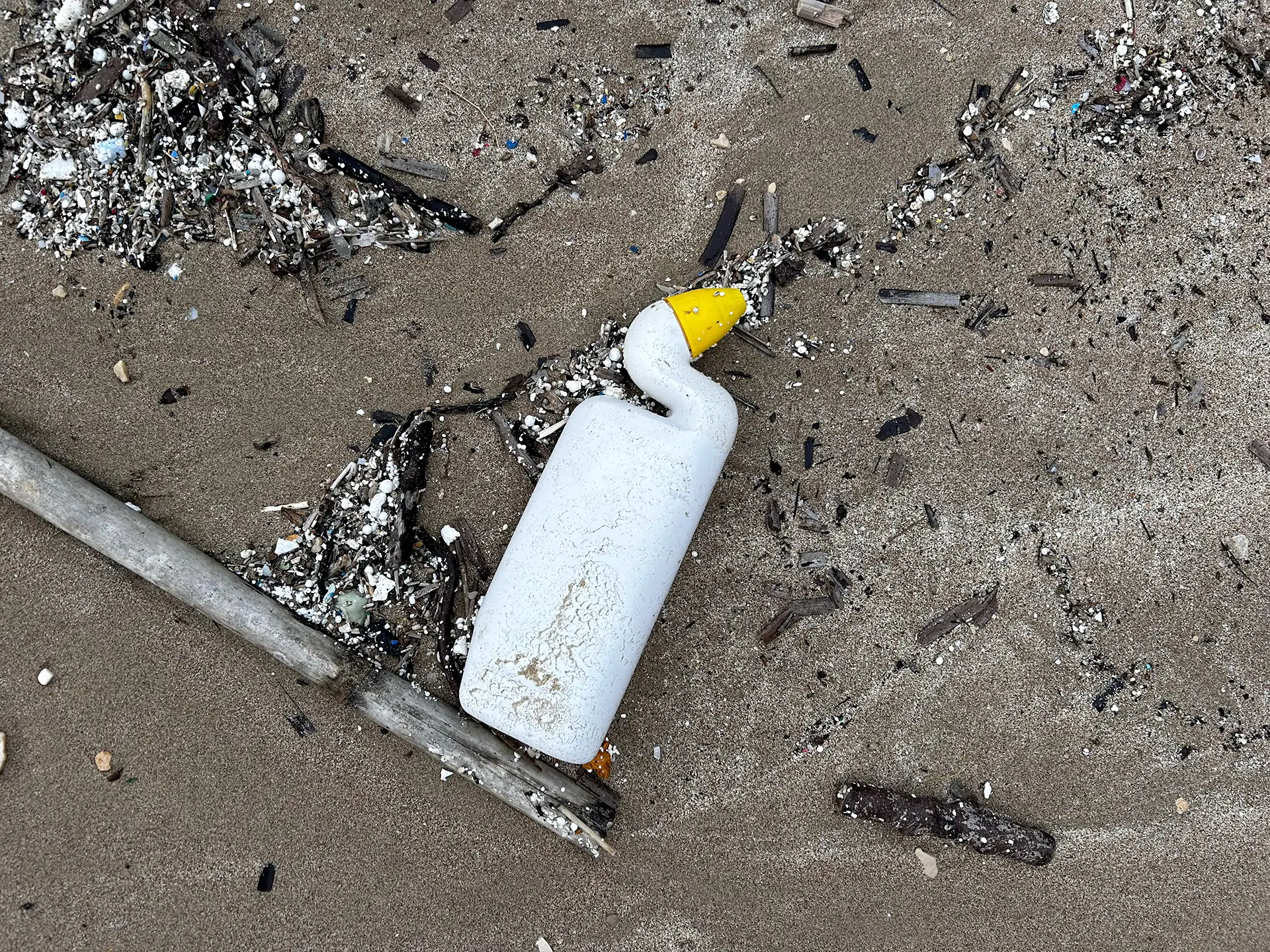
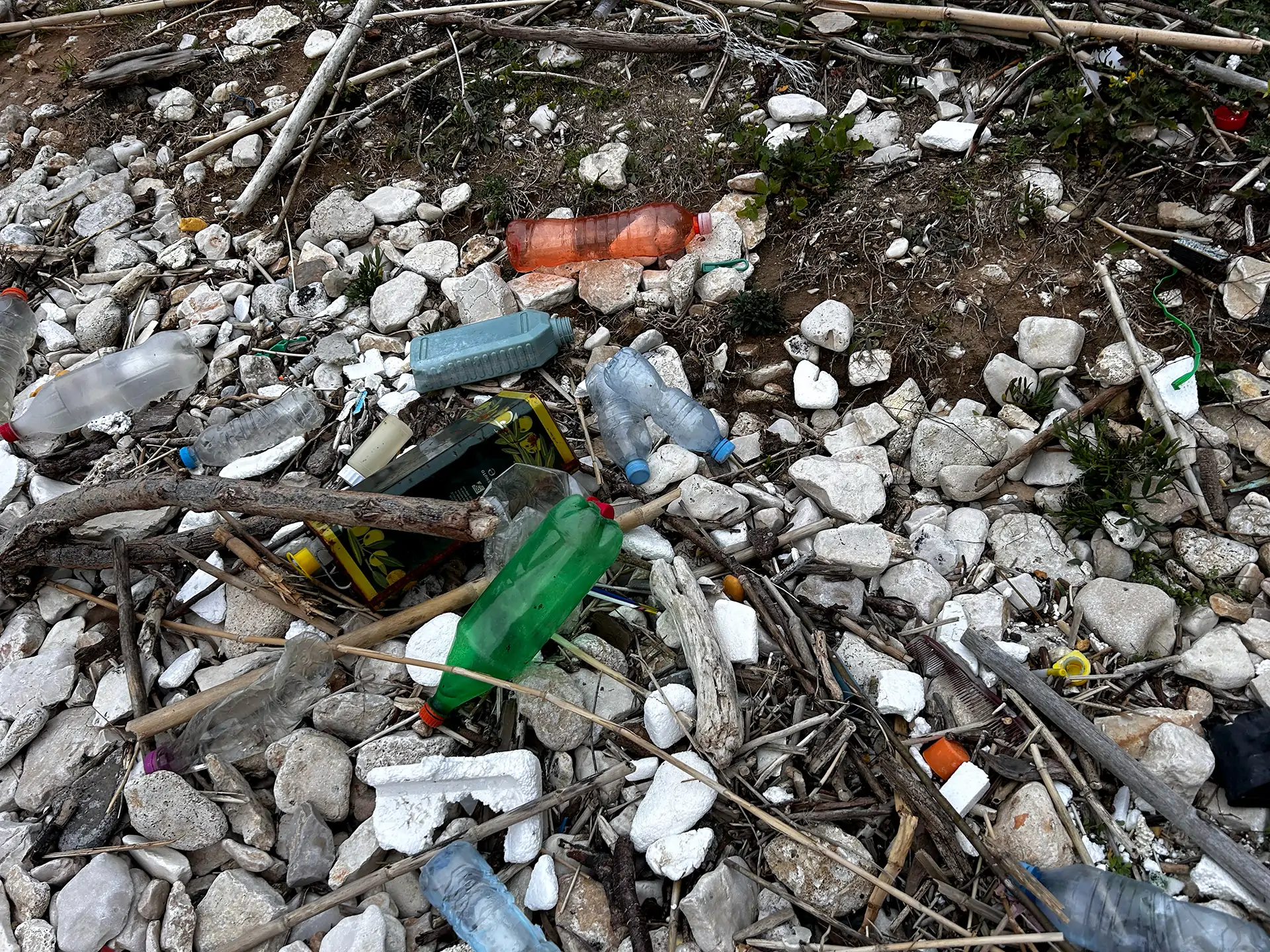
I call this post “Exhibition of Contemporary Art”because, for more than one reason, that is exactly what it is. We arrive at the exhibition — the beach — and observe how the colours, forms, and textures of rubbish have arranged themselves, shifting organically in collaboration with natural currents. It is a work of art representing the state of our culture, consumerism, in contact with a nature that hides nothing.
The exhibition shows the true face of industrial progress and the ache of each object discarded after “five minutes” of use. The objects reveal their sentence: the forces acting on and deforming them, placing them inside the next thousand years of degradation still ahead.
It is the image of a ratio, the mathematics of how long something was used against how long it will remain; the value a consumer took from it against the negative value it will continue to leave with nature and, naturally, with us.
The exhibition also shows ancient heritage — “the Mediterranean as it once was” — writhing inside humanity’s modernising masterpiece. You will not see that collision of worlds on Zagreb’s Ilica or its main square. Of course not: rubbish is rigorously removed there. It would hardly do to bury Ban Jelačić beneath abandoned bottles, would it?
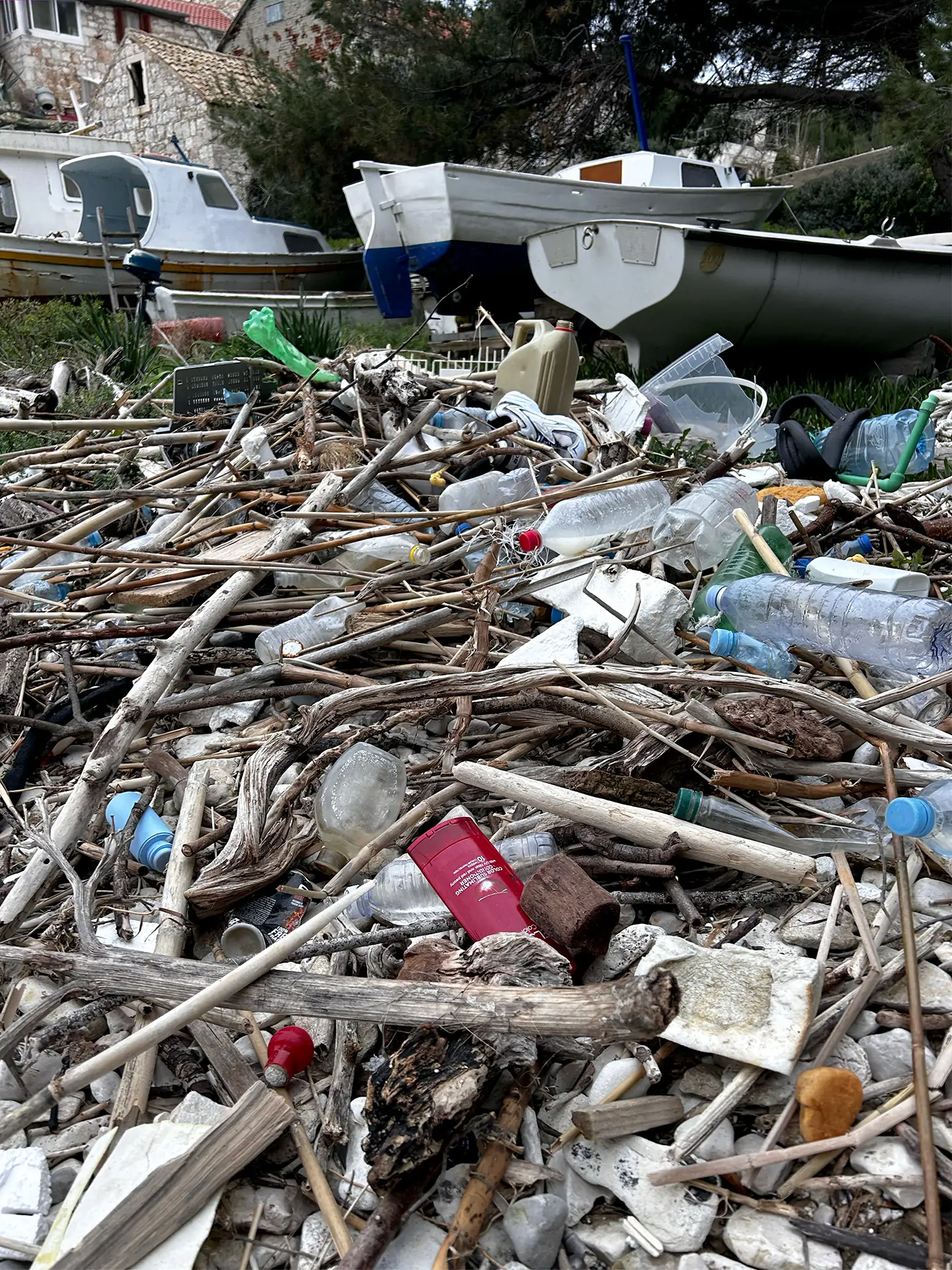
Every winter the sea delivers rubbish that city services clear away in spring, so tourists and swimmers do not have to look at the ugliness. Who would want to swim among bottles, old shoes, torn sacks, scraps of polystyrene, and every other washed-up horror?
Better that tourists do not see the whole picture or think about global problems. Let them arrive, enjoy themselves, spend, and make still more rubbish. Their relationship with nature and ecology in the role of tourist is itself consumerist: they leave everything unnecessary behind and do not care what follows.
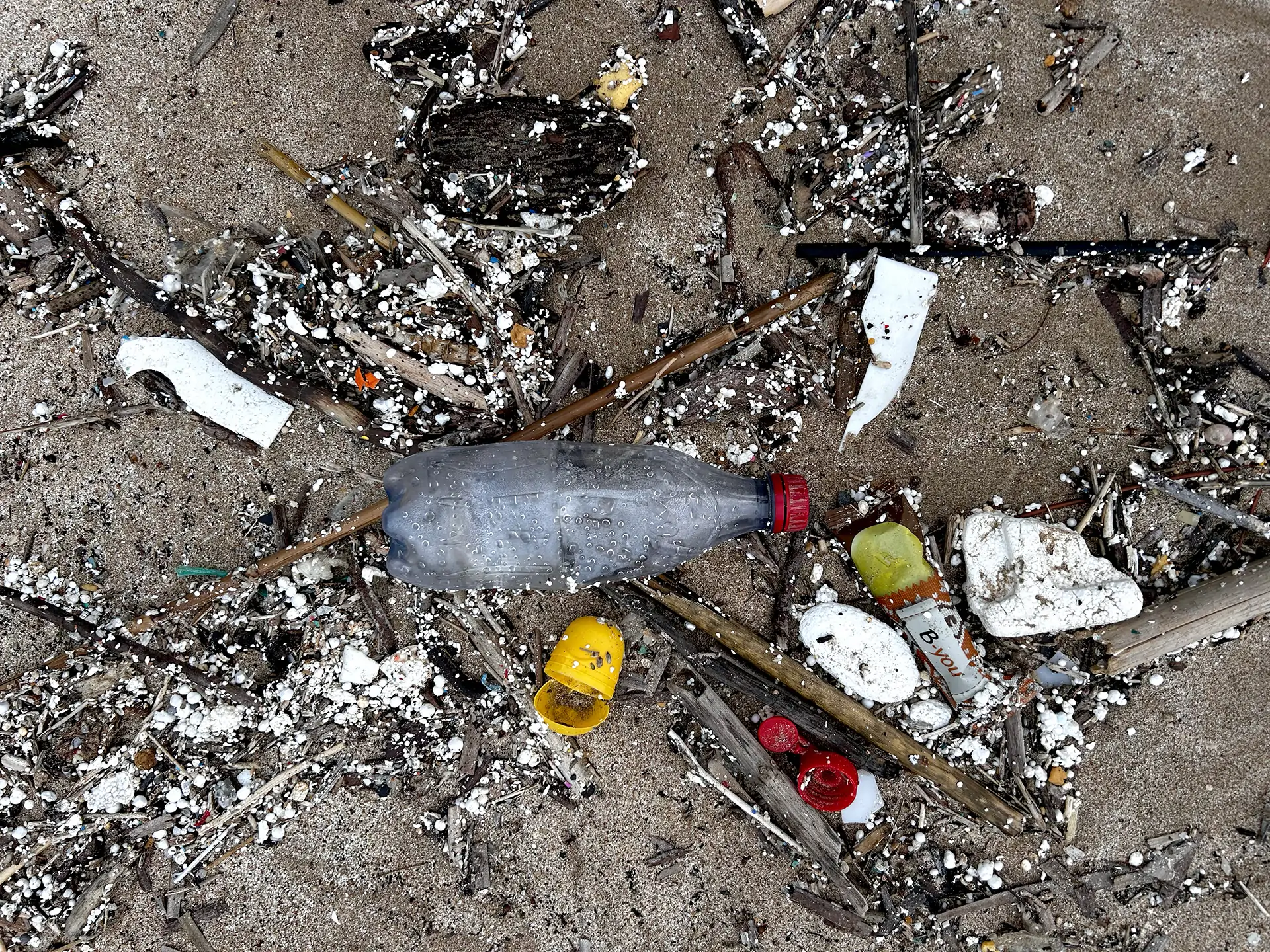
Those of us living on these shores cannot help ourselves when we watch the rubbish pile up, so we clean. Not because we are uniquely virtuous, thoughtful people who create no waste of our own, but because we simply cannot bear it. The sea will pull everything back in and keep rolling it, grinding it into smaller and smaller pieces, choking marine animals, altering seawater chemistry, underwater plant life, and the climate as a whole.
When we clean beaches, we can feel we have helped by 0.000000001 per cent, then look in the other direction while there is still somewhere unpolluted to look.
In short, this is where we are: we can clean and recycle, but until we stop producing new waste and pointless packaging, until all of us finally take responsibility for what we do, this exhibition will remain the permanent collection.
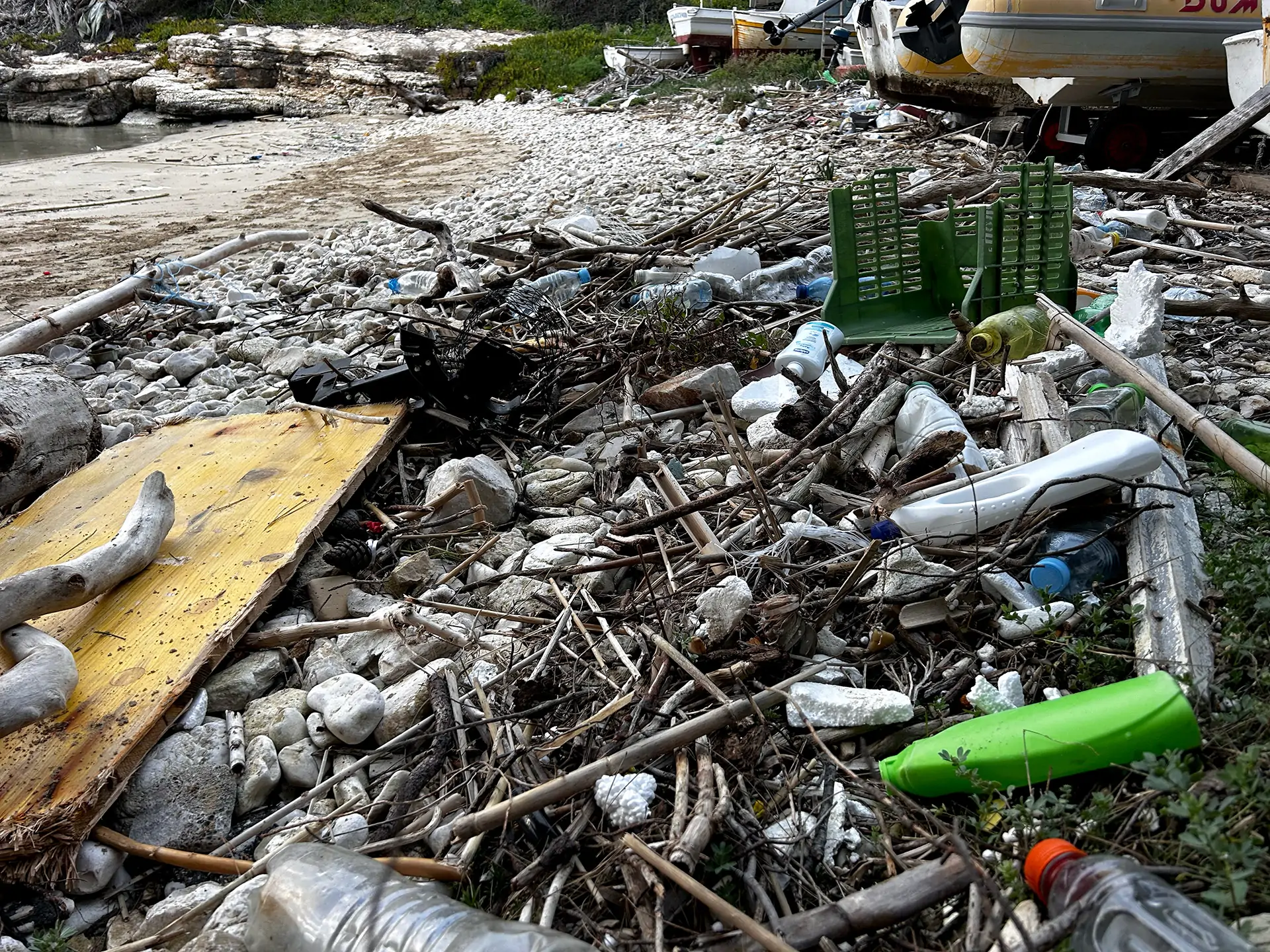
Photo: Salbunara beach, island of Biševo, February 2026.