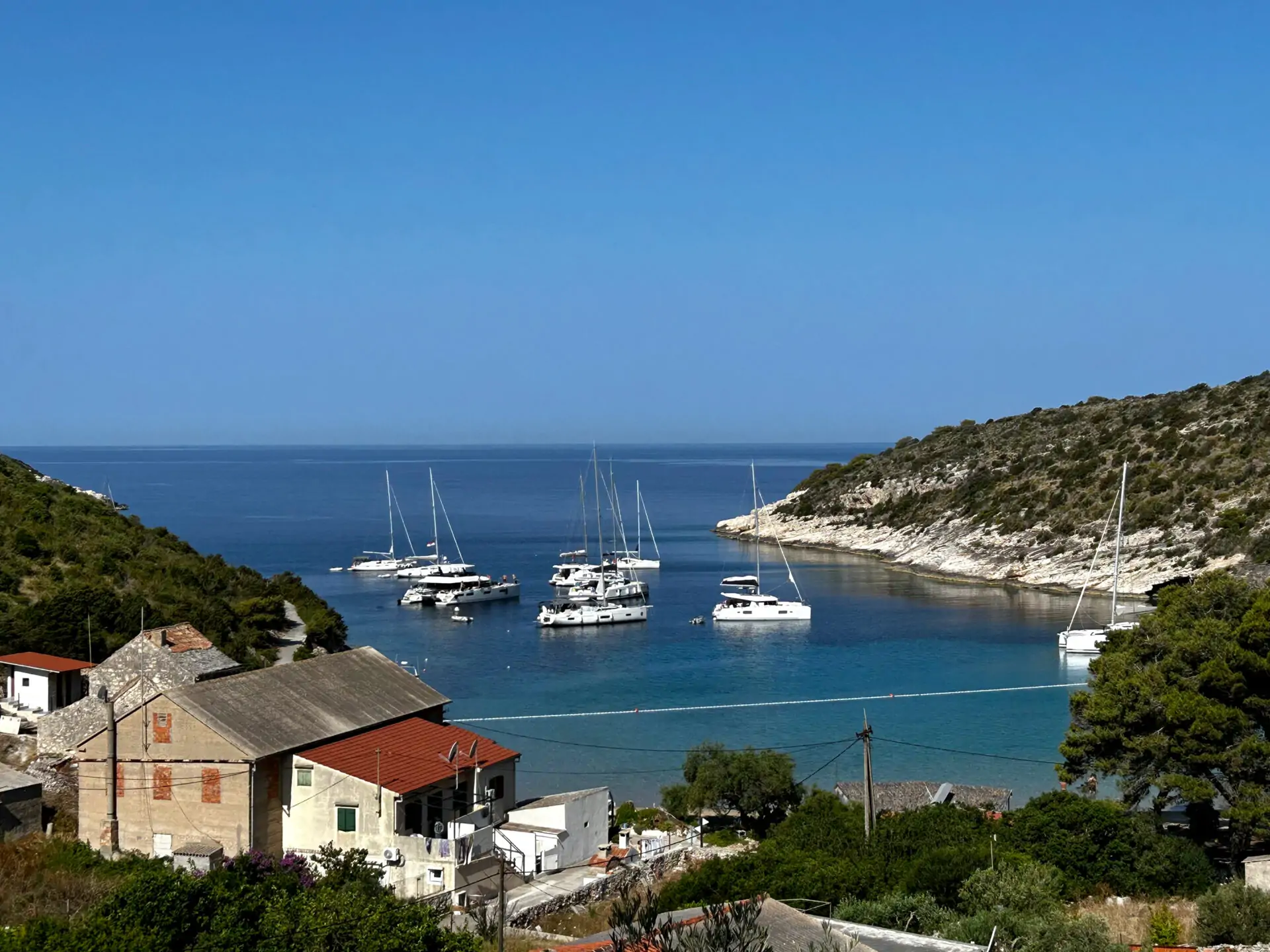
Ecology, with a side-eye at nautical tourism
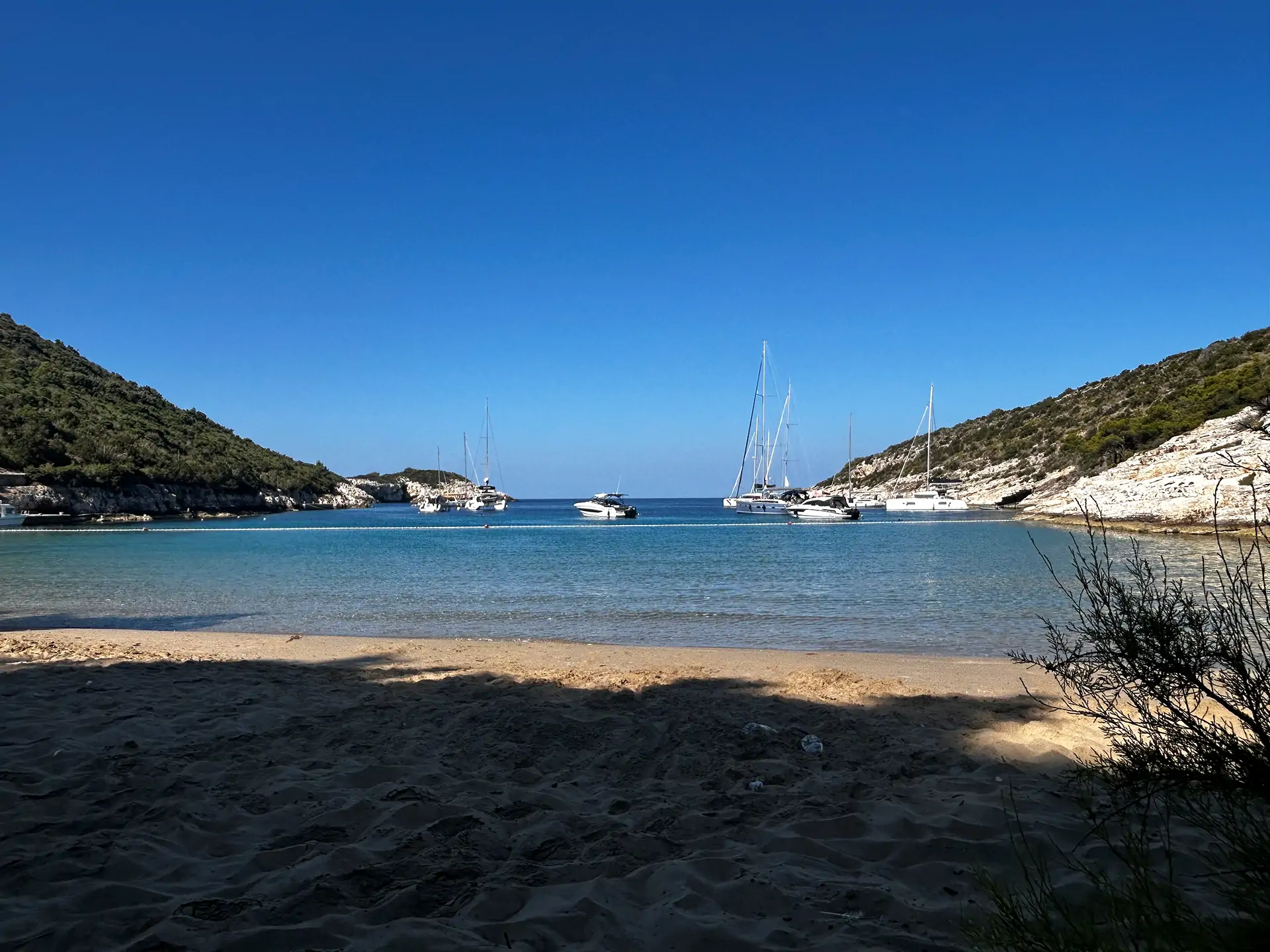
Sailors seem to have an unwritten rule that organic waste is “allowed” to go overboard, along with the odd accidental bit of plastic or whatever small nuisance happens to be in hand. The sea will deal with it, they say. That might almost be true if yours were the only yacht far out in the Atlantic. But when you anchor among nine others in a tiny bay, the watermelon rind you tossed away is not going to decompose before it reaches shore. It floats among swimmers and washes onto the beach with the first decent wave. To me, this rubbish carries a deeper, more personal note than the anonymous stuff that drifts over from Albania and piles onto our little island all winter.
This rubbish directly expresses the relationship the gentleman and lady on their fancy yacht have, first, with the host they have come to visit — our coast — and second, with the planet we all share. It also says what they think of me, the swimmer on the beach, which is why I take it personally. They can see us swimming in their waste. They know they threw it in, and it does not bother them. If anything, it probably strengthens their little sense of distinction: I am up here; you are down there.
I know you do not necessarily have to read all that into a few watermelon rinds, some pepper halves and lettuce leaves, loads of tiny scraps of packaging, a couple of floating turds, and condoms. I will let you judge for yourself.
How does anyone justify throwing that stuff away while anchored a few metres from a beach?
They do not justify it; they simply refuse responsibility. Who can make a tourist grasp that their rubbish belongs to them, and that the sea is a living organism with a very real effect even on their distant life back on the mainland?
I am sharing the scene with one thought: summer brings different polluters than winter, but the sea is the victim in both seasons.